
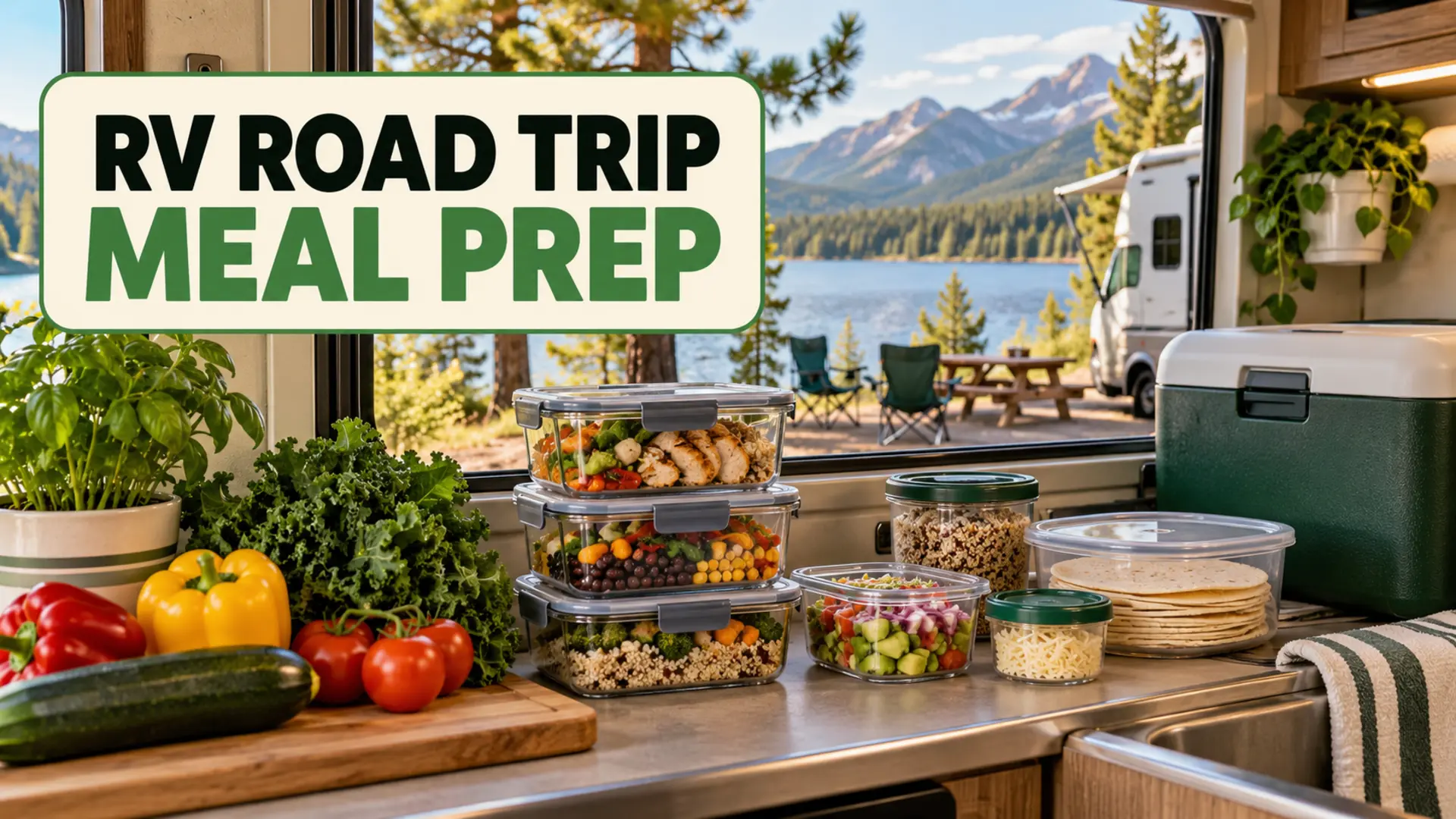
RV road trip meal prep should match the vehicle’s refrigerator capacity, water supply, power source, cooking equipment, route, and campsite rules. A small menu of adaptable meals is usually easier to store and prepare than a complicated schedule built on fixed quantities.
Start RV road trip meal prep with the vehicle
- Measure usable refrigerator, freezer, and dry-storage space.
- Confirm which appliances can operate safely at each stop.
- Check campground rules for grills, fires, generators, and food storage.
- Plan access to potable water, groceries, ice, and waste disposal.
- Account for allergies, dietary needs, and age-appropriate foods.
Follow the RV and appliance manufacturers’ instructions. Never use outdoor grills or camp stoves inside the vehicle.
Choose compact, flexible ingredients
Useful options may include tortillas, oats, pasta, rice, canned beans, shelf-stable sauces, sturdy produce, eggs, yogurt, and safely chilled cooked ingredients. Pack only what the refrigerator or cooler can hold at a safe temperature.
Prepare components safely at home
Cook and cool foods using reliable food-safety practices. Portion meals in leak-resistant, food-safe containers and label them with contents and dates. Flat packages may save space, but vacuum sealing does not replace refrigeration, safe cooling, or proper reheating.
Four adaptable RV meals
Breakfast wraps
Use eggs or beans, vegetables, and tortillas, prepared with equipment suitable for the RV.
One-pan grain bowls
Combine a cooked grain, canned beans or safely stored protein, vegetables, and sauce.
Pasta with pantry sauce
Add canned or refrigerated vegetables and a suitable protein.
Grilled or skillet quesadillas
Use tortillas, cheese or an alternative, beans, and vegetables. Cook only where the appliance is permitted and stable.
Organize cold food by access
Keep frequently used foods easy to reach so the refrigerator or cooler is not held open. Separate raw animal products from ready-to-eat food in sealed containers. Use appliance thermometers and replenish ice or cold sources as needed.
FoodSafety.gov’s outdoor and travel food-safety resources cover camping, coolers, and grilling.
Plan the grocery list by route
Buy perishables in smaller amounts when reliable stores are available. Keep shelf-stable backup meals for delays, and confirm local availability instead of assuming every stop carries the same products. See the family camping grocery checklist and family road-trip snack list.
Reduce water use without reducing hygiene
Bring potable water and appropriate cleaning supplies. Simplify meals and use one-pan methods when suitable, but maintain handwashing, clean utensils, and safe separation. Dispose of wastewater according to campsite rules.
Keep the plan flexible
RV road trip meal prep works best when it preserves cold storage, respects equipment limits, and allows route changes. Safe, repeatable meals are more useful than claims about effortless cooking, exact space savings, or universal preparation times.