
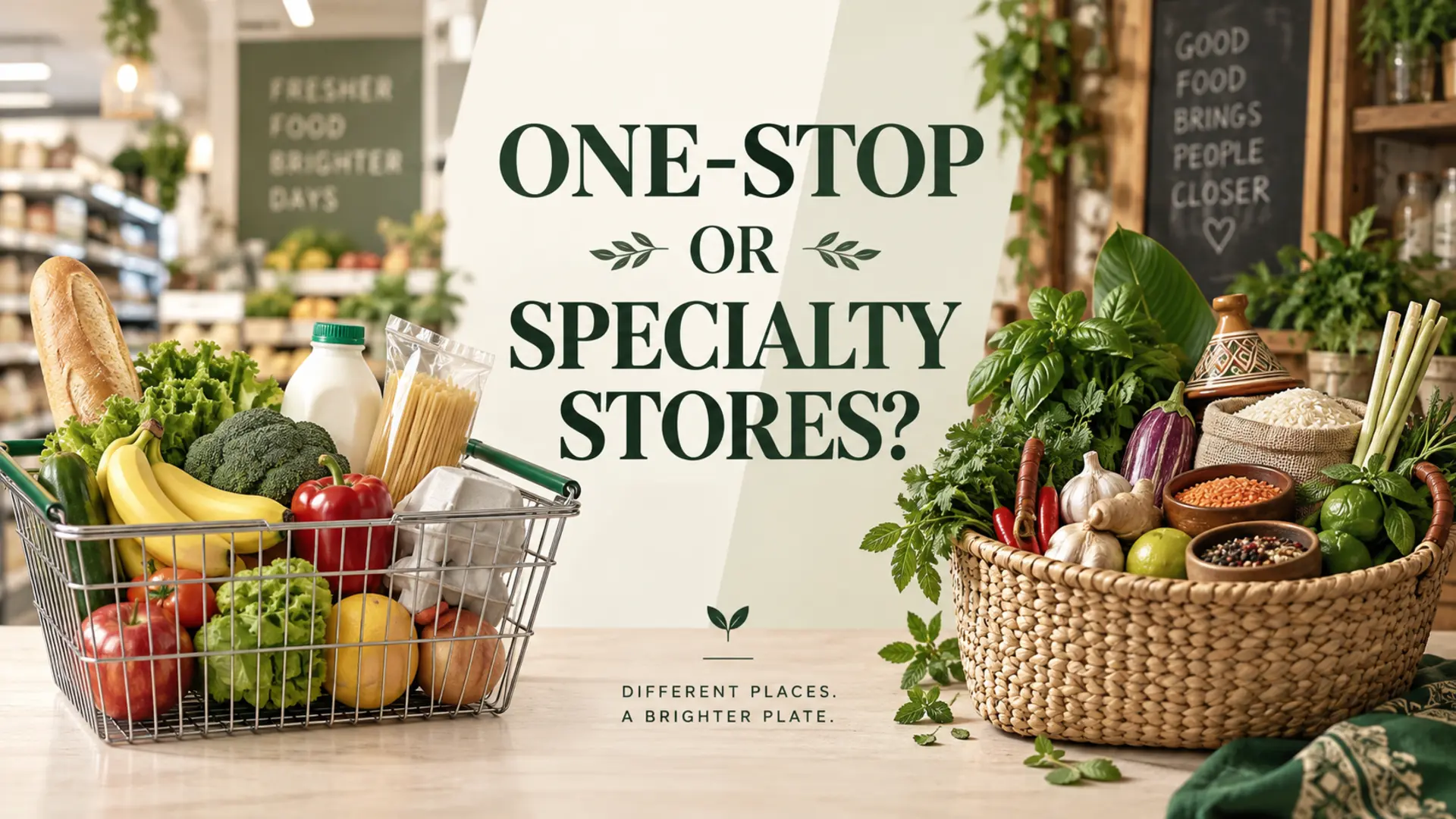
One-stop shopping vs specialty stores is not a universal choice. The better approach depends on time, transport, accessibility, product needs, prices and how often the household will use each item.
Compare One-Stop Shopping vs Specialty Stores
- One-stop stores may simplify travel and offer broad household categories.
- Specialty stores may offer particular cultural foods, formats, expertise or freshness.
- Either option can be more economical depending on local prices and waste.
Measure the Full Cost
Compare unit prices, package sizes, travel, delivery fees and likely use. A lower shelf price is not useful if a large package goes unused. See the price-per-unit comparison guide.
Use a Hybrid Shopping Plan
Many households buy dependable staples in one place and visit specialty retailers periodically for selected ingredients. Group errands when practical and keep substitutions on the list.
Review Accessibility and Values
Consider mobility, dietary needs, language, store hours and local business preferences without assuming the same solution fits every family.
The bulk-buying math guide can help assess larger packages.
Choose What Works Locally
Revisit the comparison as prices, schedules and household needs change.