
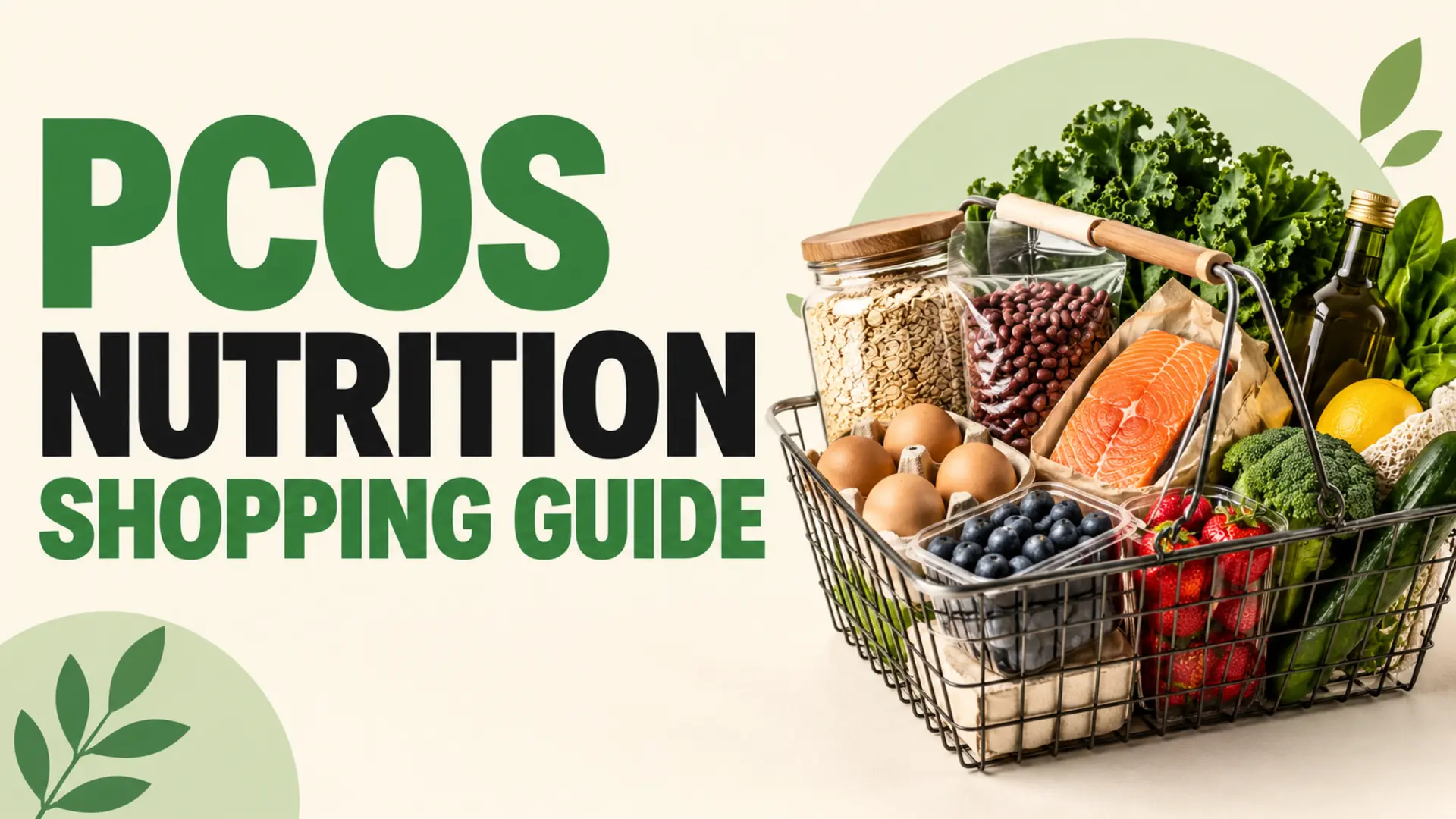
This PCOS nutrition shopping guide helps organize balanced meals without promising to “balance hormones” through a single food or restrictive routine. PCOS experiences and treatment needs differ, so grocery choices should complement individualized medical care.
PCOS nutrition shopping guide: flexible staples
- Whole grains such as oats, brown rice, barley or whole-grain bread
- Beans, lentils, tofu, eggs, fish, poultry or other preferred proteins
- Vegetables and fruit in fresh, frozen or canned forms
- Plain or lightly sweetened dairy or fortified alternatives
- Nuts, seeds, avocado and suitable cooking oils
Combining carbohydrate foods with protein, fibre and fat can make meals more satisfying, but there is no single required ratio. Cultural foods, budget, allergies and personal tolerance all belong in the plan.
Build easy meal combinations
Try oats with yogurt and fruit, rice with beans and vegetables, or whole-grain toast with eggs and greens. For more options, see the balanced grocery list and the plant-based protein and iron checklist.
Avoid unsupported hormone claims
Spearmint tea, seed cycling, supplements and individual “superfoods” are sometimes marketed for PCOS, but they should not replace evidence-based care. Discuss supplements and major dietary changes with a qualified clinician, especially when taking medication, trying to conceive or managing another condition.
Keep the plan sustainable
Use this PCOS nutrition shopping guide to make meals easier and more consistent. A flexible pattern you can maintain is generally more useful than expensive specialty foods or a long elimination list.