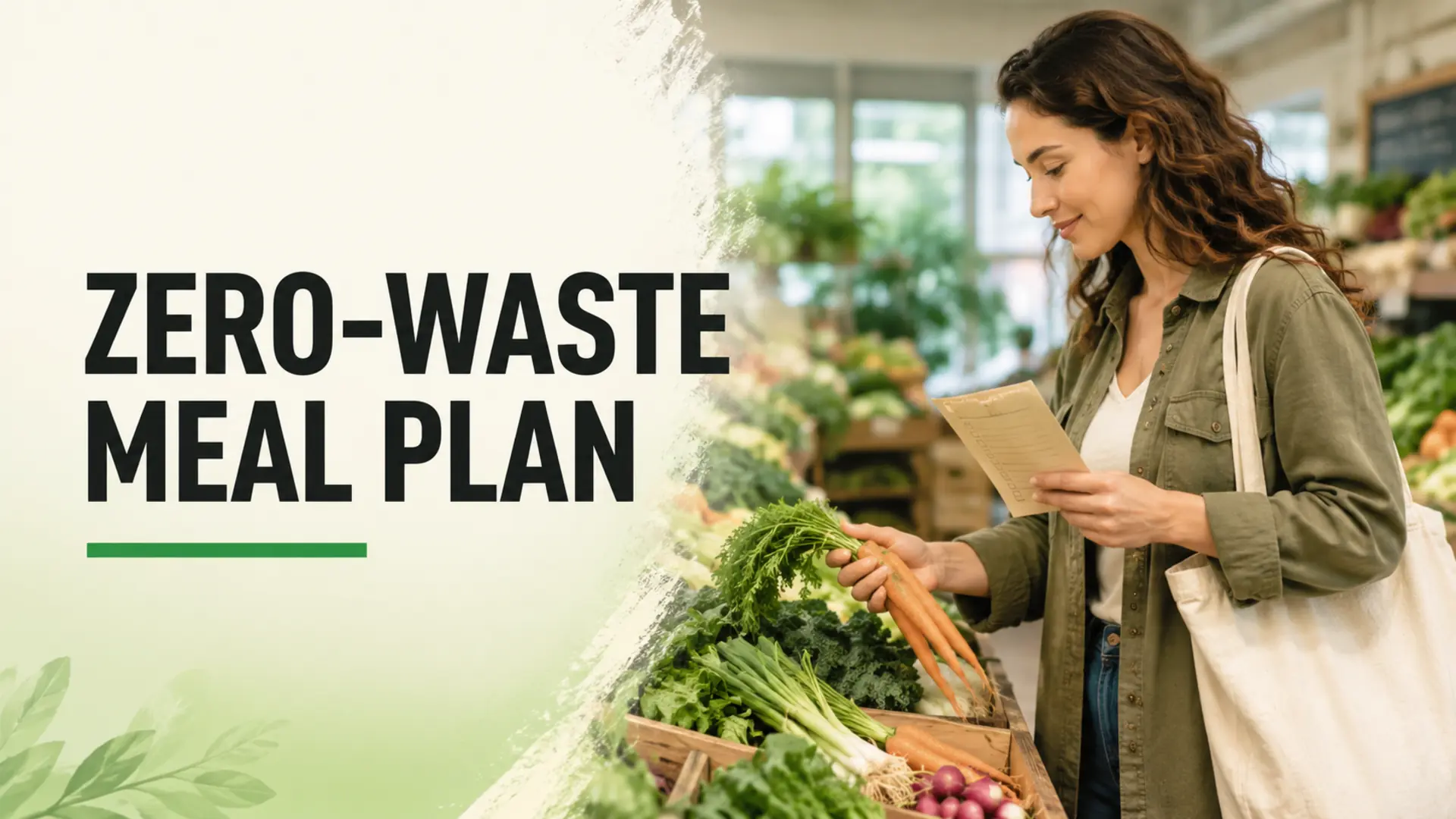
A zero-waste meal plan starts with the food you already have, then adds only what your household can realistically use. The goal is not a perfectly empty bin or a rigid week of recipes. It is a practical routine that helps you notice perishables, plan flexible meals, store food well and give leftovers a clear next use.
This approach works best when it stays simple. A short inventory, a few overlapping ingredients and one “use-it-up” meal can prevent forgotten produce and duplicate purchases without turning dinner into a complicated project.
What a zero-waste meal plan actually means
“Zero waste” is a useful direction, not a test of perfection. Some food parts are inedible, plans change and spoilage still happens. Focus first on preventing avoidable waste: buy appropriate amounts, use fragile foods early, freeze surplus before quality drops and compost unavoidable scraps where local services allow it.
The most effective plan follows this order: inspect, plan, shop, store, cook and review. Each step gives food a purpose before more groceries enter the kitchen.
1. Shop your kitchen before the store
Take five minutes to scan the refrigerator, freezer and pantry. Look beyond the front row. Check open jars, half-used vegetables, cooked grains, bread and frozen portions. Add foods that need attention to a small “use first” list.
- Use soon: tender greens, berries, ripe fruit, fresh herbs and opened dairy alternatives.
- Plan this week: hardy vegetables, opened sauces, cooked beans and leftovers.
- Keep for later: intact pantry staples and clearly labelled frozen food.
If inventory checks are new to you, start with this step-by-step grocery list method. The habit matters more than maintaining a perfect database.
2. Build meals around the most perishable foods
Choose the first meals of the week around what will lose quality fastest. Fresh fish, tender greens, mushrooms, berries and soft herbs generally need attention before carrots, cabbage, squash or frozen ingredients. Let hardy foods and freezer meals cover the later days.
Plan only the meals you are likely to eat at home. Account for work dinners, social plans, takeaway nights and intentional leftovers. Leaving one flexible evening can be more realistic than assigning a different recipe to every day.
3. Choose flexible meals with overlapping ingredients
Ingredient overlap is useful when it creates variety, not repetition. A bunch of herbs might flavour a grain bowl, become part of a dressing and finish a soup. Roasted vegetables can be served as a side, folded into a wrap and added to eggs or tofu the next day.
- Grain bowls: combine a grain, protein, vegetables and sauce.
- Soups or stews: use cooked vegetables, beans, grains and suitable odds and ends.
- Frittatas or tofu scrambles: use small amounts of cooked vegetables and herbs.
- Stir-fries: bring together compatible vegetables, proteins and a simple sauce.
- Wraps or salads: turn planned leftovers into a different lunch.
When a recipe calls for only part of a package, decide on the remainder before adding it to your list. These practical ingredient-swapping tips can help you use a suitable substitute already at home.
4. Write quantities, not vague categories
A list that says “vegetables” leaves the amount open to guesswork. A more useful entry says “three courgettes for two dinners” or “greens for two lunches.” Match quantities to your household, appetite and schedule rather than to a generic meal plan.
Bulk packs and promotions are only useful when you can store and eat the extra food. Compare the amount you need with the package size, and have a freezing or sharing plan before buying more. The EPA’s household food-waste guidance likewise recommends checking food at home, planning meals and listing quantities before shopping.
5. Create a use-first zone
Place foods that need attention in one visible area of the refrigerator. A clear container or labelled shelf can work. Keep it small enough to scan at a glance, and move suitable items there when you unpack groceries.
Visibility is more important than an elaborate system. Put older safe food in front of newer food, label cooked dishes and tell other household members what should be used first.
6. Give every leftover a next step
“Save leftovers” is too vague. Decide whether a portion is tomorrow’s lunch, an ingredient for another meal or a freezer portion. Use clear labels with the food and date so you do not have to guess later.
- Pack tomorrow’s lunch while clearing dinner.
- Freeze portions you will not eat promptly.
- Schedule one use-it-up meal before the next shopping trip.
- Keep a freezer list so stored meals do not disappear from memory.
For foods that freeze well, follow this freezer meal prep checklist for packaging, labelling and texture considerations.
7. Keep food safety ahead of waste reduction
Reducing waste never means eating food that may be unsafe. Keep raw animal products separate from ready-to-eat foods, cook foods appropriately and refrigerate perishables promptly. When you are unsure how long a food can be stored, consult the FoodSafety.gov cold-storage chart or relevant guidance from your local food-safety authority.
Do not rely on smell or appearance alone to judge foods that can carry harmful bacteria. If safety is uncertain, discard the food and adjust the next plan rather than taking a risk.
8. Try a realistic five-day workflow
- Inventory day: identify use-first foods and check your schedule.
- Plan day: choose three or four flexible meals plus one leftover meal.
- Shopping day: buy only the missing quantities on your list.
- Midweek check: freeze surplus and move older foods forward.
- Use-it-up day: combine safe leftovers and compatible ingredients before shopping again.
If seven days of detailed planning feels heavy, this smaller loop is enough. Repeat it, notice what your household actually eats and adjust quantities the following week.
9. Learn from what remains
Before taking out the bin or compost, note what was not used and why. Perhaps the package was too large, a recipe made too much, plans changed or an ingredient was hidden. One short note can prevent the same problem next time.
- Buy a smaller quantity or a longer-lasting alternative.
- Freeze part of the package immediately.
- Reduce the recipe yield.
- Choose meals your household reliably enjoys.
- Store the item where it stays visible and appropriate.
Start your zero-waste meal plan with one change
You do not need to overhaul the kitchen in one weekend. Begin by checking food before shopping and scheduling one use-it-up meal. Once that becomes routine, add quantity notes, a use-first zone and a simple freezer list.
A good zero-waste meal plan is flexible, safe and honest about real life. Buy less when you already have enough, cook foods in the order they need attention and use each weekly review to make the next grocery list more accurate.