
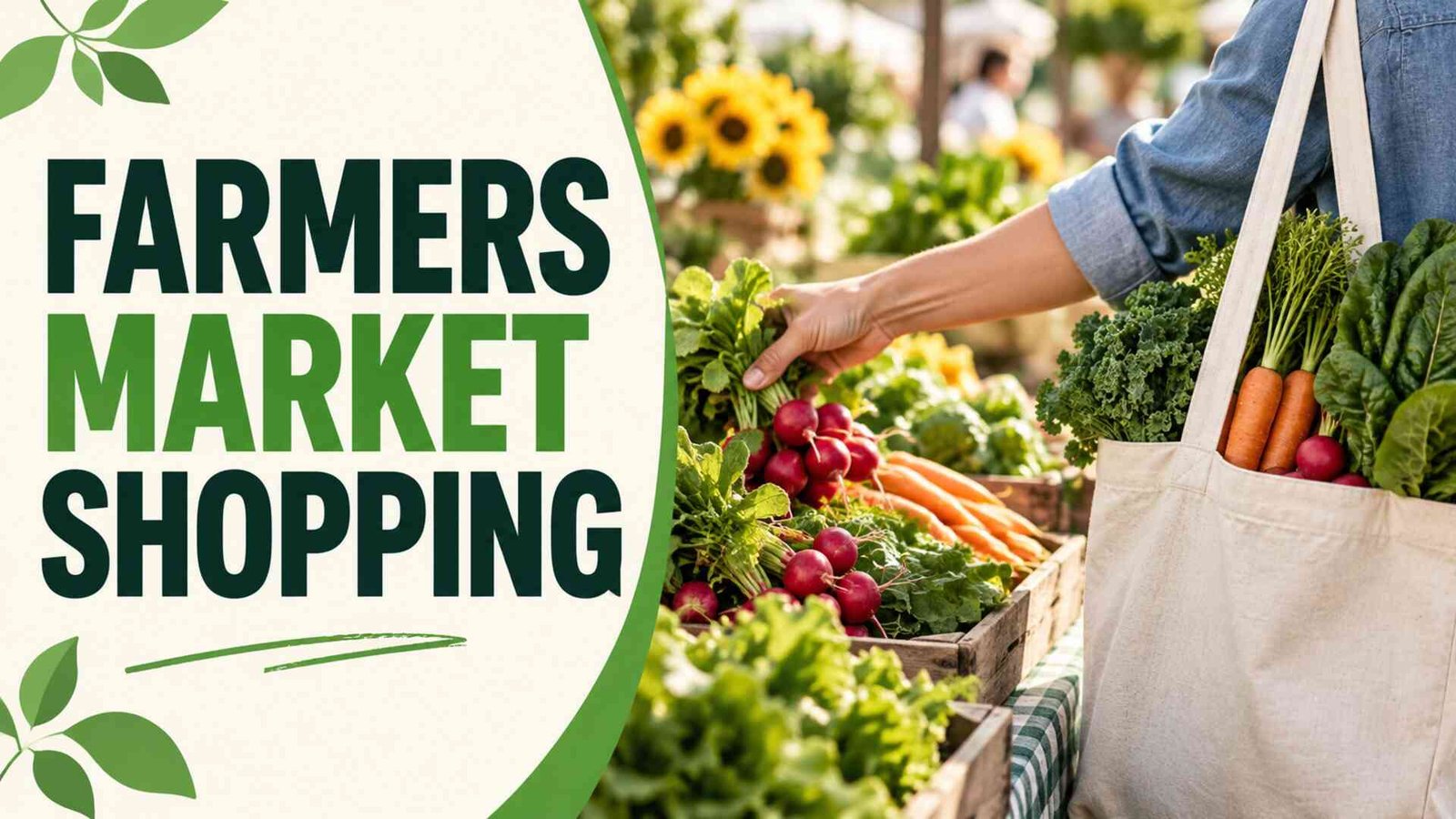
Farmers market shopping can support seasonal buying and lower-waste habits when you arrive with a list, realistic quantities and suitable bags. Products, payment methods, prices and market rules vary, so check local information before visiting.
Farmers market shopping essentials
- Bring sturdy reusable totes and small produce bags if the market permits them.
- Carry an insulated bag with cold packs for meat, eggs, dairy and other perishable foods.
- Take an accepted payment method; do not assume every vendor prefers cash.
- Leave space in your plan for one seasonal item, not an unplanned haul.
Compare quality, price and intended use
Ask about varieties, growing methods and storage rather than assuming local food is automatically cheaper, organic or recently harvested. “Seconds” may be useful for cooking, but only buy a larger quantity when you have a safe preservation or meal plan.
Transport purchases safely
Keep raw animal products separated from ready-to-eat produce and maintain safe temperatures according to local food-safety guidance. Go home promptly after shopping when carrying perishables.
Prevent waste after the market
Inspect produce and store each item appropriately. The seasonal produce calendar can guide flexible choices, while the produce storage guide helps match storage to the item.
Shop for meals, not ideals
Good farmers market shopping means choosing food your household will enjoy and use. Respectful questions and realistic quantities matter more than chasing assumed bargains.