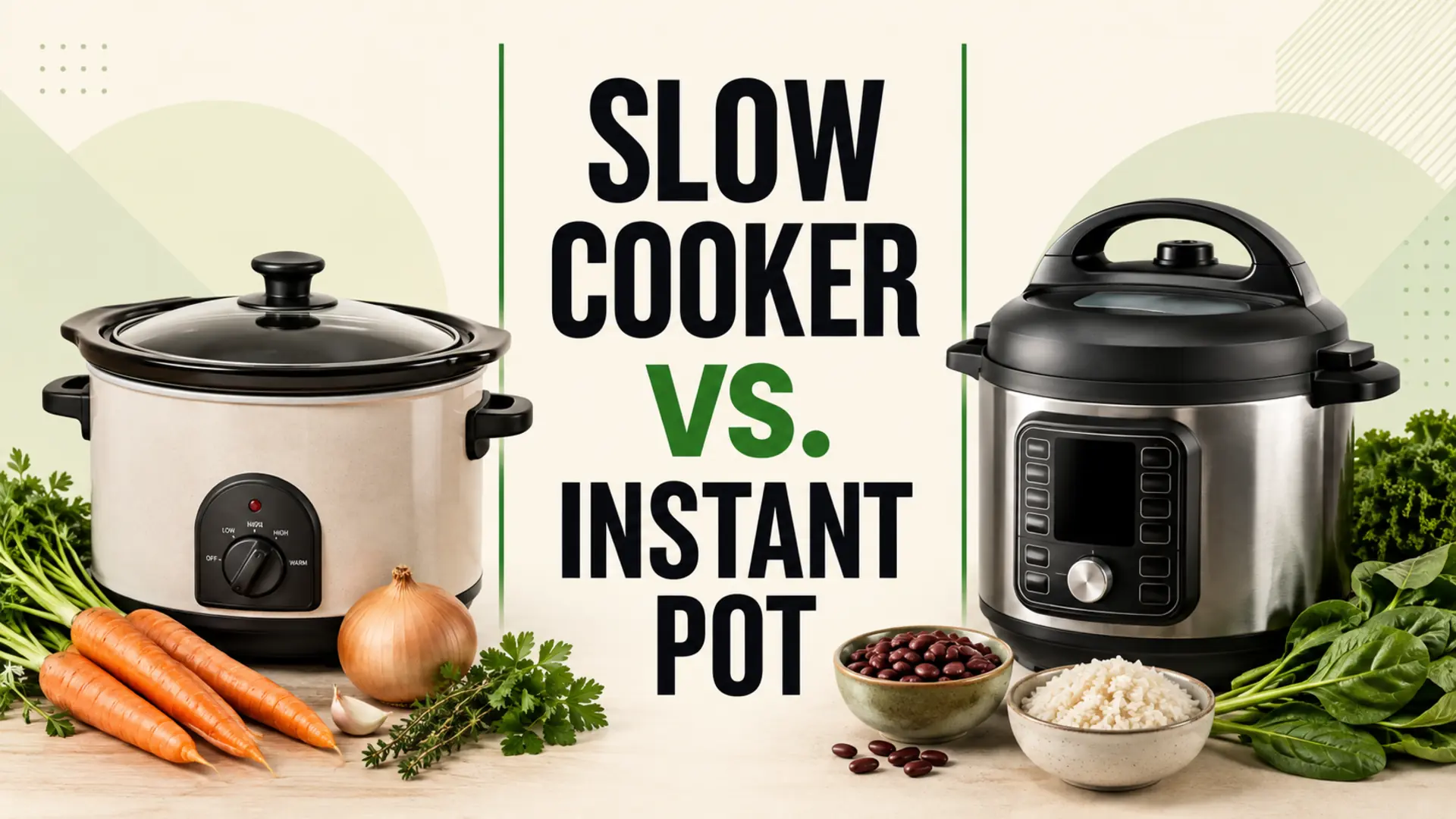
Quick answer: Slow cooker vs Instant Pot meal prep calls for different ingredients, timing and shopping-list decisions. A slow cooker suits sturdy vegetables, braising cuts and meals that cook gradually. An Instant Pot or other electric pressure cooker works well for beans, grains, soups and proteins when you follow a tested recipe and the appliance manual.
The better appliance is the one that fits your schedule and recipe. Plan the grocery list around the cooking method instead of expecting one ingredient list to work unchanged in both. This guide explains what to buy, what to add later and how to keep the process practical and safe.
Slow Cooker vs Instant Pot Meal Prep at a Glance
| Shopping decision | Slow cooker | Instant Pot |
|---|---|---|
| Useful proteins | Beef chuck, pork shoulder, chicken thighs, lentils | Chicken, ground meat, beans, lentils |
| Useful vegetables | Carrots, potatoes, sweet potatoes, parsnips | Vegetables matched to short, staged cooking |
| Liquid | Limited evaporation; follow the recipe | Enough thin liquid for the model and recipe |
| Best fit | Meals that can cook gradually | Faster batch components and one-pot meals |
Build a Slow Cooker Shopping List
Choose ingredients that tolerate long cooking
Sturdy ingredients are dependable choices. Beef chuck, pork shoulder, chicken thighs, beans, lentils, carrots, potatoes and winter squash can work well in recipes designed for slow cooking. Lean or delicate ingredients may need a shorter cooking window, so check the recipe before buying.
Keep leafy greens, tender peas, fresh herbs, dairy and some quick-cooking vegetables in a separate “finish later” section of your list. Adding them near the end can preserve texture and colour.
Plan liquid and flavour carefully
A covered slow cooker loses relatively little moisture. Do not automatically copy the liquid amount from a stovetop recipe. Use a tested slow-cooker recipe or adapt cautiously, then keep extra broth nearby only if the food needs adjusting.
Long cooking can soften flavours, so shop for concentrated ingredients such as tomato paste, dried spices, aromatics and an acidic finishing ingredient. Add salt thoughtfully, especially when broth, canned ingredients or sauces already contain it.
Build an Instant Pot Shopping List
Buy ingredients that suit pressure cooking
Useful staples include dry beans, lentils, rice, whole grains, broth, chicken and ground meat. Pressure cooking can prepare many of these efficiently, but timing varies by ingredient, quantity and appliance model. Use a trusted recipe instead of combining items with very different cooking times in one stage.
For mixed meals, place tender vegetables, dairy, cheese, fresh herbs and thickeners in a separate list section labelled “after pressure.” This makes the cooking order visible before you start.
Respect liquid and fill limits
Electric pressure cookers need enough suitable liquid to generate steam. Thick sauces and dairy-heavy mixtures can behave differently from water or broth. Follow the recipe and the manual for your exact model rather than relying on one universal liquid rule.
Never exceed the marked pressure-cooking fill line. Foods that expand, including beans and grains, may have a lower permitted fill level. The official Instant Pot guidance explains these limits and safe depressurization, but your model manual remains the primary instruction.
Organize One List for Either Appliance
Start with the recipe and number of servings. Our guide to scaling meal prep recipes can help you adjust quantities without changing the recipe’s method blindly. Then sort the list into five groups:
- Protein or main ingredient: meat, poultry, beans, lentils or tofu.
- Sturdy vegetables: ingredients that cook for most or all of the recipe.
- Cooking liquid: water, broth or another recipe-approved liquid.
- Finishers: greens, herbs, dairy, citrus, thickeners or garnishes.
- Storage supplies: shallow containers, labels and freezer-safe packaging when needed.
Before shopping, check the pantry, refrigerator and freezer. Then arrange the final list in store order using this guide to organizing a shopping list by aisle. That simple pass helps prevent forgotten finishers and duplicate staples.
Choose the Appliance for Your Schedule
Use the slow cooker when the recipe benefits from gradual cooking and you can start it early enough. Use the pressure cooker when you want a faster method and will be available for setup, pressure release and finishing steps. Total pressure-cooker time includes coming to pressure and releasing pressure, not only the programmed cooking time.
For a weekly workflow, combine the decision with a Sunday grocery prep routine. You might slow-cook one dinner while pressure-cooking grains or beans for later meals, provided each appliance is used according to its instructions.
Food-Safety Checks Before You Cook
- Thaw meat and poultry safely before slow cooking; do not place frozen meat into a slow cooker unless authoritative instructions for the exact product and method say otherwise.
- Keep raw meat separate from ready-to-eat produce while shopping and preparing.
- Use a food thermometer and follow safe minimum internal temperatures for the ingredient.
- Do not lift a pressure-cooker lid until the appliance is fully depressurized according to the manual.
- Cool leftovers promptly in shallow containers, then refrigerate or freeze them within the recommended time.
The USDA’s slow-cooker safety guidance advises thawing meat or poultry before slow cooking and keeping the lid in place. For storage planning, use our freezer meal prep checklist alongside official local food-safety advice.
Common Shopping Mistakes to Avoid
- Buying delicate vegetables for an all-day recipe without a plan to add them later.
- Using thick sauce as the only pressure-cooking liquid without model-specific guidance.
- Forgetting that dry beans and grains expand during cooking.
- Assuming pressure-cook time equals total meal time.
- Scaling ingredient quantities without checking appliance capacity.
- Buying extras before checking what is already in the pantry.
Final Takeaway
Successful slow cooker vs Instant Pot meal prep starts with matching the grocery list to the method. Choose ingredients with compatible cooking times, separate finishers, respect liquid and capacity instructions, and plan storage before cooking. With those decisions made at the list stage, either appliance can support a flexible weekly meal-prep routine.