
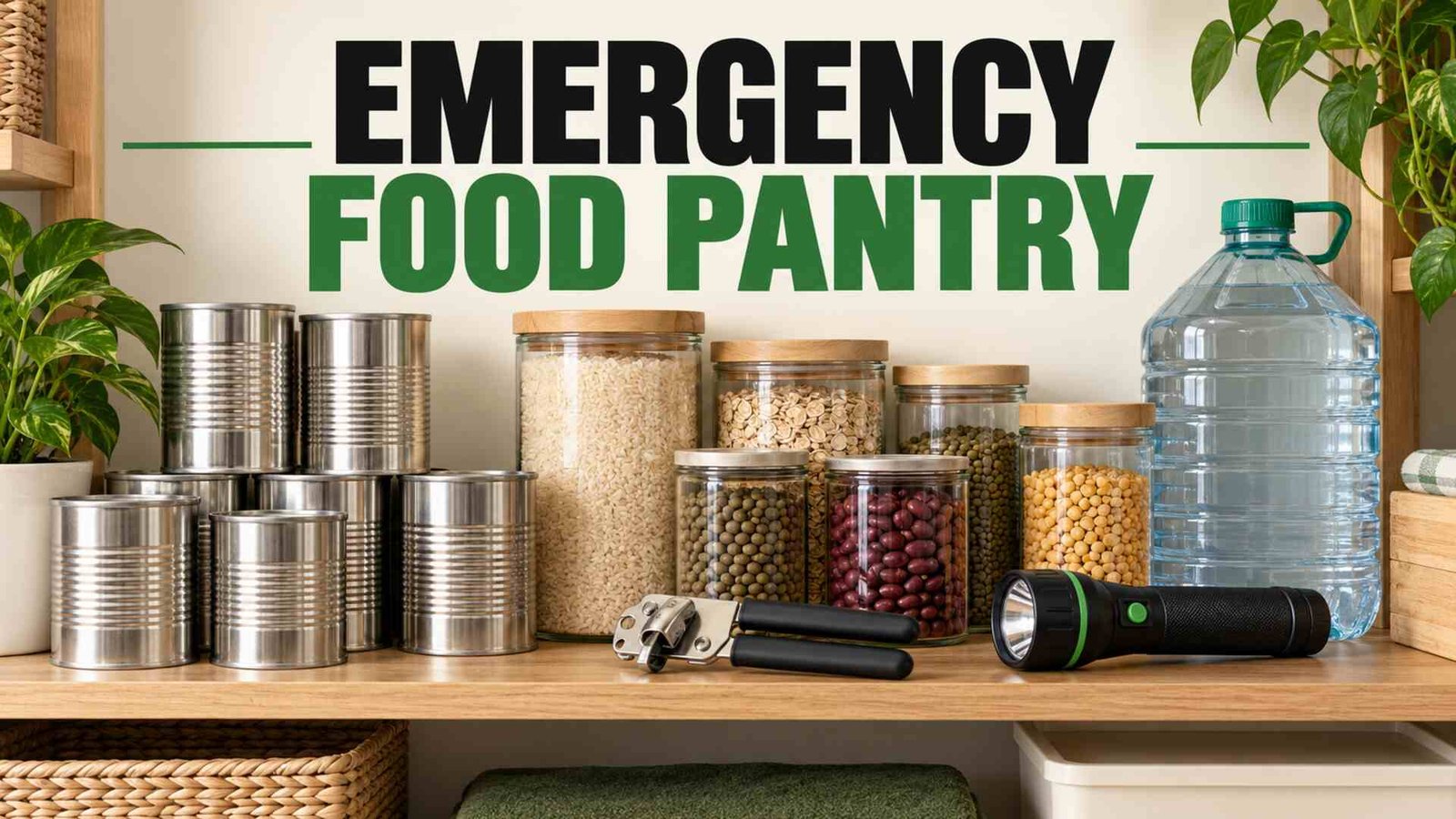
An emergency food pantry should contain familiar foods your household can safely eat and prepare during a disruption. Local hazards and official recommendations differ, so use current guidance from your emergency-management authority when deciding quantities and supplies.
What to include in an emergency food pantry
- Safe drinking water in appropriate containers.
- Ready-to-eat canned beans, fish, vegetables or fruit.
- Dry staples such as oats, grains, crackers or cereal.
- Nut or seed products where allergies allow.
- Foods for infants, older adults, medical diets and pets where relevant.
- A manual can opener and basic preparation supplies.
Plan for household needs
Consider allergies, medications, mobility, religious or cultural preferences and whether cooking, refrigeration or clean water may be limited. Avoid buying unfamiliar foods simply because they are marketed for emergencies.
Store and rotate supplies
Follow package storage directions, preserve labels and inspect packaging. Record expiry or best-quality information as applicable, place older suitable items first and replace anything damaged, leaking, swollen or otherwise unsafe. The FIFO pantry method supports regular rotation.
Use the monthly pantry audit to review inventory without relying on universal shelf-life claims.
Keep the plan current
Review your emergency food pantry periodically and after household needs change. A modest, well-rotated supply based on official local guidance is more useful than an oversized stockpile that goes unused.