
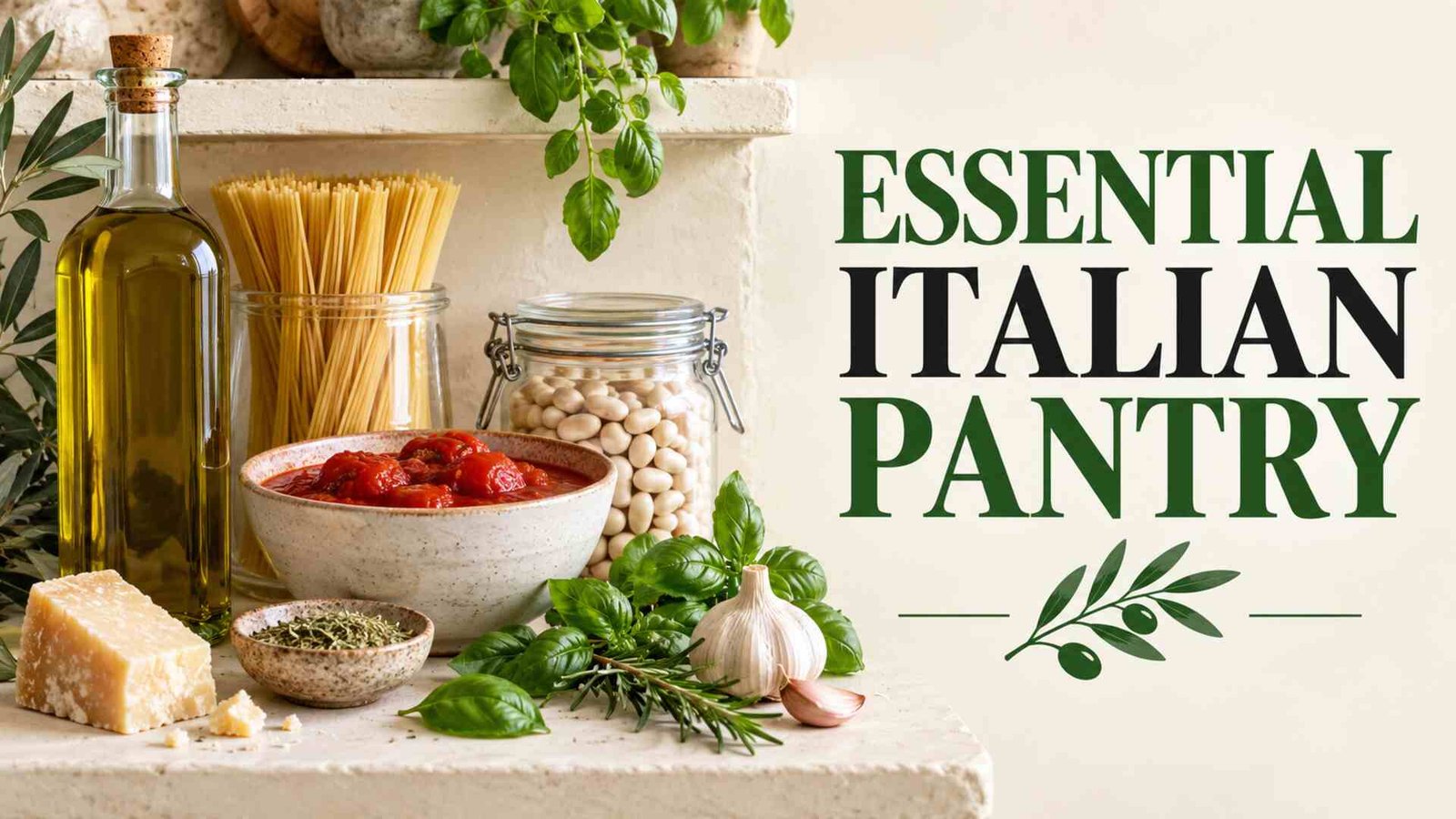
An essential Italian pantry varies across regions, households and the dishes being prepared. Use this guide as a flexible shopping framework rather than a universal definition of Italian cooking.
Essential Italian pantry staples
- Dried pasta in shapes suited to planned sauces
- Canned or jarred tomatoes with clear ingredient labels
- Beans such as cannellini, borlotti or chickpeas
- Olive oil and another suitable cooking fat
- Rice, polenta or flour where relevant
- Garlic, onions and seasonal vegetables
- Herbs, vinegar, capers or olives used in your recipes
- Cheese appropriate to the dish and dietary needs
Shop for the meals you make
Italian food traditions are diverse. Choose ingredients for specific recipes and learn from sources connected to the relevant region. Compare oil, tomato and cheese labels for origin, ingredients, allergens and storage instructions rather than assuming price establishes quality.
Use the FIFO pantry method to rotate pasta, beans and tomatoes, and consult the seasonal produce calendar for locally adaptable vegetables.
Store ingredients carefully
Keep dry goods cool and dry, refrigerate opened and perishable foods as directed, and buy quantities your household will use.
Conclusion
A useful essential Italian pantry grows around favourite dishes, regional context and practical storage—not a rigid checklist.