
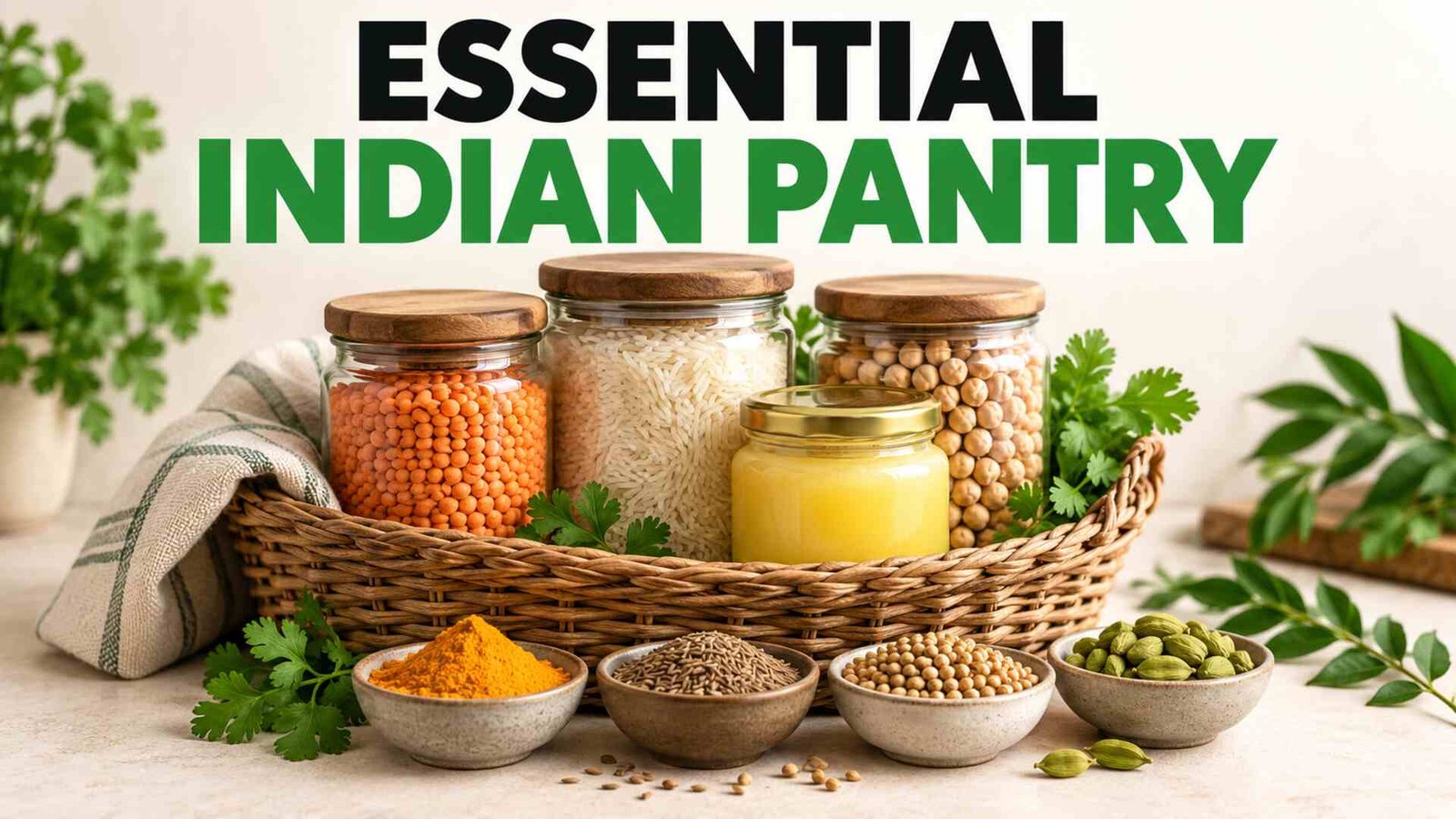
An essential Indian pantry cannot be reduced to one universal list. Ingredients and techniques vary enormously by region, religion, household and dietary pattern, so begin with the dishes you intend to prepare.
Essential Indian pantry building blocks
- Lentils and pulses such as masoor, moong, urad or chana dal
- Rice suited to the recipe, including basmati where appropriate
- Wheat, chickpea or other flours used in planned dishes
- Ghee, oil or another suitable cooking fat
- Whole and ground cumin, coriander and turmeric
- Mustard seeds, cardamom, cloves or cinnamon as recipes require
- Dried and fresh chiles selected for preferred heat
- Onions, garlic, ginger and seasonal produce
Buy spices in realistic amounts
Choose quantities you can use while aroma and quality remain acceptable. Store spices away from heat, light and moisture, and check blends for salt, allergens and ingredients. There is no single mandatory “curry powder” for Indian cooking.
The FIFO pantry method helps rotate pulses and spices. Compare flexible plant proteins in the plant-based grocery blueprint.
Cook with context
Use recipe-specific guidance and acknowledge adaptations when substituting ingredients. Check pulse cooking instructions and manage allergens carefully.
Conclusion
A practical essential Indian pantry develops gradually around regional dishes your household enjoys.