Quick Answer: What Belongs on an Off-Grid Homestead Grocery List?
Quick Answer: A resilient off-grid homestead grocery list centers on foundational calories and preserving agents that require zero refrigeration: hard wheat berries for fresh milling, white rice, dried legumes, canning salt, pure honey, and shelf-stable fats like coconut oil and ghee. Sealing bulk dry goods in Mylar-lined 5-gallon buckets and tracking inventory in Smart Grocery List secures multi-year food independence.
The Reality of Self-Reliance: Why Modern Pantries Fail Off-Grid
In suburban life, the supermarket operates as an on-demand pantry. For homesteaders and off-grid families, that safety net does not exist. Living miles down unpaved roads or hours from agricultural depots turns grocery shopping into an intentional campaign. Weather extremes and seasonal chores mean trips to town occur monthly or quarterly.
Off-grid living imposes severe technical constraints: multiple freezers drain solar battery banks during overcast winter weeks, and generator failures can spoil frozen meat within 48 hours. Rural cellars experience humidity shifts that trigger mold and weevils in cardboard packaging. A homestead pantry must rely on stable, raw ingredients capable of fueling hard physical labor.
Building an off-grid pantry is not about hoarding canned soup in fear; it is about establishing a self-sufficient domestic buffer.
Here is the master blueprint for building a resilient, multi-year homestead grocery list that guarantees food security without electrical dependence.
The 3-Tier Homestead Storage Architecture
A properly designed homestead pantry operates across three synchronized temporal tiers, preventing food waste while ensuring decades of shelf life:
|
Storage Tier |
Shelf Life & Operational Purpose |
|---|---|
|
Tier 1: The Active Kitchen Pantry |
• 30-Day Working Inventory• Decanted glass jars, active oils, daily spices, sourdough starter |
|
Tier 2: The Extended Home Pantry |
• 3 to 12-Month Rotating Supply• Home-canned jars, commercial tins, baking basics, root cellar |
|
Tier 3: The Deep Bulk Cache |
• 10 to 30-Year Long-Term Reserve• Whole grains, dry beans, salt, sugar in Mylar-sealed buckets |
By organizing your shopping around these three tiers, you rotate everyday groceries through Tiers 1 and 2 while leaving Tier 3 sealed against moisture, oxygen, and pests.
The Science of Bulk Grains: Wheat Berries vs. Commercial Flour
The most common mistake new homesteaders make is purchasing hundreds of pounds of pre-milled all-purpose or whole wheat flour.
Within six to nine months of milling, commercial flour oxidizes: natural germ oils turn rancid, baking performance degrades, and microscopic weevil eggs naturally present in grain hatch in warm summer temperatures.
|
Pre-Milled Commercial Flour |
Whole Intact Wheat Berries |
|---|---|
|
• Shelf Life: 6 to 12 months• Oxidizes quickly; loses B-vits• Susceptible to moisture & bugs• Requires constant rotation |
• Shelf Life: 25 to 30+ years• Natural bran coat seals nutrients• Oxygen absorbers halt weevils• Mill fresh daily on demand |
The 3 Core Grains Every Homestead Must Stock
- Hard Red Winter Wheat: High protein content (12% to 14%) and strong gluten development. The gold standard for rustic sourdough artisan breads and hearty sandwich loaves.
- Hard White Wheat: Mild, golden, and naturally sweet with equal protein to hard red wheat, producing light whole-grain sandwich bread and dinner rolls without bitterness.
- Whole Dent Corn (Yellow or White): Whole dried corn kernels that store indefinitely. Mill into fresh cornmeal, coarse polenta, or soak in culinary lime (calcium hydroxide) to make authentic nixtamalized masa for tortillas.
Investing in a heavy-duty manual hand-crank grain mill ensures you can turn whole wheat berries into fresh flour even when off-grid solar power is down.
The 4 Pillars of a Self-Sufficient Homestead Grocery List
To build a complete, resilient nutritional foundation, structure your bulk procurement across four operational pillars:
|
1. Whole Grains & Base Calories |
2. High-Protein Dried Legumes |
|---|---|
|
• Hard red & white wheat berries• White Jasmine & parboiled rice• Rolled & steel-cut oats |
• Pinto beans, black beans, lentils• Green split peas, garbanzo beans• Nitrogen-fixing complete protein |
|
3. Preserving & Seasoning Agents |
4. Stable Cooking Fats & Sugars |
|
• Pure pickling & canning salt• Apple cider & 5% white vinegar• Baking soda, yeast & bulk spices |
• Refined coconut oil & home tallow• Pure raw honey (never spoils)• Granulated sugar for water-bath |
The Mylar and Oxygen Absorber Sealing Protocol
To achieve a 25-year shelf life on dry grains and beans, you must eliminate oxygen and light:
The 4-Step Bucket Sealing Procedure
- Food-Grade 5-Gallon Buckets: Use HDPE #2 plastic food-grade buckets.
- 5-Mil to 7-Mil Mylar Liners: Insert a heavy gusseted Mylar bag into the bucket. Mylar provides an impenetrable barrier against oxygen, humidity, and light.
- Fill with Dry Goods: Pour in wheat berries, white rice, or dry beans until the bucket is 90% full (roughly 33 to 35 pounds of grain per bucket).
- Insert Oxygen Absorbers & Heat Seal: Drop one 2,000cc oxygen absorber (or two 1,000cc packets) directly on top of the grain. Using a household clothes iron or hair straightener pressed against a wooden board, heat-seal the open Mylar edge, leaving a small 2-inch gap to burp out remaining air before sealing shut.
Within 24 hours, the oxygen absorber consumes internal oxygen, creating a vacuum that pulls the Mylar tight around the grain like brickwork. Sealed this way, weevil eggs cannot hatch, fats cannot oxidize, and food remains biologically inert for decades.
Critical Warning: Never place oxygen absorbers in granulated sugar or salt. Absorbing oxygen turns sugar and salt into rock-hard solid blocks of concrete. Store salt and sugar in food-grade buckets with airtight Gamma Seal lids without absorbers.
The Master Homestead Pantry Bulk Checklist
Here is the prioritized inventory required to build a one-year baseline caloric reserve for a homestead family of four:
Whole Grains & Starches (Long-Term Mylar)
- 300 lbs Hard White or Red Wheat Berries (approx. 9 buckets)
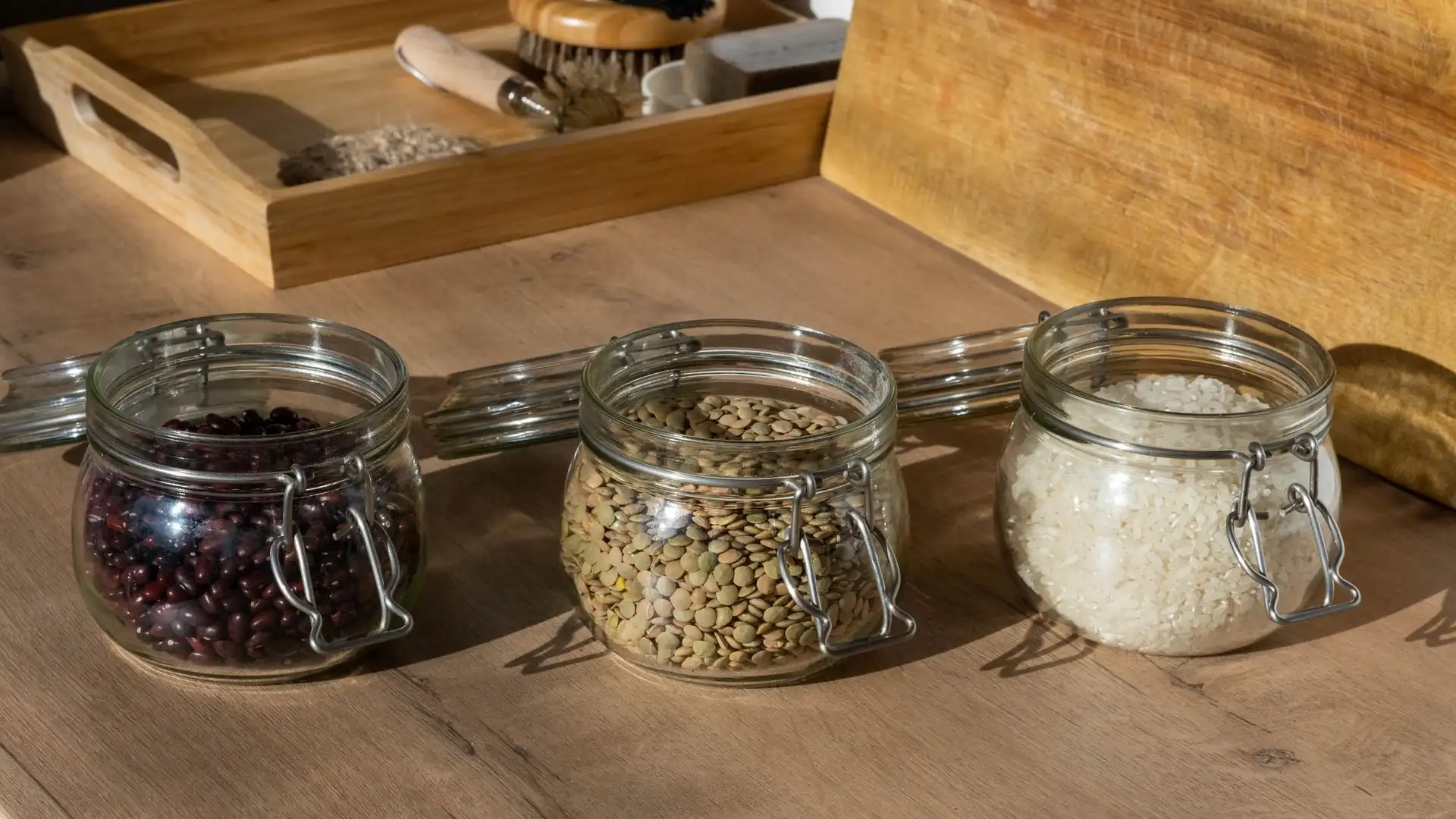
- 150 lbs Long-Grain White Rice (stores 30 years; avoid brown rice for long storage as surface oils oxidize)
- 100 lbs Rolled Oats (old-fashioned, for breakfasts and baking)
- 50 lbs Whole Dent Corn (for milling cornmeal and grits)
- 50 lbs Durum Wheat Semolina or Bulk Dry Pasta
Protein-Dense Legumes (Long-Term Mylar)
- 75 lbs Dry Pinto Beans
- 50 lbs Dry Black Beans
- 50 lbs Brown or French Green Lentils (cook fast without soaking)
- 25 lbs Green Split Peas (for hearty winter soups)
- 25 lbs Dry Garbanzo Beans (chickpeas for stews and hummus)
The Preserving & Baking Arsenal
- 50 lbs Pure Canning & Pickling Salt (non-iodized, zero anti-caking additives)
- 50 lbs Granulated White Sugar (for water-bath fruit preserving)
- 60 lbs Raw Unfiltered Honey (stored in glass or food-grade pails; indefinite shelf life)
- 10 gallons White Distilled Vinegar (5% acidity for water-bath pickling)
- 10 lbs Baking Soda (baking, leavening, and household cleaning)
- 2 lbs Instant Dry Yeast (vacuum-packed bricks; keep cool or frozen)
- 5 lbs Sprouting Seeds (alfalfa, broccoli, radish for fresh winter Vitamin C)
Stable Fats & Cooking Oils
- 35 lbs Pure Coconut Oil (solid at room temperature; resists rancidity for 3-5 years)
- 20 lbs Ghee (clarified butter with milk solids removed; shelf-stable for years)
- Home-Rendered Tallow or Lard (stored in sealed glass jars in cool root cellar)
Winter Freshness: The Sprouting Seed Strategy
The greatest threat to winter homestead nutrition is vitamin deficiency, particularly Vitamin C and live enzymes:
While root crops (potatoes, squash, carrots) provide carbohydrates and beta-carotene, fresh leafy greens vanish once snow covers the garden.
How to Grow Fresh Salad Greens in Winter
Stock sprouting seeds (broccoli, radish, clover, mung bean, and alfalfa):
- Place two tablespoons of sprouting seeds in a wide-mouth quart Mason jar fitted with a mesh screen lid.
- Soak overnight in clean water, drain, and rinse twice daily.
- In five to seven days on a kitchen counter, the jar fills with fresh, crunchy, nutrient-dense sprouts yielding high concentrations of Vitamin C, Vitamin K, and active plant enzymes without garden soil, sunlight, or electricity.
Organizing Your Homestead Procurement with Smart Grocery List
Procuring hundreds of pounds of agricultural staples from regional grain elevators, restaurant supply depots, and farm co-ops requires meticulous tracking.
Here is how Smart Grocery List keeps your homestead supply chain organized:
1. Weight and Container Specification Tracking
In Smart Grocery List on Google Play, attach precise packaging notes to every bulk entry (e.g., "Hard Red Wheat — 50 lb paper sack, food-grade grain only, target under $0.65/lb").
This prevents purchasing treated seed grain meant for planting rather than human consumption.
2. Tiered Inventory Audits
Use the app’s category architecture to separate your list into three distinct operational groups: Tier 1 Active Pantry, Tier 2 Canned Goods, and Tier 3 Long-Term Bulk Buckets.
You can check off completed Mylar buckets as they are sealed and stacked in your storage room.
3. In-Pantry Barcode Audits
When restocking commercial goods (canning lids, pectin, salt canisters, cooking oils), use the app’s built-in barcode scanner. Scanning your current storage room shelves establishes an exact replenishment count before driving two hours to town.
4. 100% Offline Performance in Remote Valleys
Homestead properties frequently sit outside cellular tower coverage. Smart Grocery List functions with complete local-first offline caching, ensuring your inventory checklists, recipe ratios, and grain weights remain instantly accessible in off-grid cabins and metal barn storage buildings.
5 Pro-Tips for Homestead Pantry Management
- Never Store Brown Rice for Long-Term Caches: Brown rice contains its natural outer bran and germ layer, which is rich in fatty acids that oxidize and turn rancid within 12 months. For 25-year storage, stock white Jasmine or parboiled rice.
- Elevate Buckets Off Concrete Floors: Concrete conducts moisture and cold. Always stack 5-gallon food buckets on wooden pallets or 2×4 boards to prevent condensation from accumulating on bucket bases.
- Use Pickling Salt for All Meat Curing and Canning: Standard table salt contains iodine and yellow prussiate of soda (an anti-caking agent) that turns pickling brine cloudy and discolors canned vegetables. Pure pickling salt contains zero additives.
- Label Every Bucket with Permanent Marker: Clearly write the commodity name, net weight, packaging date, and oxygen absorber count directly on the plastic bucket exterior and lid.
- Practice "Eat What You Store, Store What You Eat": Never buy 300 pounds of grain your family refuses to eat. Incorporate fresh-milled sourdough and lentil stews into your current weekly dinners so your household digestive system is accustomed to whole grains.
Summary & Your Next Step
Food resilience relies on agricultural staples, proper storage, and organized tracking. Establishing a 3-tier storage model, stocking whole wheat berries, sealing legumes in Mylar buckets, and using an offline checklist app creates an independent homestead kitchen.
Ready to build a resilient, long-term food reserve for your homestead? Download Smart Grocery List on Google Play today, organize your bulk storage checklist, and take command of your household food independence.
Frequently Asked Questions (FAQs)
1. How long do wheat berries last in 5-gallon buckets?
When sealed in 5-mil Mylar bags with appropriate oxygen absorbers inside food-grade 5-gallon buckets, whole intact wheat berries maintain nutritional value and baking quality for 25 to 30 years.
2. Why is white rice better for long-term storage than brown rice?
Brown rice retains its natural oily bran layer, which turns rancid within 6 to 12 months. White rice has had the bran removed, allowing it to store for up to 30 years when oxygen is eliminated.
3. Do you put oxygen absorbers in sugar and salt?
No. Oxygen absorbers should never be placed in sugar or salt. Absorbing oxygen creates a bricking effect that hardens sugar and salt into solid blocks. Store them with airtight Gamma Seal lids only.
4. How much grain does a family of four need for one year?
A common benchmark for a self-sufficient family of four is approximately 300 to 400 pounds of whole wheat berries, 150 pounds of rice, 100 pounds of oats, and 150 to 200 pounds of assorted dried legumes.
5. What cooking fats last longest off-grid without refrigeration?
Refined coconut oil and ghee (clarified butter) are the most stable off-grid cooking fats, lasting 2 to 5 years at room temperature without oxidizing because they lack water and milk solids.
6. Can you mill flour with a manual hand-crank mill?
Yes. Quality manual mills with hardened steel or stone burrs easily mill whole wheat berries into fine bread flour, requiring only arm power during electrical power outages.
7. What is the best salt for homestead food preservation?
Pure canning and pickling salt is ideal because it contains no iodine or anti-caking agents, ensuring clear pickling brines and safe fermentation.
8. How do you protect bulk food buckets from mice?
Store food in rigid food-grade HDPE plastic buckets with sealed lids, elevate buckets on pallets away from walls, and maintain clean storage rooms free of spilled grains.
9. What are the best sprouting seeds for winter vitamins?
Broccoli, radish, clover, alfalfa, and mung bean seeds sprout easily in Mason jars in 5 to 7 days, providing fresh Vitamin C and active enzymes in the dead of winter.
10. What is the best app for tracking homestead bulk food storage?
Smart Grocery List is the top mobile app for homesteaders. It tracks bulk bag weights, organizes inventory by storage tier, operates 100% offline in remote areas, and syncs across household devices.