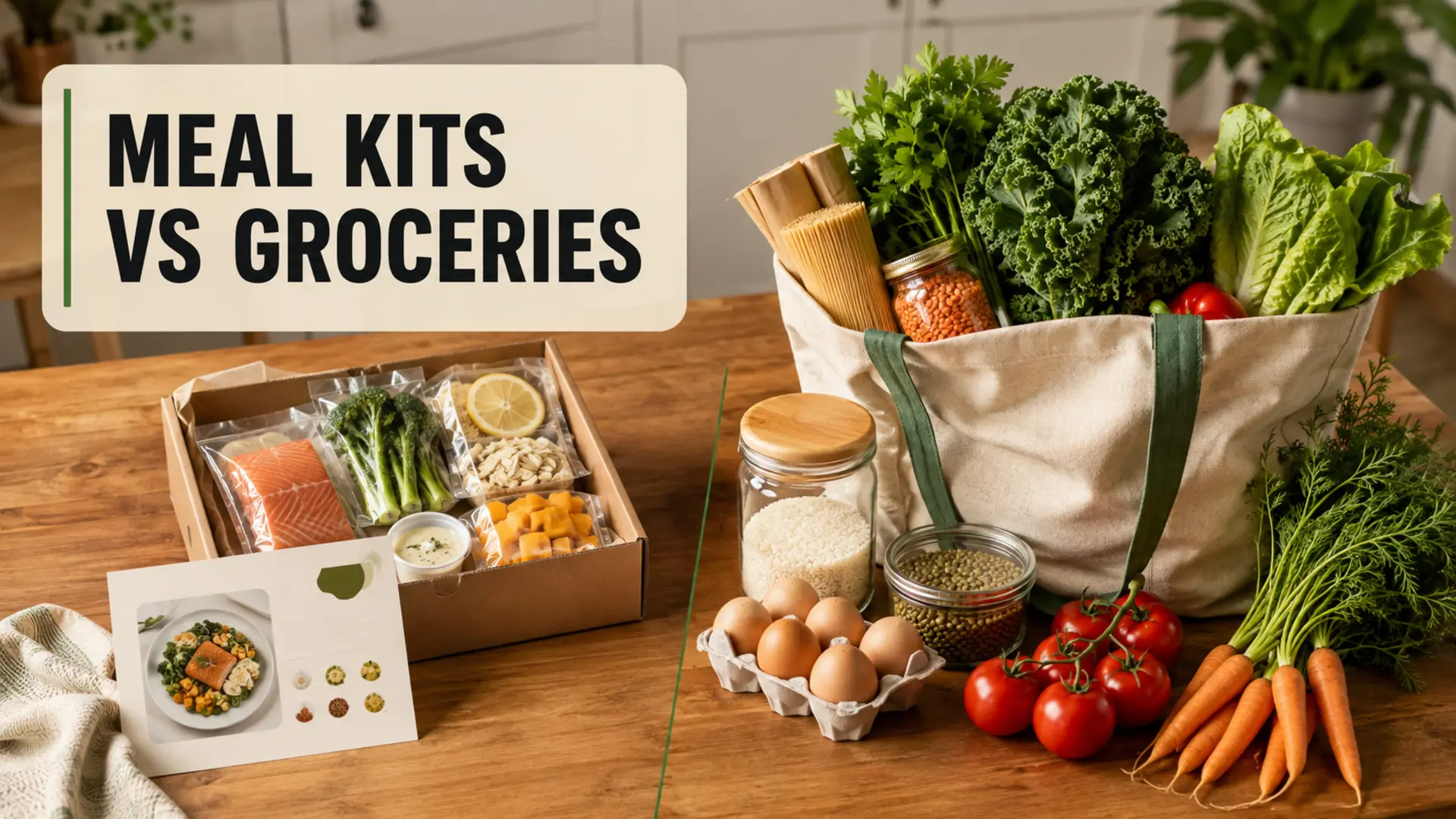
Meal kit delivery vs grocery shopping is not a one-price-fits-all comparison. Grocery shopping will often provide more flexibility and leftover ingredients, while a meal kit bundles measured ingredients, recipes and delivery convenience. The better value depends on the plan, local food prices, delivery charges, portions, waste and what the meal replaces.
Meal kit delivery vs grocery shopping at a glance
For a fair comparison, use the same number of servings and meals. Do not compare a meal-kit headline price with an entire grocery receipt that includes breakfast food, snacks or household supplies. Record every meal-kit charge, then price the closest grocery quantities you could realistically buy.
| Factor | Meal kit delivery | Grocery shopping |
|---|---|---|
| Ingredients | Measured for selected recipes | Purchased in available package sizes |
| Extra charges | May include delivery, service or minimum-order charges | May include transport, pickup or delivery costs |
| Leftovers | Often limited to planned portions | Ingredients may support additional meals |
| Planning | Recipes and quantities are chosen in advance | Shopper selects recipes, quantities and substitutions |
| Flexibility | Limited by the weekly menu and subscription rules | Broader choice of store, brand and package size |
Calculate the complete meal-kit cost
Start with the regular price after any introductory offer. Add delivery, service charges, taxes where applicable and optional upgrades. Divide that total by the number of servings you expect to eat—not merely the number advertised if portions do not match your household.
Meal-kit cost per eaten serving = total box cost ÷ servings actually eaten
- Check whether shipping is included.
- Include premium recipe or protein surcharges.
- Account for skipped-week rules and subscription deadlines.
- Exclude meals you cannot use because of schedule changes or dietary needs.
Calculate the comparable grocery cost
Price the closest realistic grocery basket, including only the portions used for those recipes. When a jar of spice, bag of rice or bottle of oil remains, allocate only the amount used and recognize that the balance can support later meals. Our guide to comparing groceries with unit pricing explains how to compare packages consistently.
Grocery cost per eaten serving = ingredients used for the meals ÷ servings actually eaten
Add transport, pickup or grocery-delivery charges when they are part of your normal shopping method. If the trip includes many other purchases, avoid assigning the full travel cost to only these dinners.
Look beyond the price per serving
Food waste and leftovers
Pre-portioned ingredients may help households that routinely discard specialty ingredients. Grocery shopping may be more efficient for households that reuse vegetables, herbs, grains and sauces across several meals. Neither format automatically eliminates waste; the result depends on storage, appetite and follow-through.
Time and decision effort
Meal kits can reduce recipe selection and some measuring, but they still require unpacking, refrigeration, cooking and cleanup. Grocery shopping takes planning and purchasing time, although a repeatable list and familiar meals can shorten the process.
Packaging and storage
Meal kits may arrive with insulation, cooling materials and individually packed ingredients. Review the provider’s local disposal or return instructions. Grocery packaging also varies, so compare the actual formats available rather than assuming one method always creates less packaging.
When a meal kit may offer better value
A meal kit can be reasonable when it replaces a more expensive restaurant or prepared-food purchase, helps someone learn a useful cooking technique, or prevents repeated waste from rarely used ingredients. It may also suit a short, unusually busy period. Judge it against the alternative you would genuinely choose that evening.
Compare those convenience costs with our broader guide to grocery delivery versus in-store shopping costs.
When groceries are likely the stronger choice
Groceries usually provide more control over brands, quantities, dietary needs and substitutions. They can also build a useful pantry and create leftovers for lunches or future dinners. This advantage depends on buying amounts you can store and use, not simply choosing the largest package.
A pantry audit before shopping can reveal which ingredients you already have and reduce the comparable grocery cost.
Run a two-week household test
- Choose the same number of dinners and servings for each method.
- Record every meal-kit or grocery charge.
- Note eaten servings, leftovers and discarded food.
- Track preparation, shopping and cleanup time if convenience matters.
- Compare the regular subscription price, not only a first-box promotion.
- Review whether either method triggered extra takeout or impulse purchases.
Use the receipt-review approach from our guide to calculating grocery cost per person to keep the comparison consistent.
Choose the option that replaces your real alternative
Meal kit delivery vs grocery shopping becomes clearer when you compare complete costs and actual behavior. A meal kit may be worthwhile as an occasional alternative to takeout, while planned grocery shopping may offer better flexibility for routine cooking. Use your own receipts, portions and waste for the decision rather than relying on a universal savings claim.