
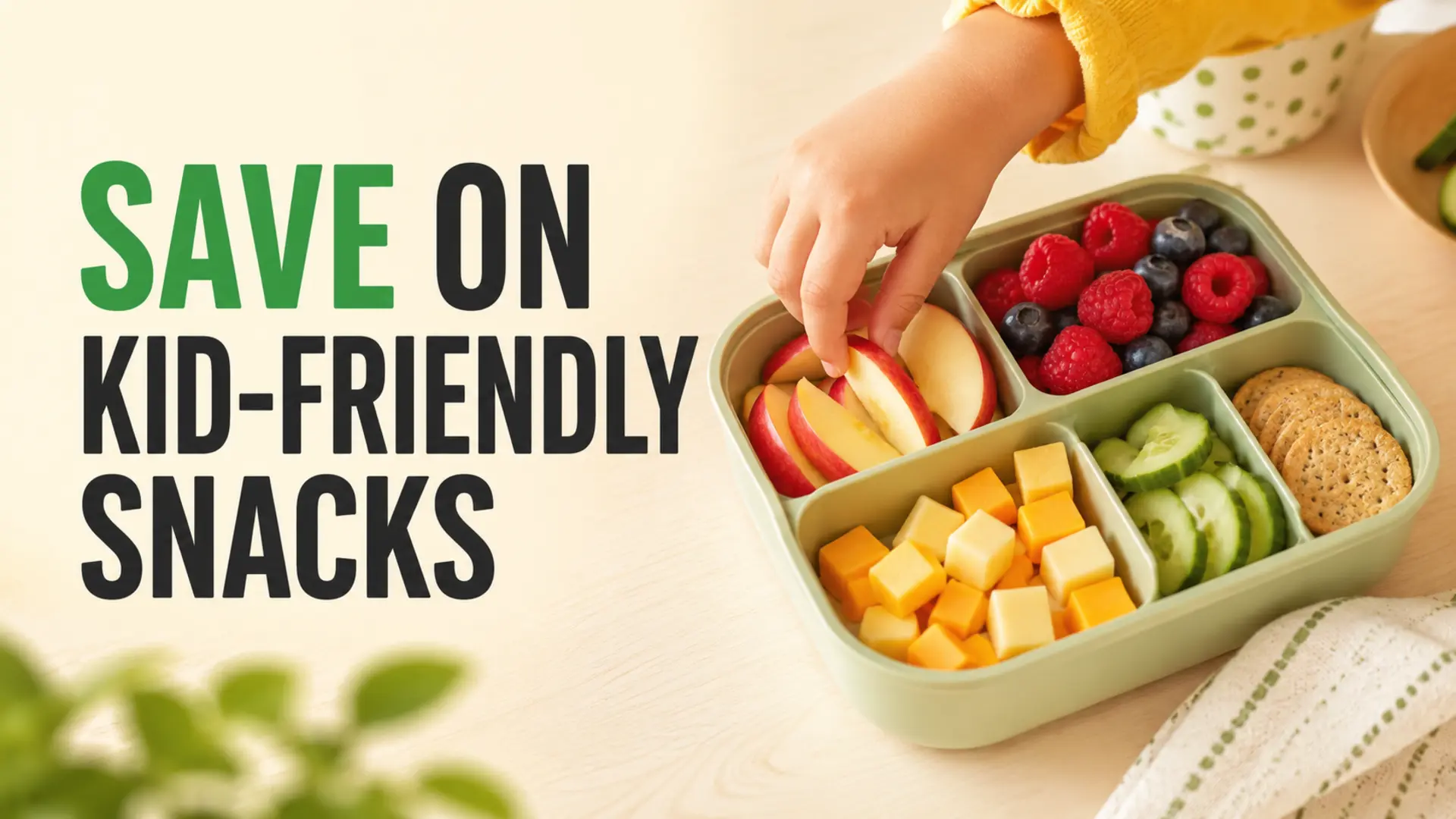
You can save money on kid-friendly snacks by planning a few flexible combinations, buying only quantities your family will finish, and portioning food at home when it is practical. The cheapest option is not always the best value if it is refused or spoils, so use your children’s preferences, dietary needs, and school rules to guide the list.
How to save money on kid-friendly snacks
Build snacks from two simple parts: a filling base plus fruit or vegetables. Examples include yogurt with berries, cheese with apple slices, hummus with soft vegetables, toast with seed butter, or crackers with a protein-rich dip. Adjust textures and portions for the child’s age.
Choose ingredients that also appear in meals. Yogurt can be used at breakfast, fruit can go into lunches, and vegetables can be served with dinner. This overlap reduces one-purpose purchases and supports the approach in our zero-waste meal plan.
Compare formats before buying
- Compare unit prices between individual packs and a larger container.
- Factor in convenience; a slightly higher price may be worthwhile when it prevents missed snacks or food waste.
- Choose package sizes based on realistic use, not the biggest advertised saving.
- Use reusable containers when they are permitted and convenient.
- Keep one shelf-stable backup for unexpectedly busy days.
Make a focused snack shopping list
Pick two or three options for the week rather than buying a different snack for every day. A basic list could include one fruit, one vegetable, one dairy or suitable alternative, one dip or spread, and one grain-based item. Check the pantry first and organize the final list with your regular weekly shopping template.
Simple preparation ideas
- Wash and portion fruit that stores well after cutting.
- Divide cheese and crackers into containers the night before.
- Mix plain yogurt with fruit rather than buying several flavours.
- Prepare a small batch of oat muffins and freeze extras if the recipe freezes well.
- Offer leftovers such as roasted vegetables or pita wedges as part of a snack plate.
Keep allergies and food safety in view
Follow school or childcare allergen rules and read labels every time, because formulations can change. Avoid assuming that a homemade version is automatically allergen-free. For young children, adapt shapes and textures to reduce choking risk and supervise eating. The American Academy of Pediatrics offers additional guidance for feeding young children.
If snack spending keeps growing, review what returns uneaten before buying more. The goal is not a dramatic savings percentage; it is a short list of safe, practical foods your family can use consistently. See our guide to meal-prep mistakes that waste money for more planning ideas.
Frequently Asked Questions
What are affordable kid-friendly snacks?
Start with foods your child already eats, such as fruit, yogurt, cheese, toast, oats, popcorn for age-appropriate children, vegetables with dip, or crackers with a protein food. Compare local prices and dietary needs.
Are homemade snacks always cheaper than packaged snacks?
No. Include ingredients, preparation time, storage, and waste. Homemade muffins or snack mixes can save money when batches are eaten or frozen, while packaged portions may reduce waste in some households.
How can I compare snack prices accurately?
Compare cost per ounce, gram, or actual portion, then consider how much will be eaten. A large package with a low unit price is poor value if it becomes stale or is rejected.
How do I make a weekly snack shopping list for children?
Choose two or three familiar options plus one flexible fresh item, check the school schedule and pantry, and list realistic quantities. Reuse ingredients across breakfasts, lunches, and snacks.
Are individually packaged snacks worth the extra cost?
They can be useful for travel, school rules, or portioning, but often cost more per unit. Compare them with dividing a larger pack into clean reusable containers where appropriate.
How can I stop kid snacks from going to waste?
Offer small portions, keep a visible “eat first” area, rotate rather than overstock choices, and note what returns from school. Buy less until actual demand is clear.
What inexpensive snack ingredients work across several meals?
Yogurt, fruit, oats, eggs, cheese, whole-grain bread, hummus, vegetables, and nut or seed alternatives where safe can serve breakfast, lunch, or snacks and reduce single-use purchases.
How should I handle food allergies when buying snacks?
Read the full label every time, follow the child’s allergy plan, prevent cross-contact, and confirm school policies. Do not assume “free from” wording applies to every allergen or facility.
Which snack foods can be choking hazards for young children?
Whole grapes, nuts, popcorn, hard raw vegetables, chunks of meat or cheese, and spoonfuls of nut butter can be hazardous. Use age-appropriate preparation and CDC choking-prevention guidance.
How do I involve children without letting the snack budget grow?
Offer two or three pre-approved choices within the budget and let the child select one. This gives useful control while keeping quantity, safety, and cost decisions with the caregiver.