
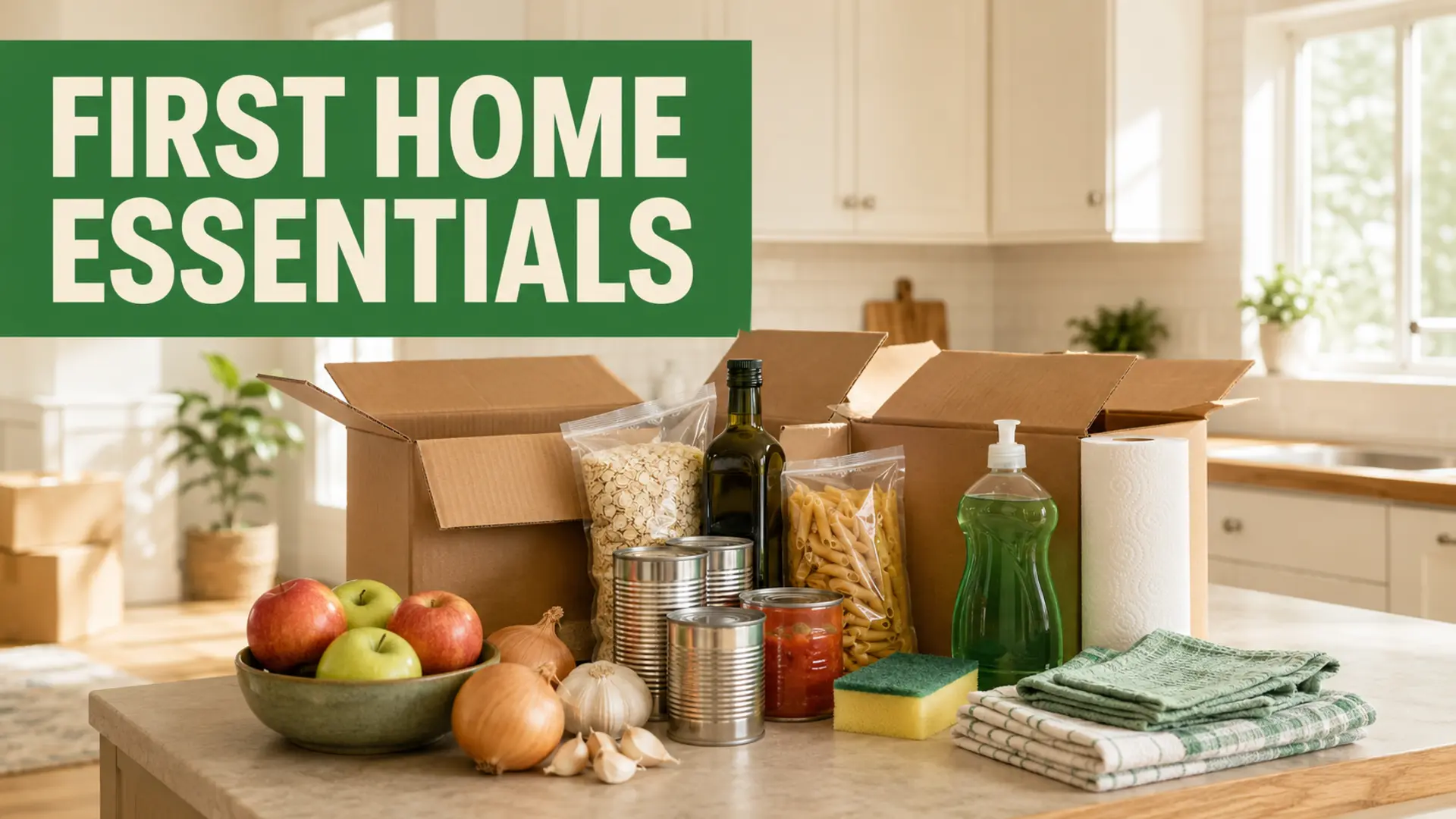
A first home essentials checklist is easier to manage when you separate immediate move-in needs from pantry basics and later purchases. Instead of trying to stock an entire home in one expensive trip, begin with what you will use during the first day, then add food and household supplies around your actual routines, storage space, and budget.
How to use this first home essentials checklist
Walk through the home before shopping. Check what the previous owner, builder, landlord, or moving company may already have provided, and note the appliances and storage you can use. Then mark each item as “need now,” “need this week,” or “buy later.”
- Need now: items required for hygiene, cleaning, hydration, and the first simple meals.
- Need this week: staples that support your usual breakfasts, lunches, and dinners.
- Buy later: specialty ingredients, backups, organizers, and tools you can choose after living in the space.
Move-in day household essentials
Pack a clearly labelled “open first” box so essential supplies do not disappear among moving cartons. Quantities should reflect household size and how quickly you can shop again.
- Toilet paper, hand soap, and clean hand towels
- Dish soap, sponge or brush, and drying cloth
- Trash or recycling bags that fit the home’s bins
- Paper towels or washable cleaning cloths
- An all-purpose cleaner suitable for the home’s surfaces
- Laundry detergent if washing clothes immediately
- Drinking water if tap-water access or quality is temporarily uncertain
- Basic first-aid supplies and regularly required personal items
Read product directions and never mix household cleaners unless the manufacturer explicitly says it is safe. Store chemicals away from food and beyond the reach of children and pets.
Food for the first day
Choose foods that require little equipment while the kitchen is still being unpacked. Match the list to allergies, dietary requirements, available refrigeration, and the appliances that are ready to use.
- Easy breakfast items such as oats, cereal, bread, fruit, yogurt, or eggs
- Simple lunch ingredients such as sandwich fillings, soup, salad components, or leftovers
- One uncomplicated dinner with a short ingredient list
- Familiar snacks and drinks
- Tea or coffee if it is part of the household routine
Avoid buying oversized packages before you know how much pantry and freezer space is available. If moving delays have interrupted refrigeration, confirm that chilled food has remained at a safe temperature before keeping it.
Foundational pantry staples
Build the pantry around meals you already cook rather than a generic master list. A practical starter selection might include:
- Grains and starches: rice, pasta, oats, bread, tortillas, or another staple your household uses.
- Canned or jarred foods: beans, lentils, tomatoes, fish, soup, or pasta sauce.
- Cooking basics: one versatile oil, salt, pepper, and a few frequently used seasonings.
- Baking basics: flour, sugar, baking powder, or other items only if you regularly bake.
- Quick meal components: frozen vegetables, eggs, approved proteins, and a dependable sauce.
Buy modest quantities first. The EPA recommends checking the refrigerator, freezer, and pantry before shopping, planning meals, and including quantities on a list to reduce overbuying and wasted food.
Refrigerator and freezer basics
Stock perishables only after confirming the refrigerator and freezer are operating correctly. Prioritize ingredients that can be used in more than one meal: a vegetable for dinner and lunch, a protein that can become leftovers, or fruit that works for breakfast and snacks.
Label leftovers and freeze what you will not use promptly. The guide to reducing household food waste can help turn a starter pantry into a more efficient routine.
Kitchen tools to confirm before buying food
- One saucepan and one frying pan
- A baking tray or oven-safe dish if needed
- A chef’s knife and stable cutting board
- Can opener, vegetable peeler, and basic utensils
- Plates, bowls, cups, and cutlery
- Food-storage containers
- Oven mitts and a kitchen towel
- A food thermometer for safely checking cooked foods
Purchase tools according to the appliances and meals you actually use. A first home does not need every gadget immediately.
Create a weekly restocking system
After the first week, review which items were used, ignored, or missing. Add frequently replaced products to a shared running-low checklist, and use the weekly grocery routine to plan future trips around current stock and upcoming meals.
Keep a small emergency supply separate from routine groceries. Ready.gov recommends including water and non-perishable food in a basic emergency kit, but the appropriate amount and contents depend on local guidance, household needs, climate, and likely hazards.
First-home shopping priorities
- Unpack hygiene, cleaning, and basic kitchen equipment.
- Buy food for the first day and one or two simple meals.
- Check available storage before adding pantry staples.
- Purchase modest quantities based on familiar recipes.
- Create a running list after learning what the household uses.
- Add specialty supplies and organizers only when a clear need appears.
A first home essentials checklist should make moving calmer, not pressure you to create a fully stocked home overnight. Start with immediate needs, build the pantry around real meals, check what you own before each trip, and let the list become more accurate as you settle in.
Planning resources: See the EPA’s food-waste prevention guidance and Ready.gov’s basic emergency supply kit.
Frequently Asked Questions
What should first-time homeowners buy before moving in?
Prioritize what makes the home safe and usable on day one: toilet paper, soap, towels, basic cleaners, trash bags, a few kitchen tools, drinking water, simple food, prescribed medicines, and any required safety supplies. Delay decorative and bulk purchases until you understand the space and your routine.
What groceries should I buy for the first night in a new home?
Choose a low-prep meal plus breakfast, drinks, and one snack. Sandwich ingredients, eggs, fruit, yogurt, soup, pasta, or a frozen meal can work depending on your equipment. Avoid a full pantry haul before confirming the refrigerator, stove, utensils, and food-storage containers are ready.
Which pantry staples are most useful in a first home?
Start with staples that match meals you already cook: rice or pasta, oats, canned beans, tomatoes, cooking oil, a few seasonings, and shelf-stable proteins. Buy small quantities first. A copied “ultimate pantry” list often creates waste when it includes ingredients the household rarely uses.
How much should I budget for first-home household essentials?
Set separate limits for immediate needs, groceries, cleaning supplies, tools, and later upgrades. Prices vary widely, so compare a local cart rather than using one universal figure. Keep an emergency margin for overlooked items such as light bulbs, basic hardware, or a replacement shower curtain.
Should I buy household essentials in bulk right away?
Usually only for products you know you use, can store safely, and can afford without crowding out urgent purchases. Unit price matters, but so do storage space, expiry, and cash flow. Learn the home’s actual consumption rate before buying oversized food, cleaners, or paper products.
What kitchen tools are essential for a first-time homeowner?
A safe knife, cutting board, saucepan, skillet, sheet pan, can opener, stirring utensil, measuring cup, plates, cups, cutlery, food containers, and a food thermometer cover many basic meals. Check what you already own and buy tools around real cooking habits instead of complete matching sets.
How can new homeowners avoid wasting food during the first month?
Plan only a few meals at a time, check the refrigerator before shopping, freeze suitable extras, and keep a visible “use first” area. The EPA recommends planning, proper storage, and shopping with a list to reduce household food waste.
What emergency supplies should be kept in a new home?
Build around local hazards and household needs: water, nonperishable food, flashlight, batteries, first-aid supplies, radio or alerts, chargers, medicines, copies of key information, and pet or infant items. Use the official Ready.gov emergency-kit checklist as a starting point.
How should I organize a first-home shopping list?
Split it into “before move-in,” “first 48 hours,” “first week,” and “later.” Within each stage, group items by store section. This protects the budget, reduces repeat trips, and keeps optional décor or gadgets from competing with food, hygiene, safety, and cleaning needs.
How do I create a weekly restocking routine after moving in?
Choose one shared list, add items when they reach a defined low point, and review the list beside current stock before shopping. After four weeks, note actual usage and adjust quantities. A routine based on consumption is more reliable than repurchasing every item on the original move-in list.