
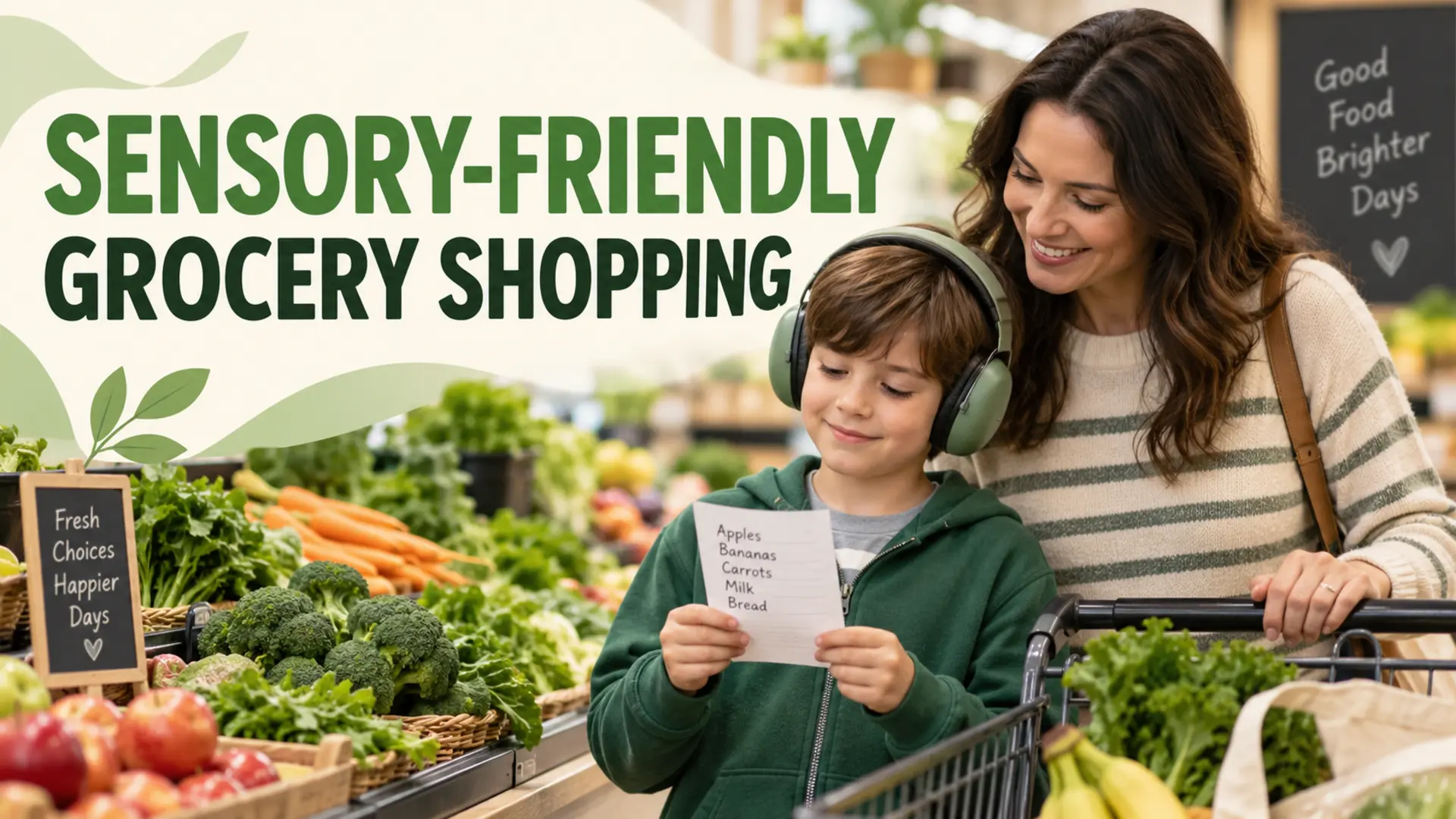
Sensory-friendly grocery shopping starts with understanding the individual child. Lighting, sound, crowds, smells, waiting, and unexpected changes can affect children differently, so the most useful plan is flexible and respectful.
Plan sensory-friendly grocery shopping together
Before leaving, explain where you are going, what the trip is for, and what will happen next. A short written or picture list can make the sequence more predictable. If possible, let the child help choose one familiar item.
- Keep the first trip small and focused.
- Check whether the store offers quieter hours.
- Preview the store online or visit a familiar location.
- Choose a time that usually works well for your household.
- Plan a calm exit if the trip becomes too demanding.
Bring familiar supports
Depending on the child, useful supports may include comfortable headphones, a cap or sunglasses, a familiar fidget, a visual schedule, or a preferred comfort item. Confirm that anything worn still allows safe awareness of carts, people, and announcements.
Keep the list and choices manageable
Group items by store section and decide which products can be substituted. Too many open-ended questions can be tiring, so offer a small number of meaningful choices. Our guide to a kid-friendly pantry can help children recognize familiar foods before the trip.
Use a flexible role
A child might hold the paper list, find one item, count produce, or place non-breakable packages in the cart. Participation should be optional and matched to age, safety, communication preferences, and energy that day.
Respond without blame
If signs of distress appear, reduce demands, move to a quieter area, or leave. A difficult trip is information, not failure. Avoid forcing exposure or withholding support to make a child “get used to it.” Families seeking individualized strategies can consult an occupational therapist or another qualified professional.
Create a backup grocery plan
When an in-store visit is not workable, another adult may shop, or the household may use pickup or delivery where available. See the guides to coordinating grocery trips with a caregiver and shopping with a newborn for practical handoffs and shorter lists.
Review what helped
Afterward, note which supports, store areas, and times were comfortable. Sensory-friendly grocery shopping improves through observation and adjustment, with the child’s communication and wellbeing guiding the next trip.