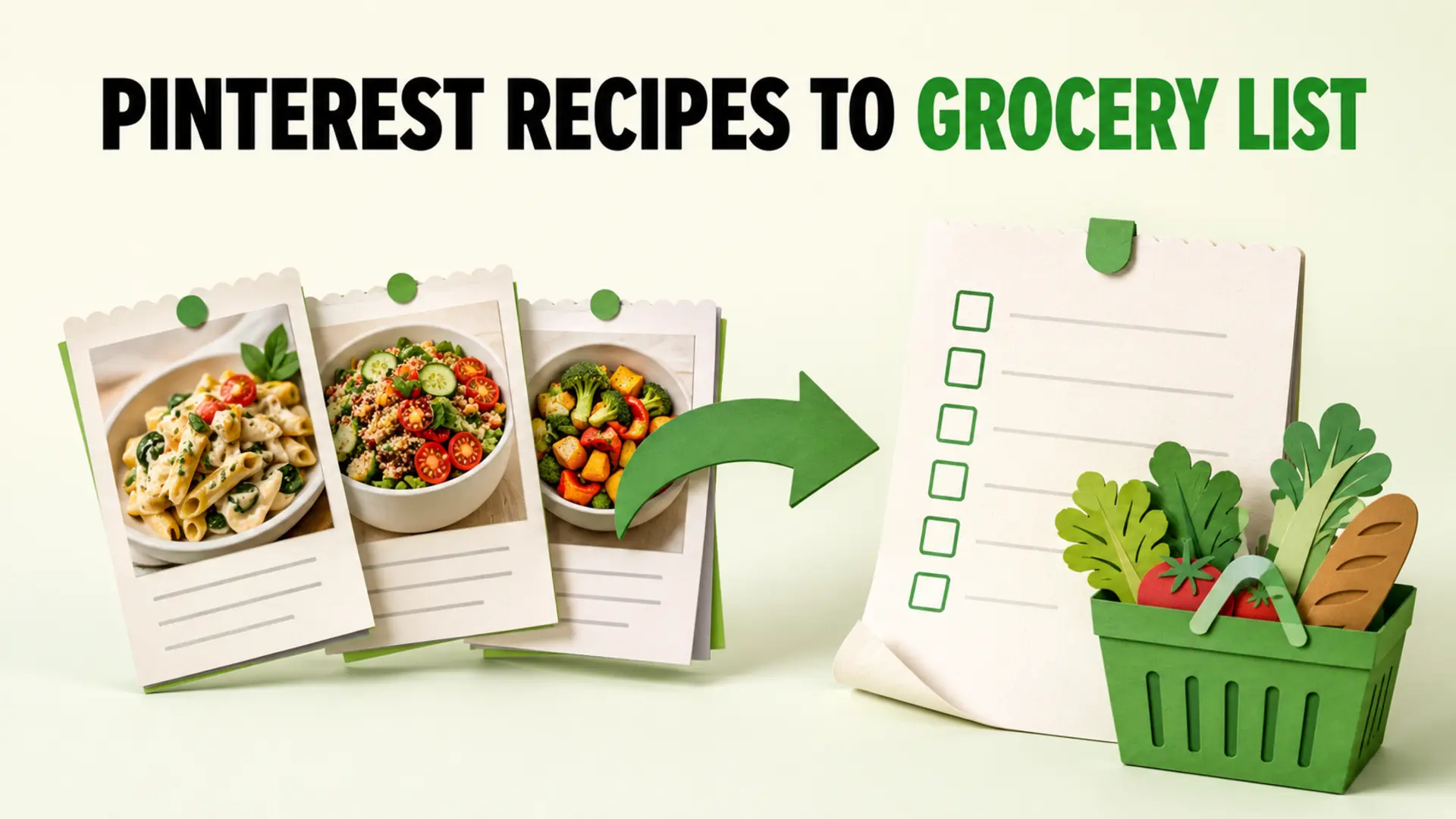
You can convert Pinterest recipes to a grocery list by collecting the recipes for one week, opening each original source, copying the verified ingredients, adjusting the servings, combining duplicates and removing items already at home. This takes a little review, but it produces a more dependable list than copying ingredients from an image or assuming an automated tool interpreted every quantity correctly.
Pinterest is useful for discovering and organizing ideas, but a Pin is not always the complete recipe. The original website may contain the current ingredients, substitutions, serving size and instructions. Begin with that source whenever it is available.
How to Convert Pinterest Recipes to a Grocery List
- Create a small board for the meals you plan to cook.
- Open and verify each original recipe source.
- Adjust ingredient quantities for the required servings.
- Copy the ingredients into one working list.
- Combine true duplicates without losing important details.
- Check the pantry, refrigerator and freezer before shopping.
You can complete this workflow in a notes tool, spreadsheet, recipe manager or grocery-list app. Automation may help when a tool supports it, but always review the final list yourself.
1. Create a “This Week” Recipe Board
A temporary board keeps the current plan separate from hundreds of saved ideas. Add only the meals you are realistically considering for the next shopping cycle.
- Limit the board to the number of meals you expect to cook.
- Include one flexible or leftover night when plans often change.
- Avoid saving several nearly identical recipes unless you intend to compare them.
- Move tested favourites into a permanent collection after cooking.
Pinterest’s official guide explains how to save Pins to a board or create a new board while saving. Interface details can change, so use its current help page if your screen looks different.
2. Open the Original Recipe Source
Tap or click through to the source website when the Pin provides one. Confirm that the page matches the food shown and that the recipe is complete.
- Check the recipe title and photograph.
- Find the listed serving size or yield.
- Read the full ingredient list, including garnishes and optional items.
- Review the instructions for ingredients mentioned only during a cooking step.
- Note whether an ingredient is divided and used more than once.
- Keep the source link with your plan for attribution and later reference.
Do not rely on a Pin description alone. It may summarize an older version, omit quantities or point to a page that has moved. If the original recipe is unavailable, choose another complete source instead of guessing essential details.
3. Adjust the Recipe for Your Household
Compare the recipe yield with the number of portions you need. Scaling is not always as simple as multiplying every line. Baking formulas, pan sizes, cooking times and concentrated seasonings may need special attention.
- Adjust ordinary ingredient quantities carefully.
- Leave room for leftovers when they are part of the meal plan.
- Round package-based items only after checking the available package size.
- Treat salt, chilli, extracts and strong spices cautiously.
- Use a tested recipe version when changing a baking formula.
Record the revised quantities beside the source instead of changing them from memory during shopping.
4. Copy Ingredients Into One Working List
Add each recipe’s ingredients to a single draft list. Preserve useful details such as fresh versus dried, weight or volume, package size and intended use.
For example, “tomatoes” may mean fresh tomatoes for a salad, canned tomatoes for a sauce or tomato paste for a stew. Combining them under one vague line can create a shopping mistake.
- Ingredient name
- Required quantity and unit
- Preparation detail when it affects what to buy
- Recipe name or source
- Optional status
5. Combine Duplicates Carefully
Merge ingredients only when they are truly interchangeable. Add quantities that use compatible units, and convert units cautiously when needed.
- Combine three onions and one onion into four onions when the type is compatible.
- Keep fresh basil separate from dried basil.
- Keep chopped tomatoes separate from tomato paste.
- Do not combine different cuts of meat simply because the animal is the same.
- Retain allergen and dietary notes attached to a specific product.
If a recipe ingredient is unavailable, the guide to ingredient swapping can help you evaluate a substitute by moisture, fat, acidity, structure or flavour.
6. Check What You Already Have
Review the pantry, refrigerator and freezer line by line. Check both quantity and condition. Having a nearly empty package is not the same as having enough for several recipes.
- Remove ingredients already available in sufficient quantity.
- Add staples that will run out after the planned meals.
- Check expiry or best-quality dates where relevant.
- Use older perishable ingredients earlier in the week.
- Confirm freezer ingredients are clearly labelled and suitable for the recipe.
The guide on how to make a grocery list provides a broader pantry-check and shopping workflow.
Organize the Final Grocery Checklist
Once the ingredients are verified, group the list in a way that matches how you shop. Common sections include produce, bakery, pantry, refrigerated foods, frozen foods and household items. Store layouts vary, so use categories that are useful in your usual shops.
Keep quantities visible and avoid turning every detail into a separate line. “Two cans of chickpeas” is easier to act on than two identical chickpea entries with no explanation.
Save Successful Recipes for Next Time
After cooking, note whether the recipe worked, which changes you made and whether the quantity was appropriate. Move reliable meals from the temporary board into an organized collection.
The guide to building a digital master recipe box explains how to standardize trusted recipes, preserve their sources and add useful tags. Over time, this reduces the number of untested recipes you need to review each week.
Connect Pinterest Ideas to a Real Meal Plan
A recipe board becomes more useful when it reflects the week’s schedule, available cooking time and planned leftovers. Select the meals first, then build the list—not the other way around.
Use the framework for planning 21 meals a week if you want to connect dinner ideas with repeatable breakfasts and lunches.
Review Before You Shop
- Every recipe links to a complete source.
- Serving quantities match the plan.
- Duplicate ingredients are combined correctly.
- Pantry items have been checked.
- Optional ingredients are clearly marked.
- Fresh items are scheduled before they lose quality.
- The final list is grouped for the way you shop.
To convert Pinterest recipes to a grocery list reliably, treat Pins as the starting point rather than the final ingredient source. Verify each recipe, adjust it thoughtfully, combine only genuine duplicates and check home supplies before buying anything.