
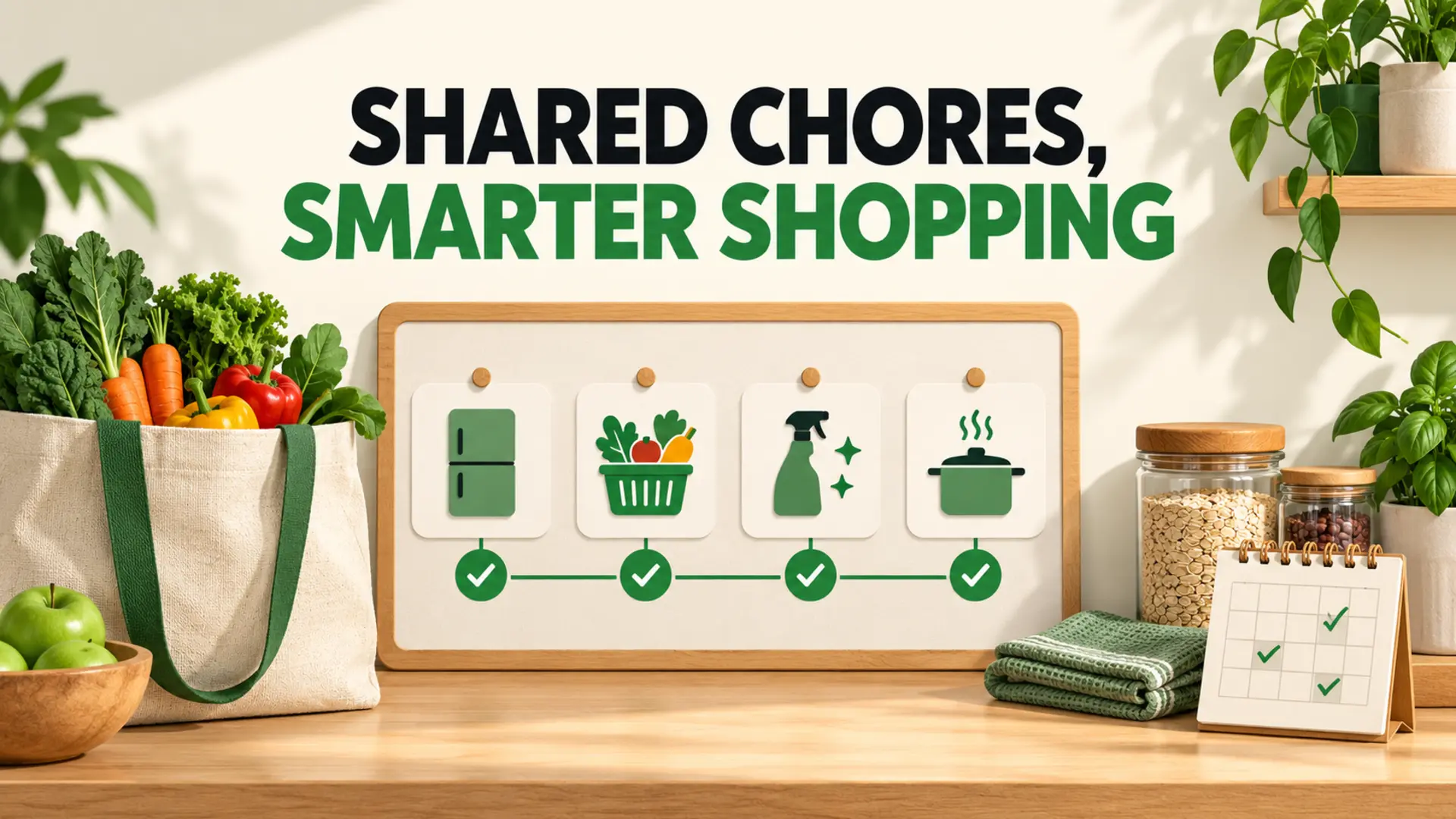
A shared chore and grocery workflow connects the small household tasks that happen before, during, and after a grocery trip. Instead of relying on one person to notice every empty item, clean the fridge, make the list, shop, unpack, and prepare food, the household uses clear responsibilities and simple handoffs.
Start With the Outcome, Not a Perfect Schedule
The goal is a kitchen that is ready for the food you buy and a grocery list that reflects what the household actually needs. You do not need a detailed timetable for every person. A short weekly rhythm is usually easier to maintain.
Choose one planning day, one likely shopping window, and a few recurring kitchen tasks. Adjust them around work, school, caregiving, mobility, and changing household needs.
Build a Shared Chore and Grocery Workflow
Divide the routine into four stages so everyone knows when their task matters:
- Check: review the refrigerator, freezer, pantry, household supplies, and upcoming meals.
- Plan: add needed items, confirm quantities, and note acceptable substitutions.
- Shop: follow the organized list and communicate any unavailable items.
- Reset: store groceries safely, clear packaging, and prepare only the foods that will be useful.
This sequence makes dependencies visible. For example, the refrigerator check needs to happen before the list is finalized, while clearing shelf space needs to happen before groceries arrive.
Assign Roles by Ability and Availability
Give each task to someone who can complete it safely and consistently. Adults may handle payment, transportation, raw meat, chemicals, sharp tools, and heavy items. Older children or teenagers may check pantry staples, date leftovers, organize shelf-stable goods, or help compare the list with what is already at home.
Younger children can participate with supervised tasks such as counting fruit, matching safe items to a picture list, or placing lightweight groceries in an accessible area. Avoid rigid age rules; skills and supervision needs vary.
If responsibility tends to fall on one person, the guide to using a shared grocery list to reduce household mental load offers a useful way to make planning work more visible.
Create Clear Handoffs Between Tasks
A handoff is the point where one person’s completed task allows the next person to begin. Keep it simple:
- The inventory checker adds low items before the list deadline.
- The meal planner confirms which meals will actually be prepared at home.
- The shopper records substitutions instead of leaving others to guess.
- The person receiving groceries clears suitable storage space.
- The household reviews unused food before building the next list.
Use specific task descriptions such as “check breakfast staples and add low items” instead of vague instructions like “help with groceries.”
Use One Shared Source of Truth
Keep the active grocery list in one agreed place, whether that is a shared digital list, a paper list on the refrigerator, or another accessible system. Avoid maintaining several competing lists because updates can be missed.
Agree on a few conventions: who can add items, whether quantities are required, how urgent items are marked, and what substitutions are acceptable. A shared running-low checklist can make restocking needs easier to capture between shopping trips.
Connect the Workflow to the Household Budget
The shopping role should include enough information to make practical choices. Note quantities, priority items, and substitution limits when needed. Keep personal preferences or dietary requirements visible rather than expecting the shopper to remember them.
For households sharing costs, decide how purchases will be recorded and who reviews them. The shared household grocery budget guide explains ways to set expectations without turning every purchase into a negotiation.
Make the Kitchen Ready Before Shopping
A short pre-shopping reset can prevent new food from being placed behind older items. Check dates and food condition, identify leftovers that can still be used safely, and create appropriate refrigerator or pantry space. Do not treat a visual date alone as a complete safety test; follow storage instructions and local food-safety guidance.
The U.S. Environmental Protection Agency recommends planning meals around what is already available and building the shopping list around the number of meals expected at home. Its guidance for preventing wasted food at home also suggests noting useful quantities rather than buying without a plan.
Handle Groceries With Safe, Practical Tasks
Put refrigerated and frozen items away promptly. Store raw animal products separately from ready-to-eat foods, follow package instructions, and keep cleaning products away from food. Produce can be prepared when it will genuinely make later meals easier, but washing everything immediately is not appropriate for every item because moisture may shorten storage life.
Canada’s Food Guide provides additional meal-planning and cooking guidance that can be adapted to foods and routines in many regions.
Review the Workflow Without Blame
Once a week, spend a few minutes checking what worked. Were tasks clear? Did anyone lack time, access, or information? Were too many quantities purchased? Move or simplify tasks that were repeatedly missed.
A shared chore and grocery workflow should reduce uncertainty, not create a scorecard. Keep one clear list, assign realistic responsibilities, make handoffs visible, and revise the routine when household circumstances change.
Frequently Asked Questions
What is a shared chore and grocery workflow?
It is a visible sequence connecting household tasks: notice an item is low, add it to one list, review inventory, shop, put groceries away, prepare food, and clean up. Each step has an owner or clear handoff so responsibility does not depend on one person remembering everything.
How do we divide grocery chores fairly?
Divide by time, ability, access, and preference rather than assuming equal task counts are equal effort. Include invisible work such as meal decisions, checking stock, substitutions, and noticing shortages. Review the workload regularly and rebalance it when schedules change.
What household grocery tasks can children do?
Children can add familiar items to a list, count fruit, match labels, unpack lightweight goods, or place safe products in assigned bins. Increase responsibility gradually. Adults should retain control of payment, raw meat handling, chemicals, glass, heavy loads, sharp tools, and allergy-sensitive decisions.
How can a shared list reduce household mental load?
One accessible list moves requests out of private memory and gives everyone a place to record needs immediately. It works only when household members actually add items, check before buying, and share decisions. A tool cannot fix unclear ownership without agreed habits.
What should happen before someone goes grocery shopping?
The assigned person should review the calendar, planned meals, current stock, budget, quantities, and substitution rules. Confirm allergy or medical requirements and remove duplicates. This short handoff prevents the shopper from interpreting vague entries while standing in the aisle.
How should groceries be put away as part of the workflow?
Refrigerate and freeze perishables first, separate raw animal foods from ready-to-eat foods, rotate older products forward, and place allergy-safe items in their agreed zones. The person unpacking should note damaged packages or missing items so the list stays accurate.
How can couples avoid arguing about incomplete grocery tasks?
Define what “done” means for each task. Shopping may include checking substitutions, saving the receipt, unpacking, and updating the list—not merely arriving home with bags. Review the process at a calm time and correct the handoff instead of assigning blame during a rushed moment.
Should one person own the whole grocery process?
One coordinator can provide consistency, but concentrating every decision creates dependency and burnout. A better system gives one person temporary oversight while others own specific categories or stages. Document preferences and substitutions so another household member can take over when needed.
How often should a chore and grocery workflow be reviewed?
Use a five-minute weekly check and a deeper monthly review. Discuss missed items, duplicate work, waste, overspending, and tasks nobody understood. Change one friction point at a time; rebuilding the entire system every week makes the workflow harder to learn.
What is the best tool for a shared household workflow?
The best tool is one all participants can access and will update: a shared app, whiteboard, spreadsheet, or paper checklist. Choose based on household habits, not feature count. Keep one source of truth and avoid copying the same task across several systems.