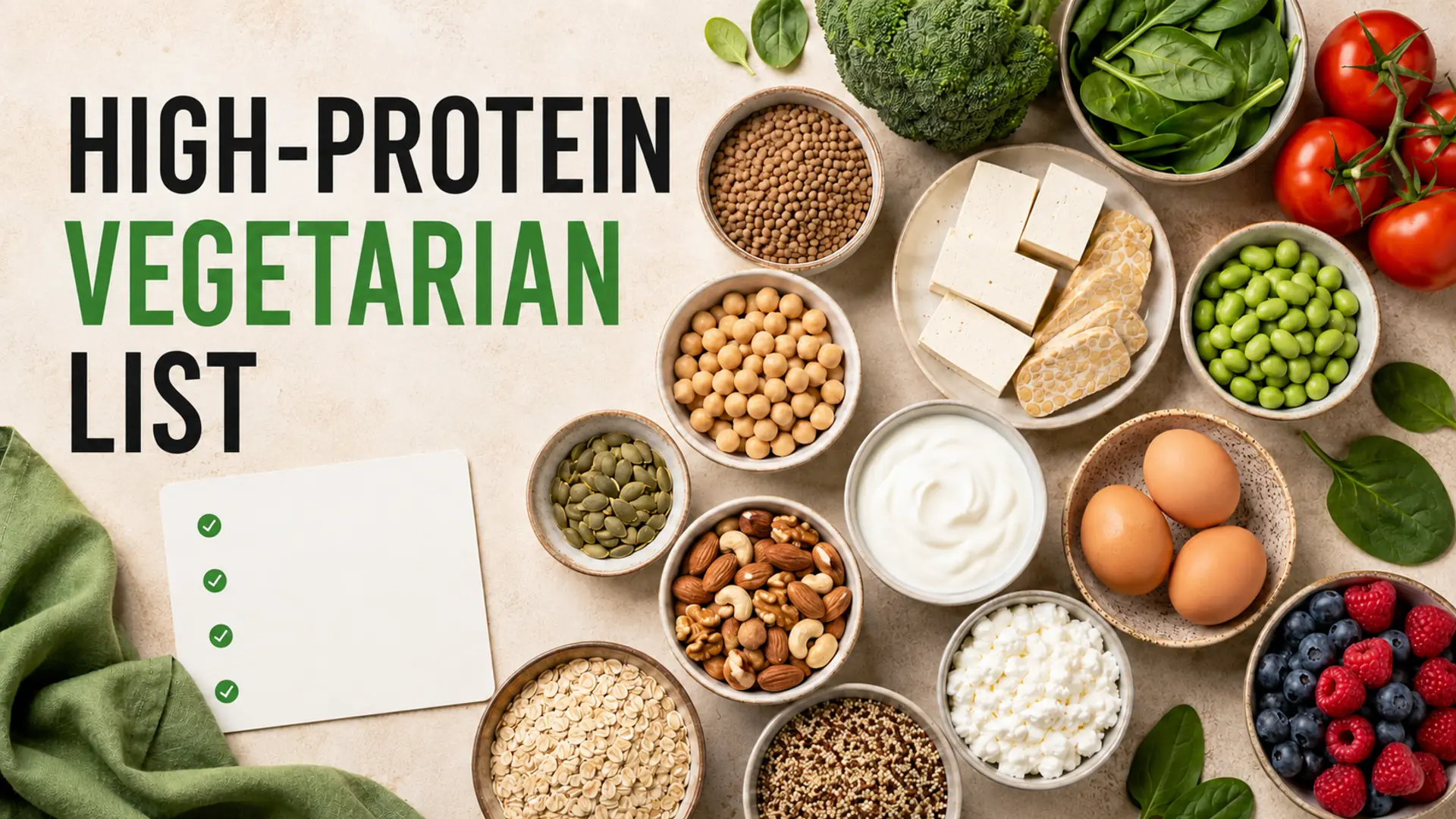
A useful high-protein vegetarian shopping list includes several protein sources that fit your version of vegetarian eating, plus vegetables, fruit, grains or other starches, flavour-building ingredients and practical snacks. It should not force every reader toward the same gram target or depend on protein powder for every meal.
Protein needs vary with body size, age, activity, pregnancy, health conditions and training goals. Use official guidance for your country and seek advice from a registered dietitian or qualified clinician when you need an individualized target—especially for athletic performance or medical nutrition.
Build a High-Protein Vegetarian Shopping List
Start by deciding whether your diet includes dairy, eggs or neither. Then choose three or four main protein foods that can appear across several meals. The NHS vegetarian-diet guide identifies pulses, eggs, nuts and seeds among useful protein sources while emphasizing overall dietary variety.
Beans, peas and lentils
- Lentils, chickpeas, black beans or local alternatives
- Split peas and dried bean mixes
- No-salt-added canned pulses when available
- Bean- or lentil-based pasta, after checking the label
Dry and canned versions can both be useful. Compare cooking time, sodium, price and the amount your household will use. Drain and rinse canned pulses when appropriate, but continue to use the nutrition label for planning.
Soya foods and other alternatives
- Tofu in a texture suited to the recipe
- Tempeh
- Edamame or soya beans
- Unsweetened fortified soya drinks or yoghurt alternatives
- Vegetarian meat alternatives used selectively
Protein and sodium vary considerably among prepared alternatives, so compare realistic portions. “Organic,” “natural” and “plant-based” labels do not guarantee a particular protein level or overall nutritional profile.
Eggs and dairy, if included
- Eggs
- Plain yoghurt or Greek-style yoghurt
- Cottage cheese or other suitable cheeses
- Milk or lactose-free alternatives
Check protein, saturated fat, sodium, added sugar and serving size according to your needs. Full-fat, reduced-fat and non-fat products have different culinary uses; no single version is automatically right for everyone.
Nuts, seeds and spreads
- Peanuts, almonds, walnuts or local nuts
- Pumpkin, sunflower, chia, flax or hemp seeds
- Nut or seed butter without unwanted additions
These foods contribute protein alongside fats and other nutrients. They are energy-dense and may present allergy or choking risks, so choose suitable forms and portions for the people eating.
Choose Grains and Vegetables That Support Complete Meals
Oats, rice, wheat, barley, quinoa, buckwheat, potatoes and other staples contribute varying amounts of protein, but they also provide energy and make meals satisfying. Vegetables, fruit and fortified foods help the list cover broader nutrient needs rather than becoming a collection of isolated high-protein products.
You do not need to combine specific plant proteins at every meal to create a “complete protein.” Eating a varied diet across the day generally supplies different amino acids. People with limited diets or higher needs should obtain personalized advice.
Use Labels Instead of Fixed Internet Totals
Protein varies by brand, recipe, moisture content and serving size. A cup, block or package is not a standard quantity across products. Compare the protein listed for the amount you expect to eat, then review sodium, sugars, fats, allergens and price.
- Confirm the serving size and servings per package.
- Compare similar products using the same quantity.
- Check whether a product needs refrigeration or preparation.
- Read allergen statements every time a package changes.
- Choose products that fit meals, not only the highest number.
A Flexible Vegetarian Meal Formula
Build each main meal from a protein food, a grain or starch, vegetables and a flavour component. Add a second protein source when it suits appetite and individual goals.
- Lentil curry with rice, vegetables and yoghurt or a suitable alternative
- Tofu and edamame stir-fry with noodles and mixed vegetables
- Egg and bean tacos with cabbage, salsa and avocado
- Chickpea pasta with tomatoes, greens and cheese or nutritional yeast
- Greek-style yoghurt or fortified soya yoghurt with oats, fruit and seeds
For more combinations, use the site’s high-protein meal-prep plans or the guide to vegetarian meal-prep staples.
Plan Quantities Around Meals, Not Aspirational Packages
Decide how many breakfasts, lunches, dinners and snacks you will realistically prepare. Multiply ingredients using verified recipe yields, then check what is already at home. Avoid buying several large packages simply because they carry high-protein marketing.
If portions need adjustment, follow the method for scaling meal-prep recipes. Record leftovers and unopened products so the next list better matches your routine.
Do You Need Protein Powder?
Protein powders can be convenient for some people, but they are not required for a vegetarian diet. Products differ in protein, sweeteners, allergens, additives and third-party testing. Supplements should complement—not replace—a varied diet. Discuss supplement use with a qualified professional when you take medication, have a health condition, are pregnant or are planning it for sport.
Final Shopping Checklist
- Two or three pulse or soya options
- Eggs and dairy or fortified alternatives, if included
- One or two nuts, seeds or spreads
- Grains or starches for planned meals
- Several vegetables and fruits
- Herbs, spices, sauces and cooking fats
- Convenient snacks that fit the week
- Supplements only when appropriate and verified
A strong high-protein vegetarian shopping list is varied, label-aware and realistic. Choose foods that work together, adapt quantities to actual meals and avoid universal macro prescriptions. When protein targets are connected to training, pregnancy, ageing or health conditions, use individualized professional guidance.