
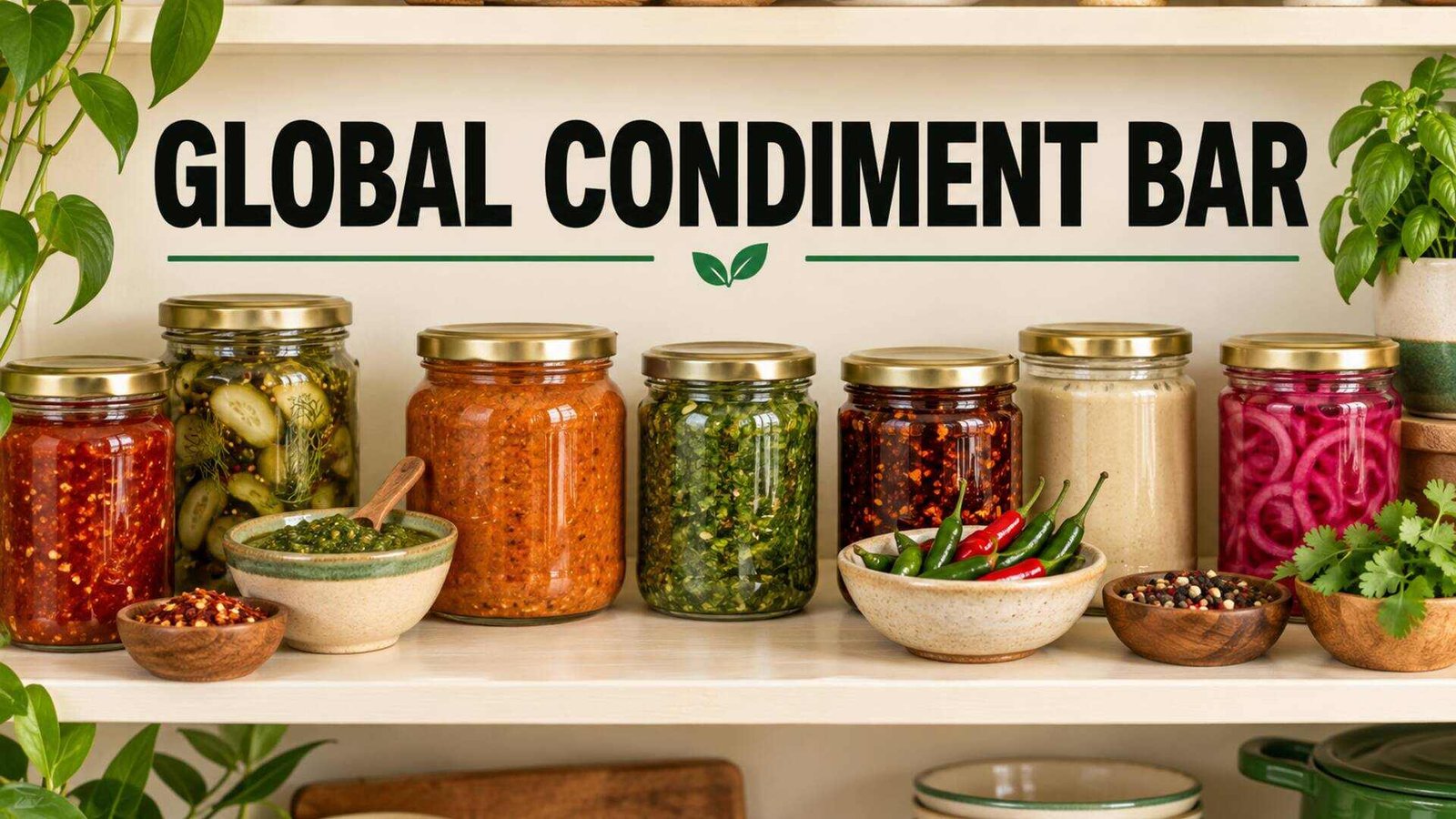
A global condiment bar can make everyday meals more flexible, but it does not need twelve open jars at once. Choose a small rotation that suits the dishes your household cooks, and keep each condiment’s cultural context, ingredients and storage needs clear.
Global condiment bar ideas
- Chile oils and crisp: compare heat, oil type, allergens and refrigeration instructions.
- Fermented pastes: products such as ssamjang vary in soy, wheat, chile and seasoning.
- Herb sauces: chimichurri and green chutneys are distinct preparations with short, recipe-dependent storage lives.
- Seed and nut sauces: tahini sauces, salsa macha and related condiments need careful allergen labelling.
- Pickles and relishes: use commercially prepared products or tested preservation recipes and refrigerate after opening when directed.
Organize and label condiments safely
Keep containers clean, date homemade batches and follow package or tested-recipe storage guidance. Do not rely on appearance or a generic shelf-life rule. Prevent cross-contact by using clean utensils, especially when diners have allergies.
For complementary seasonings, see the global spice blend guide. The FIFO pantry method can help rotate unopened and refrigerated items.
Build a useful rotation
Begin with two or three condiments connected to meals already in your plan. Keep original names and regional context rather than presenting sauces from different traditions as interchangeable. Check fish, shellfish, soy, wheat, sesame, mustard, egg and nut allergens on every label.
A compact global condiment bar is easier to use and monitor. Replace products as they are finished instead of opening a large collection that may be wasted.