
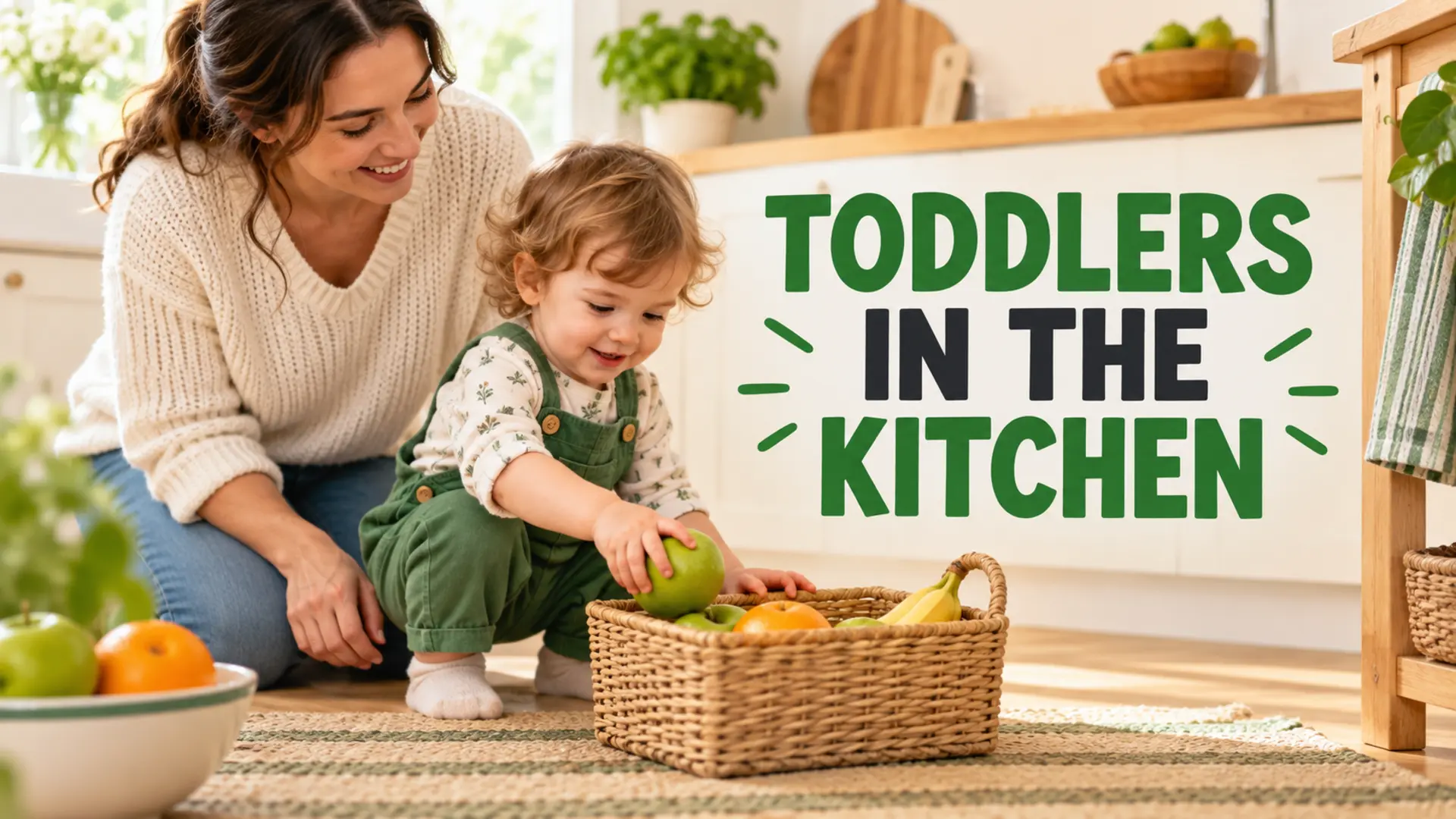
Parents can involve toddlers in kitchen prep through closely supervised tasks that match the child’s abilities. The aim is participation, not speed or independence. Keep toddlers away from hot surfaces, sharp tools, heavy containers, raw animal foods, cleaning chemicals, and choking hazards.
How to involve toddlers in kitchen prep safely
Choose one simple task, demonstrate it, and stay within arm’s reach. Use a stable floor-level workspace or another setup designed and positioned according to its manufacturer’s instructions. Stop when the child is tired, impulsive, or no longer interested.
Safe grocery-unpacking jobs
- Place lightweight, unbreakable packages in a basket.
- Move bananas or oranges one at a time with supervision.
- Match packaged items to simple picture or word labels.
- Hand nonperishable items to an adult for storage.
Adults should store cans, glass containers, raw meat, eggs, medicines, alcohol, and cleaning products. Refrigerated food should be put away promptly.
Age-appropriate food-prep ideas
- Tear washed lettuce into a bowl.
- Rinse sturdy produce under adult control.
- Stir room-temperature ingredients in a wide bowl.
- Mash soft food with a fork while seated.
- Use a salad spinner with an adult.
No child-safe tool is incapable of causing injury. Introduce any cutting tool only when appropriate for the individual child, follow the product instructions, and supervise continuously.
Create a safer workspace
Turn pot handles inward, keep appliance cords out of reach, lock hazardous cabinets, and separate the activity from the stove. A learning tower is not automatically safe; it must be stable, used as designed, and supervised. Floor-level tasks are often simpler.
Use hygiene habits toddlers can practice
Wash hands together before and after food preparation. Toddlers should not handle raw meat, poultry, seafood, or eggs. Use clean utensils and prevent tasting from tools that return to shared food.
Keep expectations realistic
Participation may create spills and take longer. Offer short choices—such as “put the apples in the bowl or place napkins on the table”—and calmly finish the task when attention fades. Avoid claims that kitchen participation will automatically correct picky eating.
Connect the task to household routines
A kid-friendly pantry organization plan can identify safe storage areas. For meal ideas, explore easy slow cooker meals, with adults completing all hot and sharp steps.
Finish with a safe cleanup job
Toddlers can carry a cloth to an adult, place an unbreakable bowl near the sink, or return lightweight items to a basket. Adults should handle cleaners, broken items, knives, and contaminated surfaces.
When you involve toddlers in kitchen prep, close supervision and simple tasks matter more than special equipment. Keep the experience brief, calm, and suited to the child in front of you.
Frequently Asked Questions
What kitchen tasks can a toddler safely help with?
With close adult supervision, toddlers can rinse sturdy produce, tear lettuce, move pre-measured ingredients, stir a cool mixture, carry lightweight packages, or place unbreakable items in a basket. Keep tasks brief and matched to the individual child’s coordination and ability to follow directions.
Can toddlers help unpack groceries?
Yes. Offer light, unbreakable, shelf-stable items and show exactly where they go. Adults should handle raw meat, eggs, glass, cans with damaged edges, heavy containers, hot foods, medicines, cleaners, and anything requiring immediate refrigeration when supervision would be divided.
How close should supervision be during toddler food prep?
An adult should remain within reach and actively watch the child. Toddlers do not reliably recognize heat, sharp edges, contamination, or choking risks. Set up all materials first so the adult is not turning away to search for tools while the child works.
What tools are safe for toddlers in the kitchen?
Use sturdy bowls, wooden or silicone spoons, a damp cloth, and child-sized tools designed for the task. Product labels do not replace supervision. Keep adult knives, graters, peelers, appliances, cords, hot pans, glass, and heavy cookware inaccessible.
How can toddlers practice handwashing before cooking?
Help them wet hands, use soap, scrub all surfaces for about 20 seconds, rinse, and dry with a clean towel. Supervise water temperature and the sink area. Repeat after touching raw animal foods, garbage, pets, coughing, sneezing, or using the toilet.
Can a toddler rinse fruits and vegetables?
A toddler can help rinse firm produce under cool running water while an adult supervises and completes the cleaning. Do not use soap or household cleaners on produce. Adults should handle cutting, damaged areas, and produce that needs more careful preparation.
How do I set up a safer toddler kitchen workspace?
Choose a stable, uncluttered area away from the stove, oven, knives, and raw meat. Use a secure learning tower or appropriate position according to its instructions, keep floors dry, turn pot handles inward, and place only the current task within reach.
What should I do if my toddler loses interest mid-task?
End the activity without forcing completion. Move the child to a safe area, then finish food storage, cooking, and cleanup. A two-minute successful job builds participation better than extending the activity until the child becomes tired, frustrated, or unsafe.
Can toddlers taste ingredients while helping?
Only offer foods that are safe, age-appropriate, and ready to eat. Do not allow tasting raw flour, dough containing raw egg, raw meat, unpasteurized products, or choking hazards. Seat the child upright and supervise eating rather than letting them walk around with food.
What cleanup jobs can toddlers do?
They can place safe utensils in a tub, wipe a low surface with water, carry a cloth to the laundry, or return lightweight items. Adults must handle chemicals, contaminated surfaces, broken items, sharp tools, hot cookware, and final sanitizing where required.