
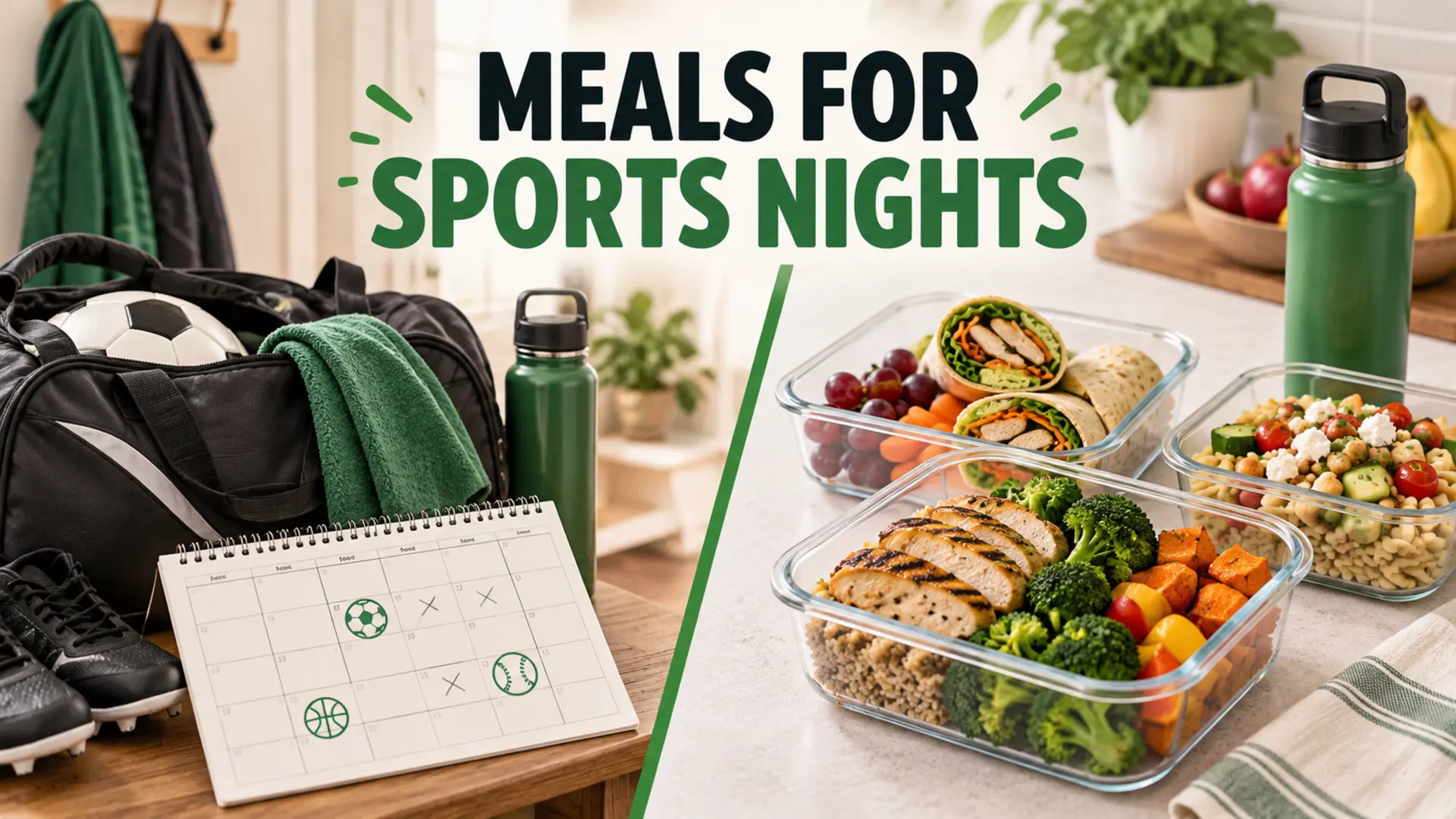
Meal planning for kids’ sports works best when the family calendar, travel time, food safety, and individual preferences are considered together. The aim is a dependable selection of meals and snacks—not a rigid plan or a promise of athletic performance.
Start meal planning for kids’ sports with the calendar
Mark practices, games, departure times, school events, and late workdays. Then identify which evenings need a portable meal, an early dinner, a quick meal after returning home, or help from another adult.
Choose flexible meal components
Cook ingredients that can be served in different ways across the week:
- Rice, pasta, potatoes, tortillas, or another familiar base
- Cooked chicken, beans, eggs, tofu, fish, or another suitable protein
- Washed produce and simple cooked vegetables
- Yogurt, fruit, dips, or other household staples
These can become bowls, wraps, pasta dishes, soups, or snack-style plates. The easy slow-cooker meal guide offers additional adaptable options.
Match the meal to the timing
Appetite and comfort vary. Before an activity, some children prefer a familiar meal with enough time to digest; others do better with a smaller snack and a meal later. Follow guidance from the child’s healthcare professional or sports program when medical or performance nutrition needs are involved.
Pack food for safe stops
Do not encourage children to eat while a vehicle is moving, because supervision is limited and choking risk can be harder to manage. Plan a safe stop. Pack cold perishables with adequate cold sources, and use an appropriate insulated container for foods intended to remain hot.
Keep hydration practical
Bring clearly labeled water bottles and make them easy to refill. Needs vary with age, activity, conditions, and health; avoid universal fluid targets. Coaches or healthcare professionals can advise when weather or medical concerns require a specific plan.
Make the grocery list do the work
Organize the list by produce, refrigerated items, pantry staples, and freezer foods. Include two backup meals for schedule changes. For morning practices or tournaments, the family breakfast prep guide can simplify early departures, while the school lunch prep guide covers insulated packing.
Share the responsibilities
Assign calendar checks, grocery updates, cooking, container packing, and cleanup according to age and availability. A visible plan helps another caregiver step in without guessing.
Review the plan each week
Notice which foods traveled well, what came home uneaten, and which nights felt rushed. Meal planning for kids’ sports becomes more useful when portions, timing, and responsibilities change with the schedule.