
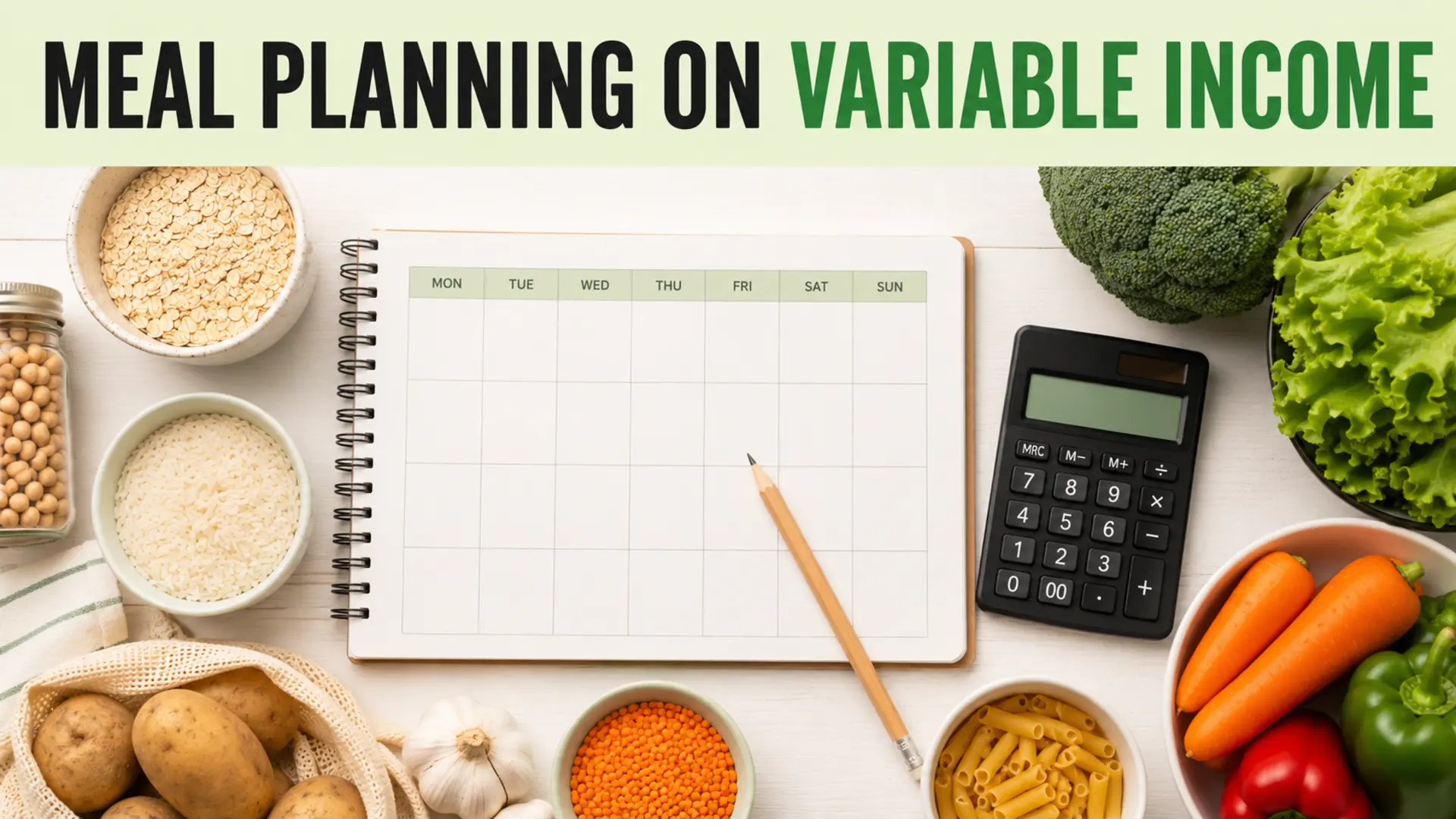
To meal plan on a variable income, build your regular grocery routine around a conservative baseline rather than your best earning month. Keep flexible pantry and freezer ingredients available, separate essentials from optional purchases, and adjust the plan only after you know what money is available. This creates stability without forcing an unrealistic fixed menu.
How to meal plan on a variable income
Review several months of income and essential expenses, then choose a grocery amount that remains manageable during a slower period. Household size, dietary needs, food prices, and access to stores all affect the number, so use your own records rather than a universal per-person figure.
A shared household grocery budget can make this easier when more than one person shops. Decide which purchases are essential, which can wait, and how you will handle an unusually low-income month.
Build a three-level grocery list
- Level 1—essentials: foods required for planned meals, dietary needs, and household basics.
- Level 2—flexible additions: extra produce, snacks, convenience items, or ingredients for variety.
- Level 3—stock-up items: products worth buying only when the price, storage space, and cash flow make sense.
Shop Level 1 first. Add the other levels only when the week’s budget allows. Organizing the list by supermarket aisle also makes it easier to finish the essential part of the trip without browsing every section.
Use flexible meals instead of rigid recipes
Plan meal formats that tolerate substitutions: grain bowls, soups, pasta, curries, tacos, omelettes, and tray bakes. Choose a base, a protein, vegetables, and a sauce or seasoning. If one ingredient becomes expensive, replace it without abandoning the full plan.
Check the pantry and freezer before writing the menu. A small reserve of foods your household genuinely eats can bridge delayed payments, but buying excessive bulk quantities can tie up money and create waste. Our guide to zero-waste meal planning explains how to plan around food already at home.
Adjust the plan when income changes
In a stronger month, consider replenishing used staples, replacing depleted freezer items, or setting aside part of the grocery allocation for a future slow month. In a leaner month, simplify recipes, use priority ingredients first, and pause nonessential stock-ups. Avoid treating a higher-income week as permission to buy food without a plan.
A repeatable weekly routine
- Check available money and upcoming bills.
- Review food already at home.
- Choose flexible meals that share ingredients.
- Write an essentials-first list with estimated prices.
- Review actual spending and carry the lesson into next week.
A good variable-income meal plan is adaptable, not perfect. Keep the baseline realistic, revise it with your own receipts, and make changes before shopping rather than at checkout.
Frequently Asked Questions
How do I meal plan when freelance income changes every month?
Build the plan around a conservative grocery baseline supported by recent low-income months. Add flexibility only after essential bills and savings commitments are covered, rather than planning from the best month.
What is a three-level grocery list?
Level one contains essential foods for core meals, level two adds variety and convenience, and level three contains optional treats or stock-ups. Shop in order and stop when the current limit is reached.
Which meals work well with a variable grocery budget?
Use flexible templates such as soups, pasta, curries, grain bowls, tacos, eggs, and bean dishes. Ingredients can expand or contract without requiring an entirely new menu.
How much should a freelancer keep as a grocery buffer?
There is no universal amount. Base it on income volatility, household needs, storage, and other emergency savings. Even a small dedicated reserve can reduce dependence on credit during a slow week.
Should I buy groceries in bulk after a high-income month?
Only for frequently used foods with a real unit-price advantage, adequate storage, and low waste risk. Preserve cash for future essentials rather than treating a good month as permission to overstock.
How can I lower a meal plan quickly after income drops?
Recheck pantry and freezer inventory, protect essential nutrition, replace the costliest flexible items, pause optional stock-ups, simplify snacks and drinks, and plan leftovers before shopping.
How do I avoid takeout during unpredictable work weeks?
Keep two or three fast shelf-stable or frozen meals available, batch-cook only realistic quantities, and schedule food preparation around confirmed workload. Convenience at home is part of the budget plan.
Should business and household food expenses be tracked separately?
Yes. Separate personal groceries from legitimate business meal expenses and keep appropriate records under local tax rules. Do not assume ordinary household food becomes deductible because you freelance.
How often should I revise a variable-income grocery plan?
Set the weekly list using cash actually available, then review the broader baseline monthly. Adjust after several cycles rather than rebuilding the entire system after one unusual payment.
Where can I get help if variable income causes food insecurity?
Contact local food banks, community programs, student or worker supports, and government benefit services early. A grocery plan cannot replace assistance when available income is insufficient for adequate food.