
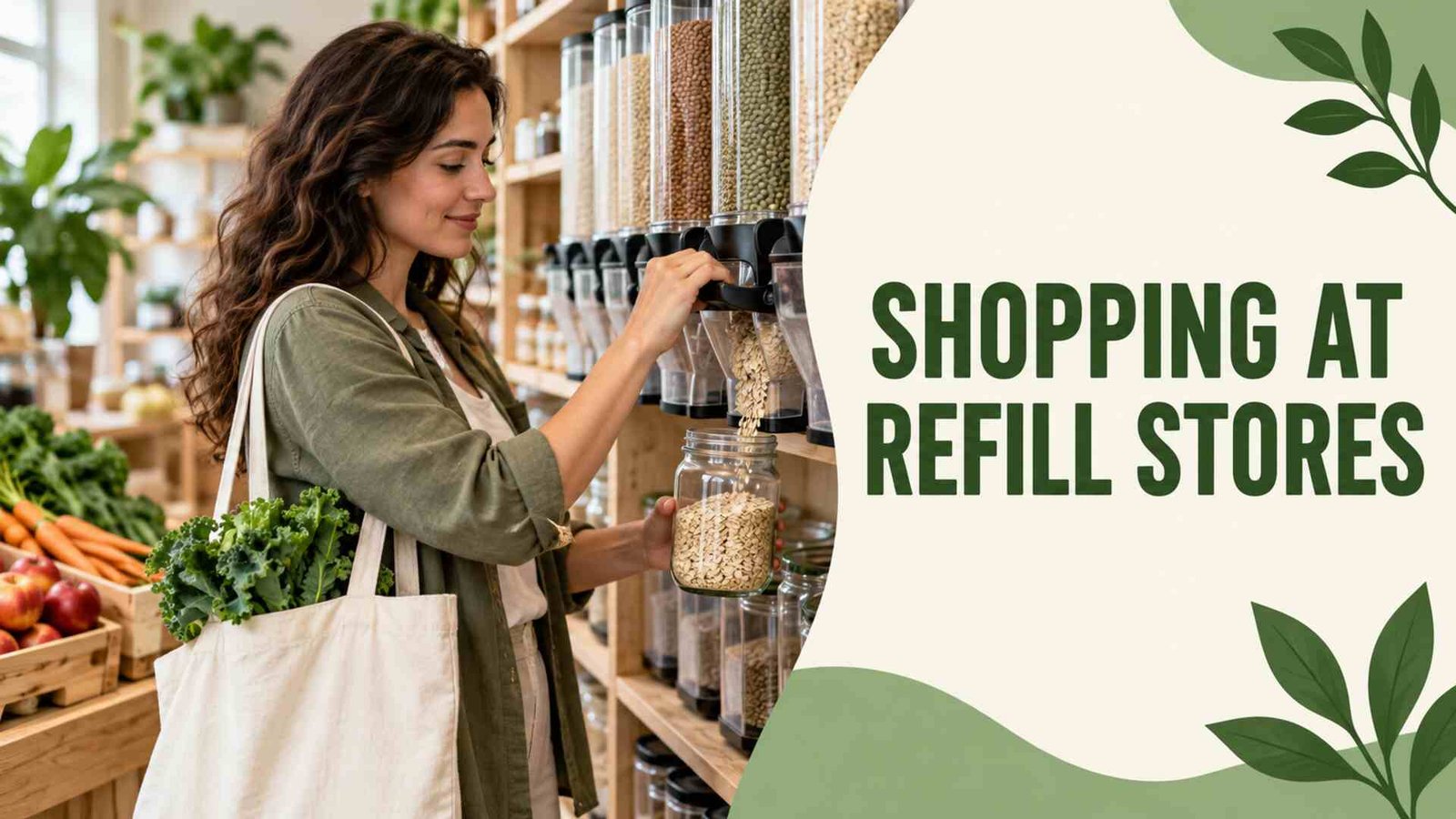
Shopping at refill stores can reduce some packaging and make it easier to buy flexible amounts, but the best approach depends on store policies, food safety, allergies, price and what you will actually use.
Before shopping at refill stores
- Check whether the retailer accepts customer containers.
- Bring clean, dry, food-safe jars or bags with secure lids.
- Ask how the store records container tare weight.
- Write a list based on your pantry and planned meals.
Compare products carefully
Read ingredient and allergen information before filling a container. Bulk dispensing may create cross-contact concerns, so people managing allergies should ask staff about procedures and choose sealed products when needed. Compare unit prices because refill options are not automatically cheaper.
The plastic-free bulk dry-goods guide explains more trade-offs, while the FIFO pantry method helps rotate purchases at home.
Store and label purchases
Record the product name, purchase date, cooking directions and allergen details. Store food according to retailer or manufacturer guidance and inspect it regularly for moisture, pests or spoilage.
A realistic refill routine
Start with one or two staples you use consistently. Shopping at refill stores is most useful when it fits your routine and prevents excess purchasing rather than creating a new collection of containers.