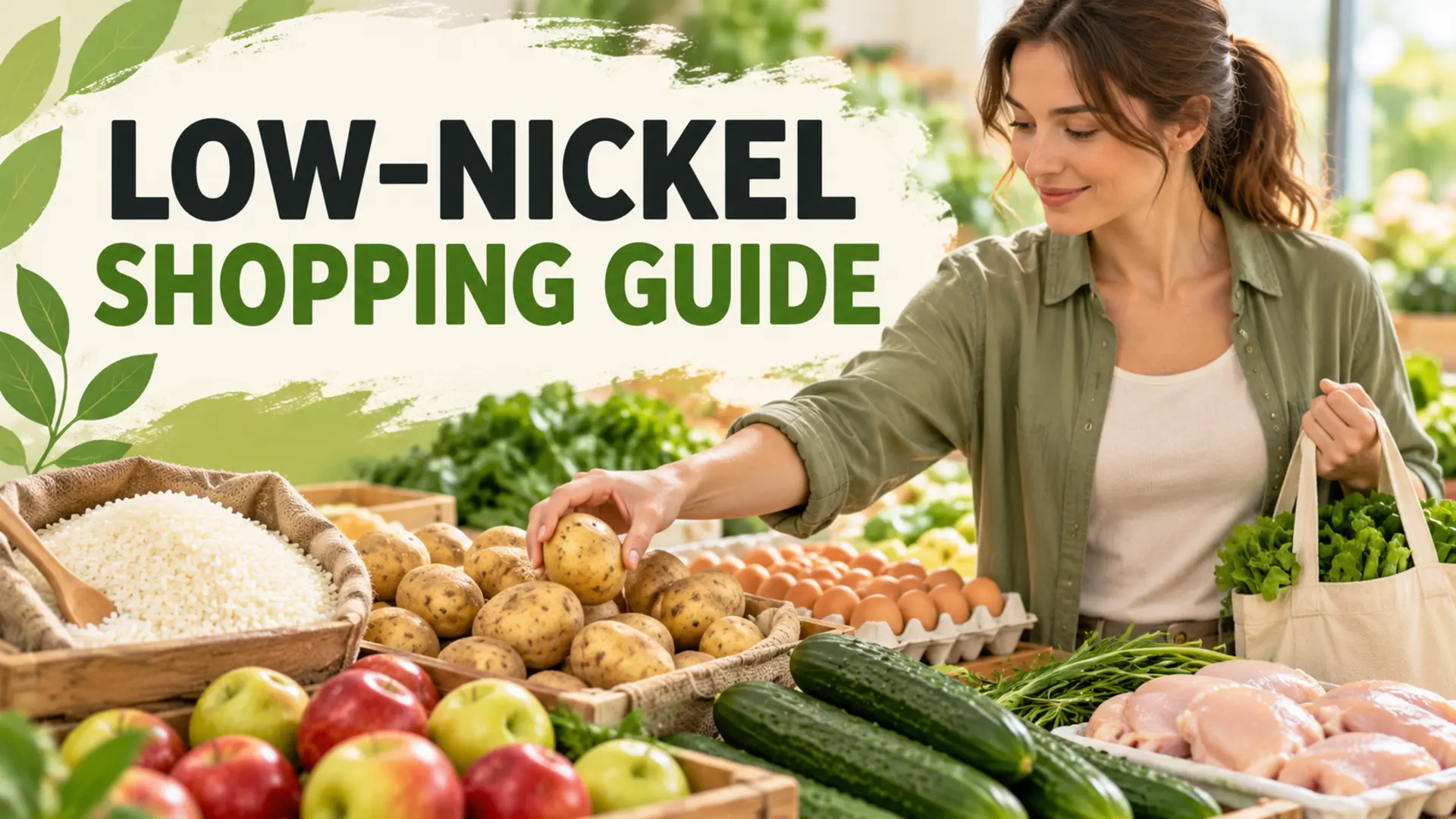
This low-nickel shopping guide is intended for people who have been advised by an allergy or dermatology professional to trial dietary nickel restriction. Nickel occurs naturally in food, amounts vary, and eczema has many causes, so a low-nickel diet should not be treated as a universal cure.
Low-nickel shopping guide: planning your cart
- Choose fresh foods and simple ingredient lists that fit your clinician’s plan.
- Consider rice, potatoes, eggs, dairy, meat, poultry and tolerated produce.
- Ask for individualized guidance on legumes, whole grains, nuts, seeds, cocoa and canned foods.
- Record portions, symptoms and other exposures rather than assuming one food is responsible.
Published food lists often disagree because nickel content changes with soil, processing and testing methods. Avoid relying on a universal microgram threshold or a permanent “safe” list.
Keep nutrition and food safety in view
Restricting whole grains, legumes, nuts and seeds can narrow fibre and nutrient intake. A dietitian can suggest suitable alternatives. The nutrition-label guide can help with packaged foods, and our allergy-aware grocery list covers cross-contact and current-label checks.
Cooking equipment and packaging
Do not replace cookware or avoid all canned foods based on unsupported assumptions. If contact allergy or equipment is a concern, discuss it with the clinician overseeing your trial.
Review the results
Use this low-nickel shopping guide as part of a time-limited, supervised plan with a clear review point. Seek medical care for severe or worsening symptoms, breathing difficulty or widespread swelling.