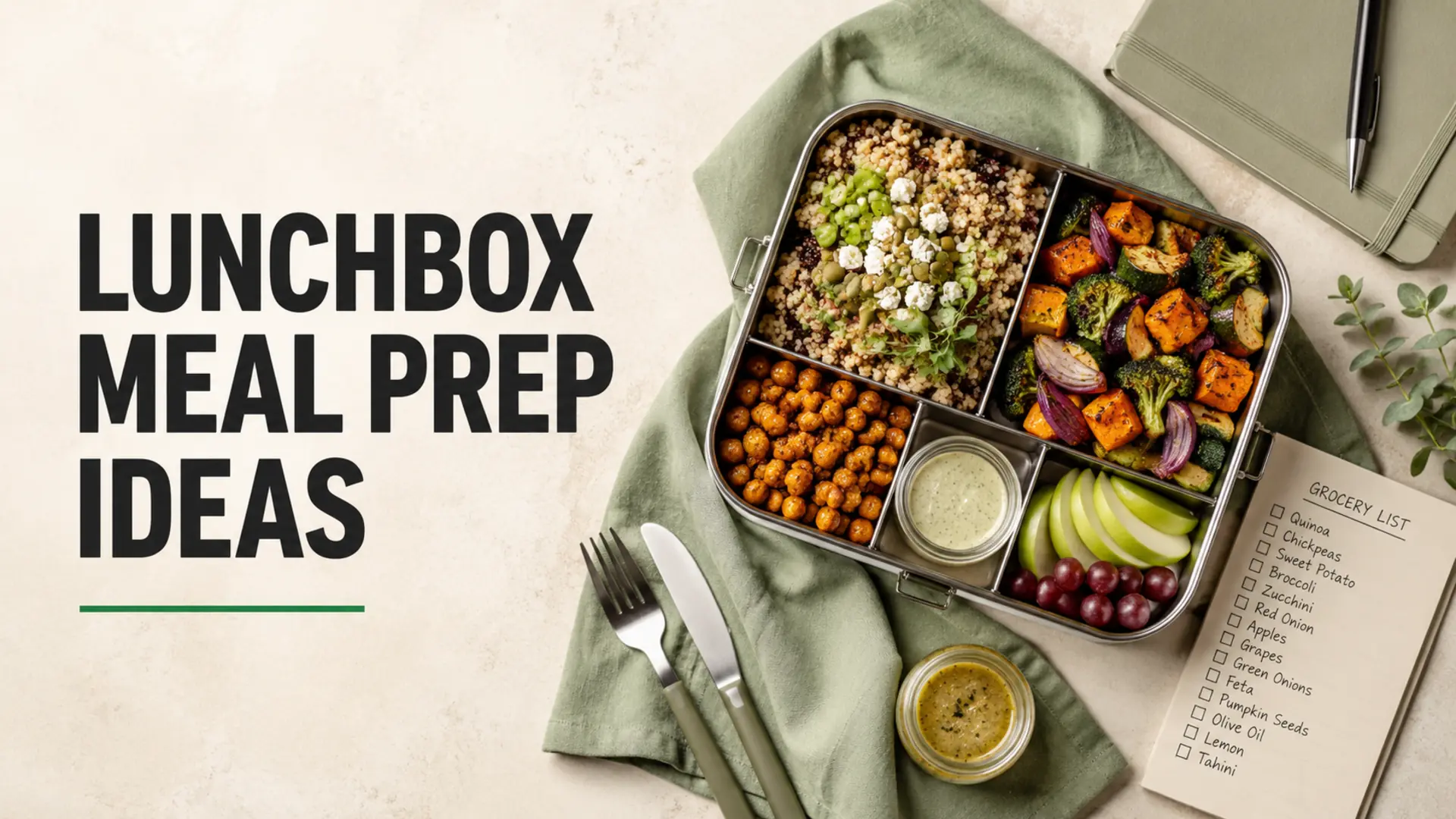
Lunchbox meal prep ideas for working professionals work best when they are flexible, portable and realistic for your schedule. Instead of preparing five identical lunches, build a small set of components that can become grain bowls, wraps, salads or snack-style boxes. This approach makes the workweek easier without relying on fixed budgets, rigid nutrition rules or an all-day prep session.
How to Plan Lunchbox Meal Prep Ideas for Work
Start with the conditions at your workplace. Do you have a refrigerator, microwave, sink and a reliable lunch break? If refrigeration is limited, an insulated bag and cold sources matter more than a complicated recipe. If the microwave queue is long, prepare at least two lunches that are enjoyable cold.
Next, choose three building blocks: a protein or satisfying plant-based option, a grain or other base, and two vegetables or fruits. Add a sauce, dip or crunchy topping separately. A short component plan gives you variety while keeping the shopping list manageable.
A Simple Lunchbox Formula
- Base: brown rice, quinoa, pasta, potatoes, whole-grain bread or leafy greens.
- Protein: beans, lentils, tofu, eggs, yogurt, chicken, fish or another option that suits your needs.
- Produce: include two colors when practical, using fresh, frozen or roasted vegetables and fruit.
- Flavor: vinaigrette, hummus, pesto, salsa, herbs, seeds or cheese.
- Texture: keep nuts, seeds, crackers or crisp vegetables separate until lunchtime.
Use the formula as a guide, not a prescription. Appetite, dietary needs and access to ingredients vary. Scale portions for the person eating the meal, and check labels carefully when managing allergies or medically prescribed diets.
Six Practical Lunchbox Meal Prep Ideas
1. Roasted Vegetable Grain Bowl
Combine a cooked grain with roasted broccoli, carrots or squash, plus chickpeas, tofu or cooked chicken. Pack a lemon-herb dressing separately. Change the grain or sauce midweek so the same components do not feel repetitive.
2. Layered Salad Jar
Place dressing at the bottom, followed by sturdy ingredients such as beans, grains, carrots and cucumbers. Add tender greens near the top. Transfer the salad to a bowl before eating rather than depending on a jar to mix everything evenly.
3. Snack-Style Lunchbox
Fill compartments with hummus, whole-grain crackers, vegetables, fruit and a protein such as eggs, edamame, yogurt or cheese. This format is useful for short breaks and can be adjusted to what you already have.
4. Wrap With Crunchy Sides
Spread a wrap with hummus or another thick filling, then add greens, roasted vegetables and a protein. Keep watery ingredients separate to reduce sogginess. Pack cucumber, snap peas or fruit on the side.
5. Thermos Soup and Toppings
A preheated insulated food container can carry hot soup, chili or stew when a microwave is unavailable. Follow the manufacturer’s instructions, heat the food thoroughly before packing, and keep toppings in a separate container.
6. Leftover Remix
Turn dinner components into lunch instead of cooking a second meal. Roasted vegetables can fill a wrap, cooked grains can become a salad, and sheet-pan ingredients can become a bowl. Our guide to 5-ingredient sheet pan dinners offers flexible combinations that work well for this approach.
Build a Focused Grocery List
Choose two lunch formats, then list only the ingredients needed for those meals. Check the refrigerator, freezer and pantry before shopping. Reuse ingredients across lunches: spinach can go into wraps and grain bowls, while carrots can be roasted or packed raw.
- Two bases, such as quinoa and whole-grain wraps
- Two proteins, such as chickpeas and eggs
- Three or four vegetables and one or two fruits
- One dressing or dip and one crunchy topping
- Insulated containers, reusable cutlery or cold packs if needed
For a faster store trip, arrange the final list in your store’s walking order using this guide to organizing a shopping list by aisle.
A Realistic Prep Workflow
- Wash hands, clean the work surface and gather containers.
- Cook the longest component first, usually a grain or protein.
- Roast or chop vegetables while it cooks.
- Mix one versatile sauce and portion crunchy toppings separately.
- Assemble the first few lunches and refrigerate promptly.
- Leave delicate items for a quick midweek refresh if quality matters.
You do not need to complete everything on Sunday. The Sunday grocery prep routine can be shortened or split across two days. Preparing a few high-impact components is often more sustainable than forcing a rigid weekly schedule.
Keep Packed Lunches Safe
Perishable lunches need dependable temperature control. The USDA recommends an insulated lunch bag and at least two cold sources for perishable cold foods. Place cold sources above and below the food when possible, and use workplace refrigeration promptly if it is available. Follow official USDA packed-lunch safety guidance for current details.
Cool cooked food in shallow containers and refrigerate it promptly rather than leaving it on the counter for an extended period. Reheat appropriate leftovers thoroughly, and follow workplace or local guidance where it is stricter. If a lunch has not been kept at a safe temperature, do not rely on appearance or smell alone.
Avoid Common Work-Lunch Problems
- Soggy lunches: separate dressings and wet ingredients.
- Repetitive meals: use one base with two sauces or formats.
- Overbuying: plan around ingredients already in your fridge.
- Forgotten containers: keep spare utensils and a shelf-stable backup at work.
- Too much prep: batch only the components that genuinely save time.
The inventory method in our guide to planning meals from your fridge can help you use opened produce and cooked ingredients before adding more to the list.
Make Your Lunch Routine Repeatable
The most useful lunchbox meal prep ideas are the ones you can repeat without boredom or unnecessary effort. Pick two formats, share ingredients between them, pack sauces separately and match the plan to your workplace facilities. A flexible system makes it easier to bring satisfying lunches while adapting to busy weeks, changing appetites and the food already at home.