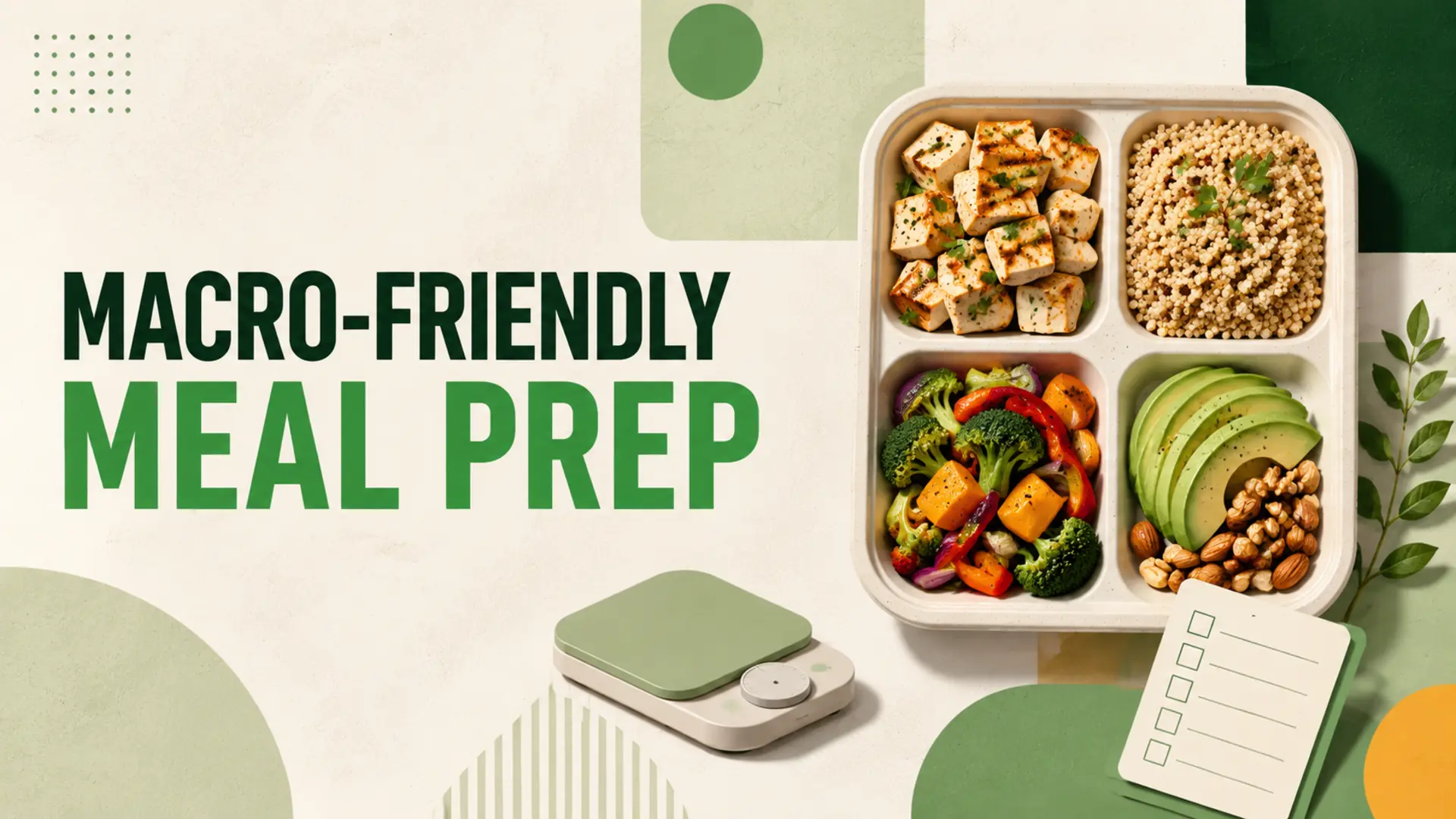
Macro-friendly meal prep means organizing meals so protein, carbohydrate and fat quantities can be adjusted without rebuilding every recipe. It can be useful for people who already track macronutrients, but it does not require labeling foods as “clean,” “free” or “pure.” Most foods contain more than one macronutrient, and nutrition needs vary from person to person.
This guide focuses on practical organization rather than prescribing calorie or macro targets. If you need targets for a health condition, athletic programme, pregnancy, an eating-disorder history or another individual concern, work with an appropriately qualified health professional.
What makes meal prep macro-friendly?
A flexible meal-prep system keeps some ingredients separate until serving. Instead of mixing every component into one large casserole, you might prepare a protein option, a grain or starchy food, vegetables, a sauce and a measured topping. That makes portions easier to change while still allowing varied meals.
- Protein-rich component: beans, lentils, tofu, eggs, fish, poultry, meat, yogurt or another suitable choice.
- Carbohydrate-rich component: rice, oats, quinoa, pasta, potatoes, bread or fruit.
- Vegetables: a mix of fresh, frozen, roasted, steamed or raw options.
- Fat-containing component: avocado, nuts, seeds, oil, cheese, tahini or another ingredient.
- Flavour: herbs, spices, citrus, sauces and condiments that suit the meal.
These groups overlap. Tofu contains protein and fat; beans contain protein and carbohydrate; nuts contain fat, protein and carbohydrate. Use the actual nutrition information for the ingredient rather than treating it as a single-macro food.
Choose reliable nutrition information
For packaged food, start with the label and confirm the serving size. Nutrition information is usually stated for a particular weight or household measure, and one package may contain multiple servings. The FDA guide to using the Nutrition Facts label explains how serving information and nutrient values work in the United States. Labels in other countries may use different formats, so follow the system where you live.
For unpackaged ingredients, use a reputable food-composition database appropriate to your region or the data in a trusted tracking tool. Brand recipes, restaurant estimates and user-submitted entries may differ. Consistency is often more practical than chasing false precision.
Use consistent raw or cooked weights
Food weight can change during cooking because water is absorbed or lost. Rice becomes heavier after absorbing water, while roasted meat or vegetables may become lighter. A nutrition entry for a raw ingredient should be paired with a raw weight; a cooked entry should be paired with a cooked weight.
- Choose raw or cooked data before measuring.
- Use the same state for the weight and nutrition entry.
- Record draining, edible portions or preparation details when relevant.
- Keep brief notes for recipes you repeat.
This does not make every number exact. Labels and databases use standardized values, ingredients vary naturally and household measurements introduce differences. The goal is a repeatable planning method.
How to calculate a mixed batch
You can still prepare curries, soups, chilli and casseroles. Add the nutrition information for every ingredient in the full recipe, then divide the finished batch into portions. Two common methods are equal containers or finished-batch weight.
Method 1: Divide into equal containers
If the full recipe is divided evenly into four containers, each container receives roughly one quarter of the recorded recipe totals. Stir mixed dishes thoroughly before portioning so ingredients are distributed as evenly as practical.
Method 2: Use finished-batch weight
- Calculate the nutrition information for all ingredients in the recipe.
- Cook the recipe and weigh the finished edible batch in grams.
- Divide each batch total by the finished weight to estimate the amount per gram.
- Multiply the per-gram value by the weight placed in each container.
For example, if a finished batch weighs 1,000 g, a 250 g portion represents one quarter of that batch. This method can handle uneven serving sizes without claiming that every spoonful is perfectly identical.
Build flexible meal-prep components
Prepare a small number of compatible components rather than many unrelated recipes. A grain, roasted vegetables, two protein choices and two sauces can support bowls, wraps, salads and plated meals. Store ingredients separately when their textures or shelf lives differ.
| Component | Flexible examples | Planning note |
|---|---|---|
| Protein-rich option | Lentils, tofu, eggs, chicken or fish | Choose options that fit dietary needs and planned meals |
| Grain or starch | Rice, quinoa, pasta or potatoes | Record the raw or cooked measurement consistently |
| Vegetables | Broccoli, peppers, greens or mixed frozen vegetables | Use variety rather than calling any vegetable “free” |
| Fat and flavour | Avocado, nuts, seeds, oil-based dressing or tahini | Measure when the quantity matters to your plan |
| Sauce or seasoning | Salsa, yogurt sauce, herbs, citrus or spice blends | Check labels for multi-ingredient products |
If a recipe must serve a different household size, use the multiplier method in How to Scale Meal Prep Recipes for 1, 2, or 4 People before calculating the grocery quantities.
Create a macro-friendly grocery list
Build the list from meals, not from isolated macro categories alone. First decide how many breakfasts, lunches, dinners and snacks you plan to prepare. Then choose compatible components and combine duplicate ingredients across recipes.
- Write the number of planned meals and portions.
- Select recipes or flexible component combinations.
- Scale each recipe to the required yield.
- Combine identical ingredients in consistent units.
- Check pantry, refrigerator and freezer stock.
- Round to realistic package sizes and plan how remainders will be used.
The framework in How to Plan 21 Meals a Week can help separate meal needs before quantities are calculated. For adaptable protein-rich ideas, review these high-protein meal prep plans and shopping lists.
Organize the list for fewer mistakes
Keep the shopping list easy to verify. Add a useful quantity beside ingredients when package size or recipe math matters, such as “two 400 g tins” instead of “beans.” Grouping the list by store area can also reduce missed items. The Smart Grocery List features page explains the available list and pantry-organization tools.
Common macro meal-prep mistakes
- Using universal targets: macro needs are individual and may require professional advice.
- Calling foods pure protein, carbs or fat: many ingredients contain a combination.
- Mixing raw weights with cooked data: match the measurement state to the nutrition entry.
- Ignoring serving size on labels: nutrition values apply to the stated quantity.
- Forgetting sauces and cooking ingredients: include them when they matter to the calculation.
- Chasing perfect precision: food and nutrition databases naturally vary.
- Preparing too much repetition: flexible components can provide more variety.
Keep the system balanced and sustainable
A macro-friendly meal prep routine should still include food variety, enjoyment, practicality and appropriate nutrition. Tracking numbers does not replace dietary guidance, and macro totals alone do not describe every nutrient a meal provides. Consult the official recommendations for your country or region; the existing Canada’s Food Guide is one authoritative example.
Start with one or two repeatable meals, use reliable data, keep measurements consistent and adjust the system based on what you actually eat. That creates a flexible planning method without unnecessary rules or unsupported precision.