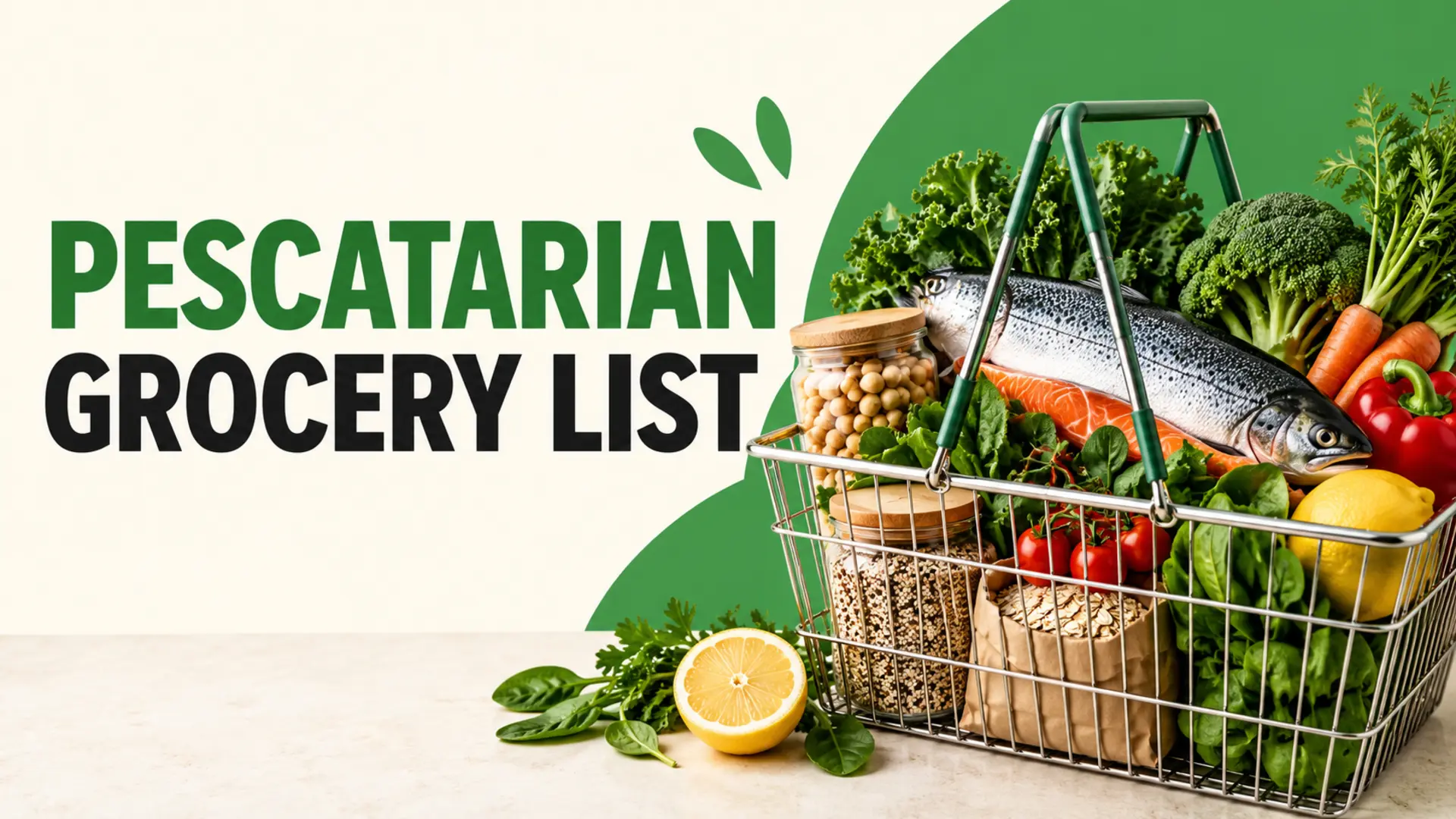
Build a practical pescatarian grocery list with seafood, plant proteins, produce, grains and optional dairy or eggs, plus buying tips, meal ideas and food-safety basics.
A pescatarian grocery list combines fish and shellfish with vegetables, fruit, grains, legumes, nuts and seeds, and often dairy or eggs. Current U.S. dietary guidance lists seafood among recommended protein foods [2]. This pattern supports a wide range of meals, but no single way of eating guarantees better brain or heart health, so choose foods that fit your preferences, budget and any guidance from your healthcare provider.
Pescatarian grocery list essentials
- Seafood: fresh, frozen or canned fish and shellfish that fit your budget and local guidance.
- Plant proteins: beans, lentils, chickpeas, tofu, tempeh, nuts and seeds.
- Produce: a variety of fresh, frozen and canned vegetables and fruit.
- Grains and starches: oats, rice, pasta, whole-grain bread and potatoes.
- Optional foods: eggs, yogurt, cheese or fortified dairy alternatives.
- Pantry staples: olive oil, canned tomatoes, herbs, spices, stock and lemons.
What goes on a full pescatarian grocery list?
Use this longer list as a starting point, then keep what fits your tastes, budget and any dietary needs.
- Fresh and frozen seafood: salmon, cod, trout, tilapia, shrimp, scallops, mussels.
- Canned and shelf-stable seafood: tuna, salmon, sardines, mackerel, anchovies.
- Legumes and soy foods: dried or canned lentils, chickpeas, black beans and white beans; tofu, tempeh and edamame.
- Nuts and seeds: almonds, walnuts, peanuts or peanut butter, chia seeds, flaxseed, pumpkin seeds.
- Vegetables: leafy greens, tomatoes, peppers, broccoli, carrots, onions, garlic, plus frozen mixed vegetables.
- Fruit: apples, bananas, citrus, and frozen berries.
- Grains and starches: oats, brown rice, quinoa, whole-wheat pasta, whole-grain bread, potatoes and sweet potatoes.
- Dairy, eggs and alternatives (optional): eggs, plain yogurt, cheese, fortified soy or other plant milks.
- Pantry staples: olive oil, canned tomatoes, stock, vinegar, mustard, herbs, spices and lemons.
How do you choose seafood?
Compare species, origin, fishing or farming method, price and storage life. Frozen and canned options are often cheaper and last longer, which makes them useful for weeknight meals. Mercury levels vary by species, and the FDA and EPA publish advice on which fish are lower in mercury and how often to eat them. This matters most if you are pregnant, breastfeeding or feeding young children [1]. Our sustainable seafood shopping guide explains the main label checks.
What are easy pescatarian meal ideas?
- Salmon, potatoes and roasted vegetables
- Lentil pasta with tomato sauce and greens
- Rice bowl with tofu, vegetables and optional fish
- Bean salad with whole-grain bread
- Canned tuna or sardines on toast with salad
- Vegetable and chickpea curry with rice
Rotate seafood and plant proteins through the week so meals stay varied and affordable. For more plant-forward ideas, use the Mediterranean diet shopping list.
What does a week of pescatarian shopping look like?
Buy fresh fish for the first meals of the week, then switch to frozen and canned seafood and plant proteins as the week goes on. Shared ingredients keep the list short.
| Day | Dinner | Seafood source | Reused ingredients |
|---|---|---|---|
| Monday | Baked salmon with potatoes and broccoli | Fresh | Broccoli, lemon |
| Tuesday | Lentil pasta with tomato sauce and greens | None (plant protein) | Canned tomatoes, greens |
| Wednesday | Shrimp and vegetable rice bowl | Frozen | Rice, broccoli |
| Thursday | Chickpea and vegetable curry with rice | None (plant protein) | Rice, canned tomatoes |
| Friday | Canned sardines or tuna on toast with salad | Canned | Lemon, greens |
This plan uses two fish-free dinners, which keeps costs down and shows how plant proteins fill the gaps between seafood meals.
How can you shop smarter?
- Plan a few base meals, then reuse ingredients across them.
- Buy fresh fish for the next day or two. Look for clear, shiny eyes on whole fish and a fresh, mild smell [3].
- Choose frozen fish that is solidly frozen, and skip packages where the flesh bends [3].
- Stock dried or canned beans and lentils as low-cost protein.
- Choose frozen vegetables and fruit when fresh options are costly or out of season.
How can you build a pescatarian grocery list on a budget?
Seafood is often the most expensive part of the list, so a few habits make the biggest difference.
- Use frozen and canned fish for most meals, and buy fresh fish only when you plan to cook it within a day or two.
- Compare unit prices and store brands for canned seafood, frozen fillets and frozen vegetables.
- Make dried or canned beans, lentils and tofu the base of several meals each week.
- Buy staples such as oats, rice and pasta in larger packs when you will use them before they go stale.
- Cook extra grains and beans at once, then reuse them in salads, bowls and soups.
Food-safety reminders
Keep seafood cold, separate it from ready-to-eat foods, wash hands after handling raw seafood, and cook it thoroughly [3][4]. Follow package or local public-health instructions for storage and cooking. People with allergies, kidney disease or other clinical nutrition needs should seek individualized advice.
Pescatarian grocery list FAQ
Do pescatarians eat eggs and dairy?
A pescatarian eating pattern is built on plant foods plus fish and shellfish. Many pescatarians also eat eggs and dairy, but some leave them out, so treat them as optional items on your list.
Is canned fish a good choice?
Canned fish is a convenient, shelf-stable option and is often cheaper than fresh. Mercury levels differ by species, so check the FDA and EPA advice for the types you buy often, especially if you are pregnant or feeding young children [1]. Check labels for added salt if you are watching sodium.
How much seafood should you buy each week?
Current U.S. dietary guidance includes seafood as a protein food, and the amount that suits you depends on your age, health and calorie needs [2]. Check the guidelines or ask a registered dietitian for a target that fits you, then rotate with plant proteins for the remaining meals.
Can a pescatarian diet provide enough protein?
Seafood, beans, lentils, tofu, tempeh, nuts, seeds, eggs and dairy all contribute protein. Individual needs vary, so people with medical conditions, such as kidney disease, should get personalized advice.
Conclusion
A practical pescatarian grocery list emphasizes variety. Rotate seafood and plant proteins, choose convenient produce, and build meals that match your preferences, budget and health guidance.
References
- U.S. Food and Drug Administration. FDA and EPA Issue Fish Consumption Advice.
- U.S. Department of Agriculture and U.S. Department of Health and Human Services. Dietary Guidelines for Americans, 2025–2030.
- FoodSafety.gov. Safe Selection and Handling of Fish and Shellfish.
- FoodSafety.gov. Four Simple Steps to Food Safety: Clean, Separate, Cook, Chill.