
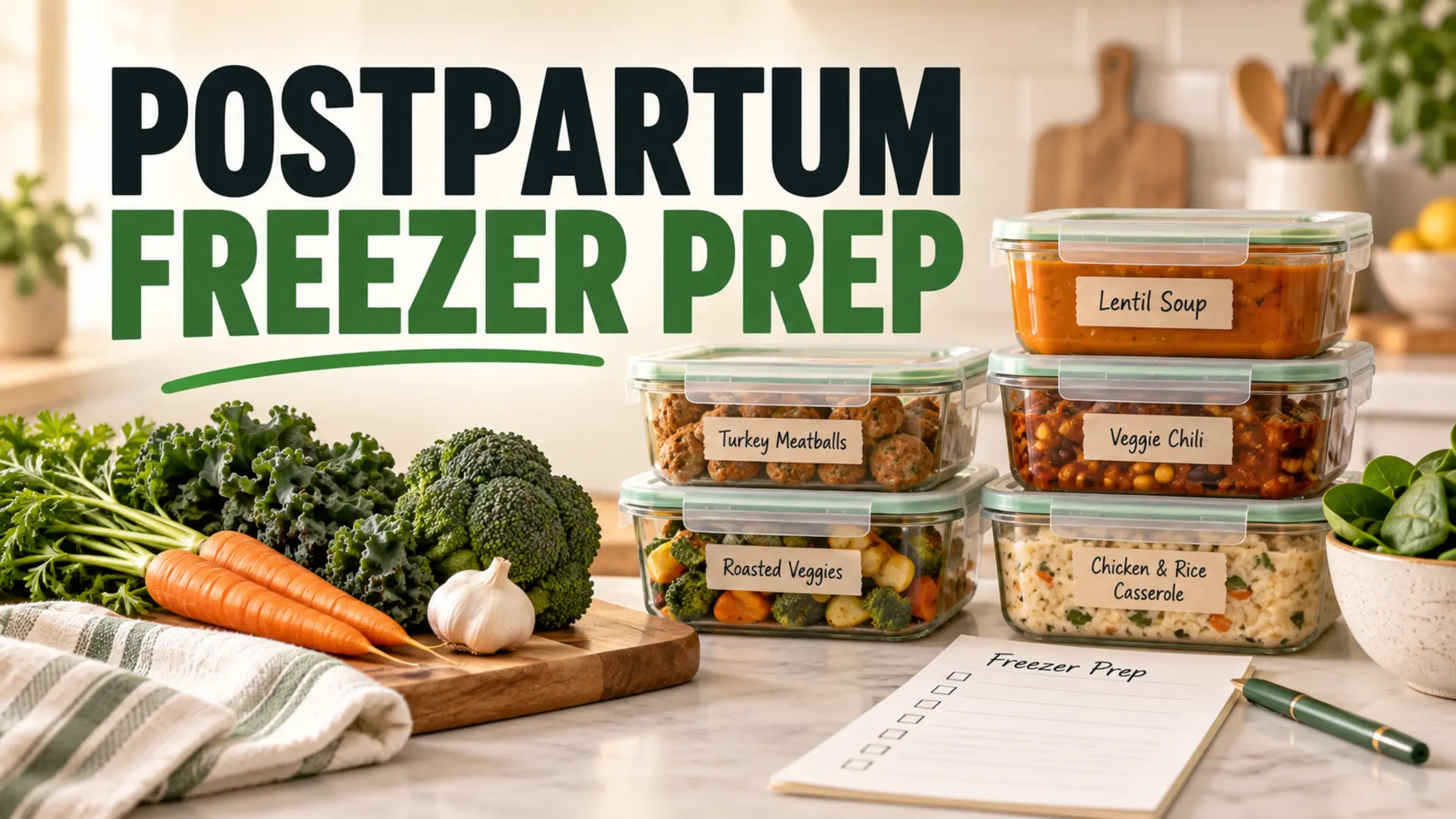
A postpartum freezer prep checklist can make the first weeks with a new baby easier without promising a rigid 30-day menu. The most useful plan is flexible: freeze familiar meals, label them clearly, and leave room for changing appetite, recovery needs, allergies, and help from family or friends.
Postpartum freezer prep checklist: start with your household
Before shopping, check freezer space and list meals you already enjoy. Ask a healthcare professional about individual nutrition needs, especially after complications, blood loss, allergies, or dietary restrictions.
- Choose recipes your household has cooked successfully before.
- Include breakfast, lunch, dinner, and snack options.
- Use containers intended for freezing and reheating.
- Plan a mix of single portions and family-size meals.
Build a practical freezer menu
Good candidates include soups, stews, cooked bean dishes, pasta bakes, curries, breakfast burritos, muffins, and cooked grains. Add vegetables and protein in ways that suit your preferences. For more ideas, use this freezer meal prep checklist.
Make the grocery list manageable
Group ingredients by produce, proteins, grains, dairy or alternatives, pantry goods, and storage supplies. Check what you own first so duplicate purchases do not crowd the freezer. A shared running-low checklist can help another household member restock essentials.
Prep in small sessions
Spread the work across several short sessions. Cook one or two recipes at a time, cool food safely, portion it, and label each container with the meal name and preparation date. Write reheating notes only when they are supported by the original recipe.
Store and reheat food safely
Follow the storage and reheating instructions from your local food-safety authority. Keep raw meat separate from ready-to-eat foods, cool cooked food promptly, and discard food when its safety is uncertain. See the current FoodSafety.gov cold-storage guidance.
Prepare an easy-access snack area
Stock shelf-stable or refrigerated options that fit the household, such as fruit, yogurt, cooked eggs, whole-grain crackers, nut or seed butter where safe, and ready-to-eat vegetables. Keep water accessible and avoid presenting any single food as a guaranteed way to improve recovery or milk supply.
Keep the plan flexible after birth
Postpartum needs differ. Accept help, supplement freezer meals with fresh foods when convenient, and adjust portions as routines change. The goal is a reliable food backup—not a perfect month-long schedule.
A thoughtful postpartum freezer prep checklist reduces daily decisions while keeping food choices adaptable, familiar, and safe.
Frequently Asked Questions
How many freezer meals should I prepare before having a baby?
There is no required number. Estimate freezer space, household size, dietary needs, outside help, and how often meals will actually be used. A smaller set of familiar mains, breakfasts, and snacks is often more useful than trying to freeze exactly 30 full dinners.
When should postpartum freezer meal prep begin?
Begin when energy and pregnancy care guidance allow, often by adding one extra freezer portion to normal cooking over several weeks. Avoid one exhausting prep day. If pregnancy complications, fatigue, nausea, or mobility concerns affect cooking, ask the prenatal care team what is appropriate.
What meals freeze well for postpartum recovery?
Soups, stews, chilli, casseroles, curries, cooked beans, meatballs, muffins, breakfast burritos, and many sauces usually freeze well. Foods with delicate greens, crispy coatings, or high-water raw vegetables may change texture. Test one portion before making a large batch.
How should freezer meals be labelled?
Write the dish, preparation date, number of portions, major allergens, thawing method, reheating instructions, and any toppings to add. Clear labels let a partner or helper serve food safely without relying on the person who prepared it to remember every detail.
How long can prepared freezer meals be stored?
Frozen food kept continuously at 0°F/-18°C remains safe for a long time, but quality declines. Storage recommendations vary by dish, so use official charts and label dates. Plan to rotate postpartum meals within a few months rather than treating the freezer as indefinite storage.
How do I cool meals safely before freezing?
Divide cooked food into shallow containers, refrigerate promptly, and avoid leaving it at room temperature longer than two hours. Do not overload the freezer with a large amount of hot food. Follow the recipe and local authority’s guidance for cooling particular dishes.
What is the safest way to thaw and reheat postpartum meals?
Thaw in the refrigerator, cold water, or microwave—not on the counter. Reheat leftovers to 165°F/74°C and check several spots in dense dishes. FoodSafety.gov advises refrigerating leftovers within two hours and using or freezing refrigerated portions within four days.
Should postpartum freezer prep include snacks and breakfast?
Yes, because food needed during feeds or short breaks may be more useful than another large dinner. Consider muffins, oatmeal portions, soups, sandwiches, yogurt, fruit, and other easy foods that fit the household’s nutrition needs, allergies, and safe-storage capacity.
Can friends bring meals instead of filling the freezer beforehand?
Yes. A meal train, grocery delivery, gift card, or helper who cooks and cleans can reduce prep pressure. Share allergies, dietary restrictions, delivery timing, container preferences, and whether freezer space remains. Support should lower work, not create coordination or storage problems.
What if postpartum appetite or dietary needs change?
Keep the plan flexible and include neutral foods that can be combined in different ways. Do not build the freezer around unproven lactation claims or a highly restrictive diet without clinical advice. Contact an appropriate healthcare professional for recovery, feeding, allergy, or medical nutrition concerns.