
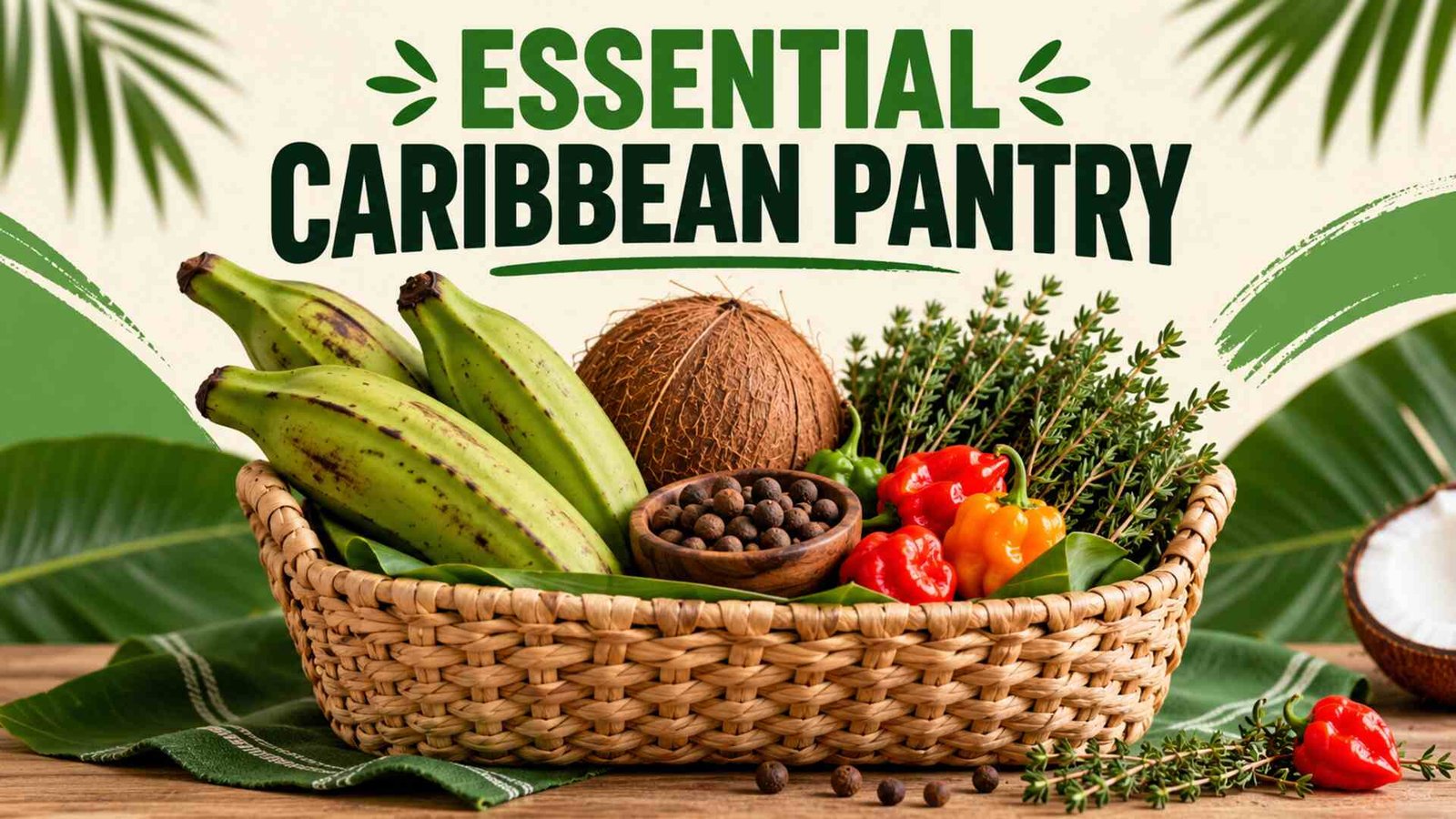
An essential Caribbean pantry should reflect the particular island, country or family tradition you want to explore. Caribbean cuisines are diverse, with Indigenous, African, European, South Asian and other influences; one short list cannot define them all.
Essential Caribbean pantry building blocks
- Plantains and root crops: select ripeness for the recipe and inspect fresh produce for damage before buying.
- Coconut products: canned coconut milk, dried coconut and coconut oil are not interchangeable. Check fat content, added ingredients and package directions.
- Allspice and herbs: whole or ground allspice, thyme, scallions, garlic and ginger can form useful seasoning bases.
- Chiles: Scotch bonnet peppers are very hot. Handle carefully, avoid touching your face and adjust the quantity to your household.
- Pulses, rice and canned goods: beans, peas and rice can support many dishes; choose forms appropriate to the recipe.
Respect regional and household variation
Jamaican, Trinidadian, Cuban, Haitian, Puerto Rican and other Caribbean food traditions are distinct. Look for recipe-specific guidance instead of labelling one technique or product as universally “authentic.” Check sauces and seasoning blends for soy, wheat and other allergens.
Use the Latin supermarket guide for aisle-planning ideas, and the FIFO pantry method to rotate opened staples.
Keep the collection practical
Begin with ingredients shared by two planned meals, then add specialty items gradually. A smaller, well-used pantry is usually more useful than a broad collection with no cooking plan.