
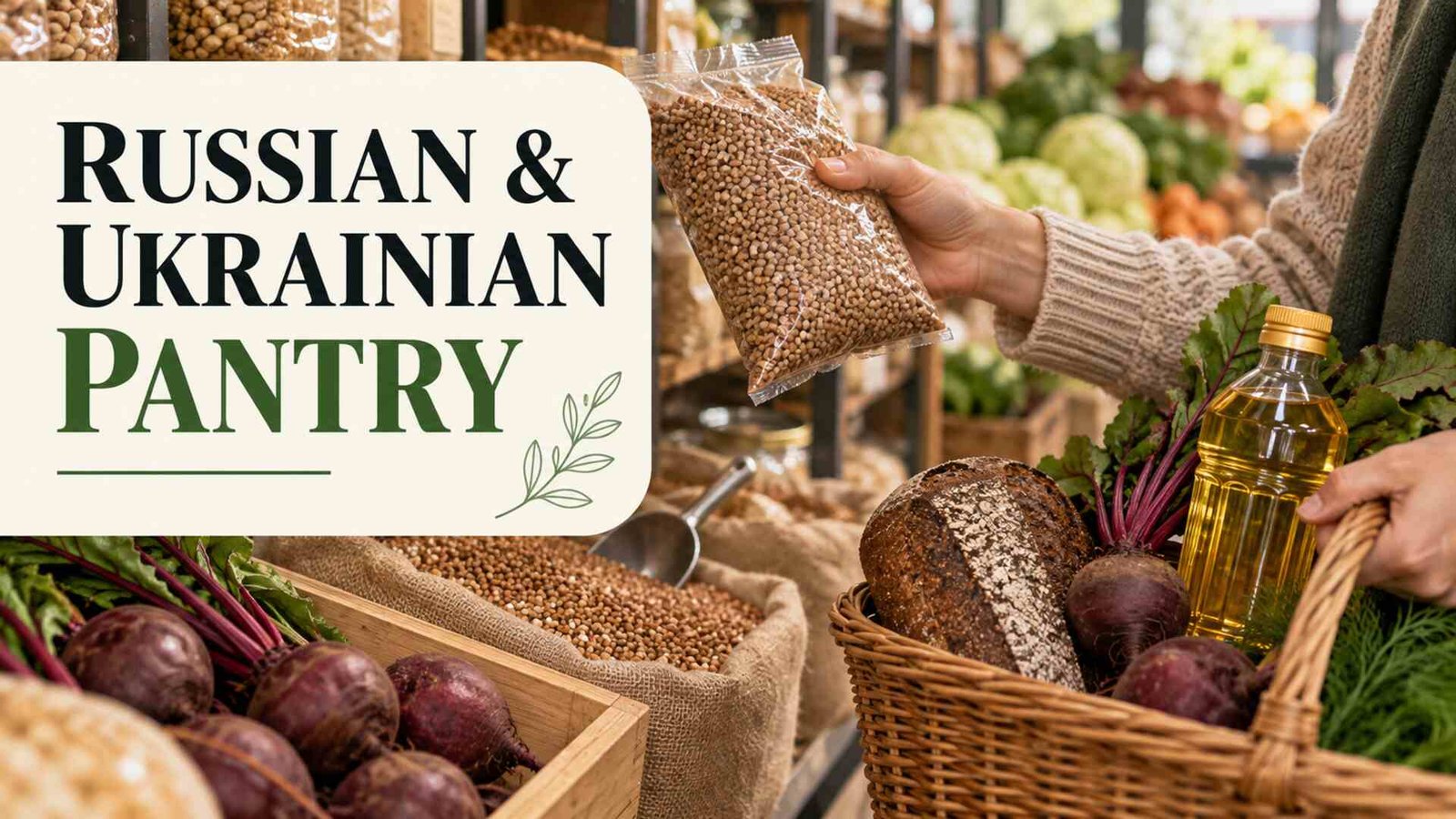
A Russian and Ukrainian pantry may include buckwheat, beets, rye products, sunflower oil and preserved foods, but recipes and preferences vary widely by region, family and season. Choose ingredients for specific meals instead of treating the two cuisines as identical.
Russian and Ukrainian pantry building blocks
- Buckwheat groats: check whether a recipe needs toasted or untoasted groats, because their flavour and cooking differ.
- Beets and root vegetables: useful for soups, salads and side dishes; buy quantities you can store well.
- Rye and wheat products: breads, flours or noodles should match the intended recipe and allergen needs.
- Sunflower oil: refined oil and aromatic unrefined oil suit different cooking temperatures and uses.
- Pickled or fermented foods: compare salt, ingredients, refrigeration directions and package condition.
Products called kvass also vary. Some are commercially produced beverages, while homemade ferments require reliable recipes and careful hygiene. Do not treat fermented drinks as a detox, probiotic cure or substitute for medical care.
Shop and store with care
Read labels for wheat, dairy, egg, fish, mustard and other allergens. Keep grains sealed, inspect packaged foods before purchase, refrigerate products when directed and discard items showing spoilage or damaged seals.
Our Eastern European market guide offers aisle-by-aisle shopping tips. For organized storage, use the FIFO pantry method.
Let recipes guide the pantry
Start with one soup, grain dish or salad you want to make, then expand from there. Recipe-led purchasing keeps the pantry practical while leaving room for the distinct histories and household traditions behind Russian and Ukrainian cooking.