
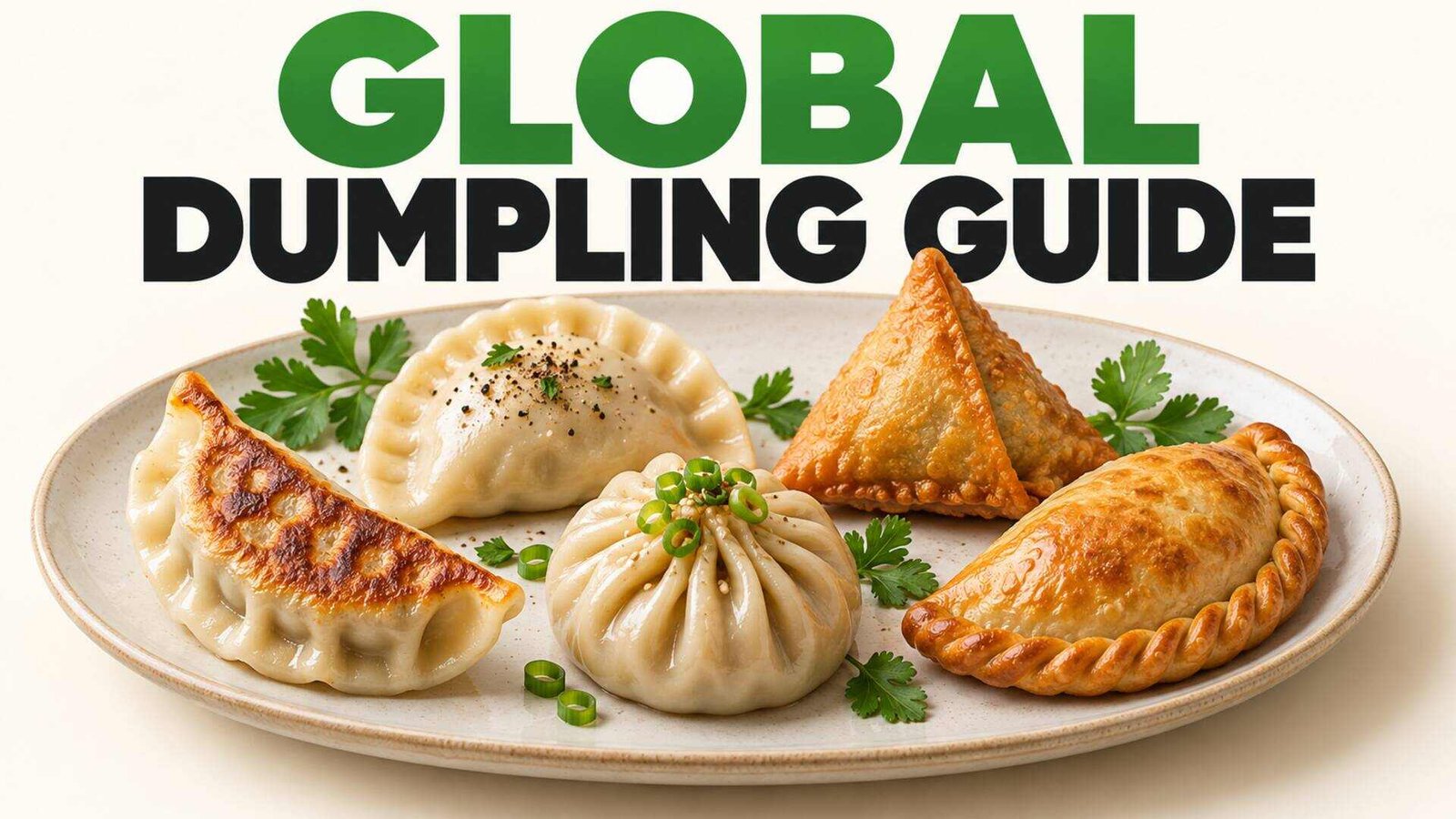
This global dumpling guide introduces gyoza, pierogi, mandu, samosas and empanadas as distinct foods rather than versions of one universal blueprint. Their wrappers, fillings, folding traditions and cooking methods come from different communities and should be learned from specific recipes.
Global dumpling guide to five traditions
- Gyoza: Japanese dumplings often made with thin wheat wrappers and cooked by steaming, pan-frying or both.
- Pierogi: Polish filled dumplings with many savoury and sweet variations, commonly boiled and sometimes pan-fried.
- Mandu: Korean dumplings prepared with varied wrappers, fillings and cooking methods.
- Samosas: a diverse South Asian family of filled pastries that may be fried or baked.
- Empanadas: filled pastries found across Latin America and elsewhere, with region-specific doughs, fillings and cooking methods.
Handle fillings and wrappers safely
Keep raw meat separate from ready-to-eat ingredients and cook fillings to guidance appropriate for the meat and local authority. Check wheat, egg, soy, sesame, dairy, peanut and other allergens. Follow the wrapper or dough recipe for sealing; overfilling can make closure difficult.
Our dim sum at home guide covers steaming and frozen-food handling. The Asian supermarket guide helps compare wrappers and packaged ingredients.
Freeze and cook according to the recipe
Some uncooked dumplings freeze well, but the safe method depends on the filling and wrapper. Freeze promptly on a clean tray, transfer to a sealed container and label it. Follow a tested recipe for cooking from fresh or frozen rather than assuming every style uses the same time.
A useful comparison keeps each dumpling’s name, origin and technique visible. Choose one or two recipes first, then buy the ingredients they actually require.