
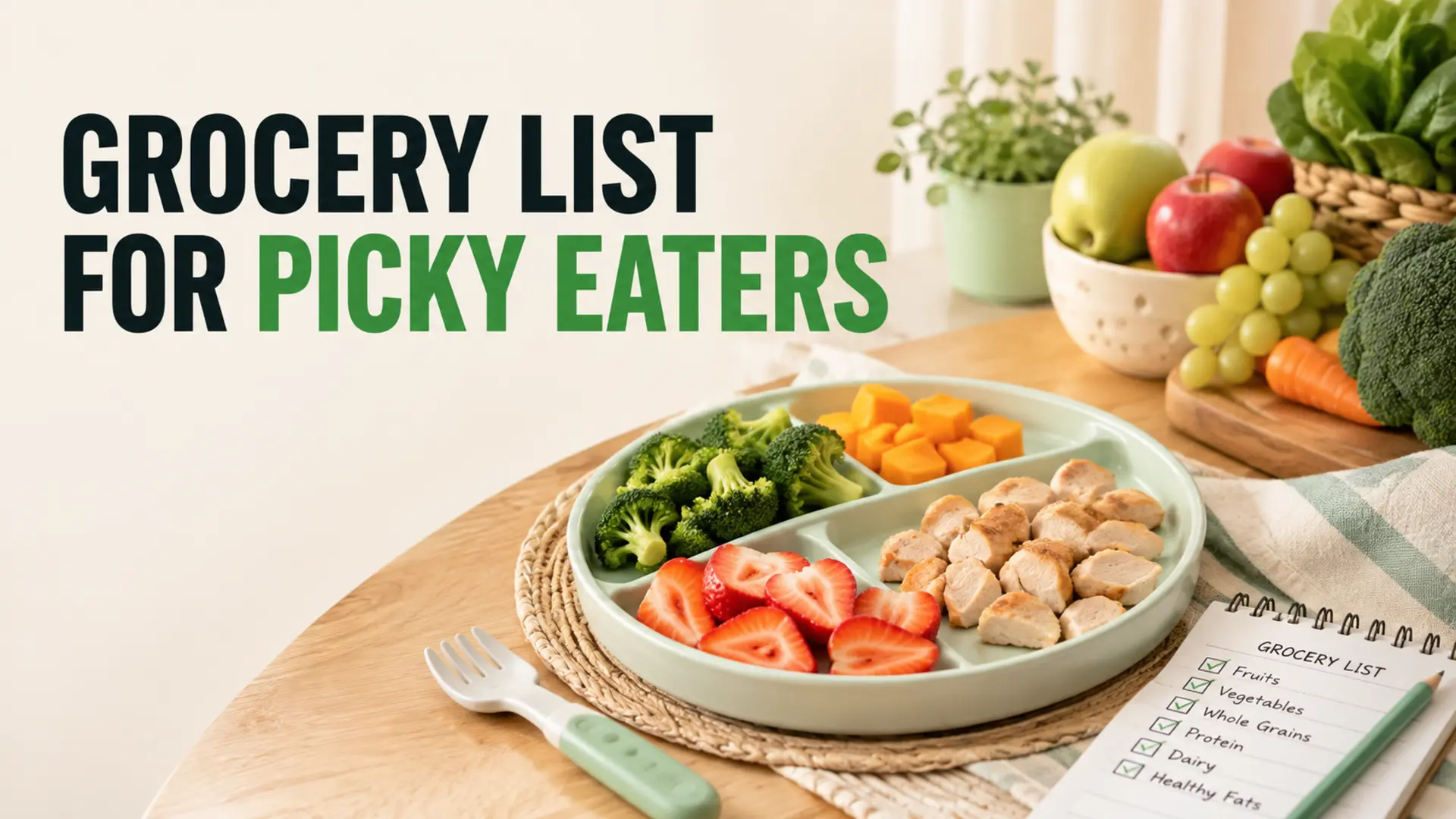
A grocery list for picky eaters should include dependable familiar foods while leaving room for gentle, low-pressure variety. The goal is not to hide every new ingredient or force a child to eat. Plan flexible family meals, offer age-appropriate choices, and judge progress over time rather than by one plate.
Build a grocery list for picky eaters
Begin with foods the child reliably accepts across several groups, then add one or two foods that are similar in flavour, shape, colour, or texture. A practical list might include:
- Protein options: eggs, yogurt, cheese, beans, hummus, fish, poultry, tofu, or suitable alternatives.
- Grains and starches: oats, bread, rice, pasta, tortillas, potatoes, or familiar cereals.
- Fruit: a reliable favourite plus one seasonal or differently prepared option.
- Vegetables: raw, steamed, roasted, or blended into a familiar dish according to preference.
- Meal connectors: mild sauces, dips, herbs, or toppings served separately.
Account for allergies, cultural preferences, medical needs, and foods available locally. Organic, premium, or specialty products are not inherently necessary.
Use familiar meal components
Instead of planning ten separate “kid meals,” choose components the family can combine differently. A taco night can offer tortillas, beans or meat, cheese, vegetables, and sauce separately. A pasta meal can place sauce on the side. This gives the child a familiar option without requiring the whole family to eat identical plates.
Our guide to scaling meal-prep recipes can help adjust quantities without creating excessive leftovers.
Introduce variety without pressure
Serve a small amount of a less familiar food beside accepted foods and allow the child to decide whether to taste it. Repeated, calm exposure may help over time. Avoid using dessert as a reward or turning a refused bite into a confrontation. The American Academy of Pediatrics advises parents to provide food choices while allowing children to decide how much to eat in its tips for parents of picky eaters.
Shop in quantities your family can use
- Buy small amounts of experimental foods.
- Choose ingredients that work in adult meals too.
- Freeze suitable extras in labelled portions.
- Review what came home uneaten before repeating the list.
- Use a weekly shopping-list template to keep accepted foods and trial foods visible.
Keep age-appropriate safety in mind
Prepare foods in shapes and textures appropriate for the child’s age and development, supervise eating, and follow current choking-prevention advice from a qualified health source. Seek guidance from a pediatrician or registered dietitian if the child has poor growth, pain when eating, frequent choking or gagging, very limited intake, or suspected nutritional deficiencies.
A useful grocery list for picky eaters balances predictability, variety, safety, and waste reduction. Keep the list flexible and consider our kid-friendly snack planning guide for more reusable ingredients.
Frequently Asked Questions
What belongs on a grocery list for a picky toddler?
Include familiar foods from several food groups, ingredients for family meals, one or two low-pressure learning foods, and convenient backups. Choose textures and sizes appropriate for the child’s development.
Should I cook a separate meal for a picky eater?
A common approach is to serve a family meal with at least one familiar component rather than making a completely separate menu. Individual medical, sensory, or feeding needs may require professional guidance.
How can I introduce new foods without wasting money?
Offer a very small portion beside familiar food, repeat exposure without pressure, and buy the smallest practical quantity. A child may need many neutral opportunities before accepting a food.
Is toddler picky eating normal?
Food selectivity is common in toddlerhood, but severity varies. Seek advice from a pediatric clinician or dietitian when growth, nutrition, swallowing, distress, or a very restricted range causes concern.
How many familiar foods should be on the weekly list?
Buy enough reliable options to support meals without creating a pantry full of one preferred product. Rotate familiar foods so temporary refusal or package changes do not create a crisis.
How do I avoid overbuying toddler snacks?
Track what is actually eaten, use small containers, and buy one package before stocking up. Preferences can change quickly, so a sale is not valuable when several packages go unused.
What are useful meal components for picky toddlers?
Depending on dietary needs, consider soft grains or pasta, eggs, yogurt, beans, tender vegetables, fruit, toast, cheese, shredded meats, and sauces served separately or alongside familiar foods.
Which foods are choking hazards for toddlers?
Whole grapes, nuts, popcorn, hard raw vegetables, chunks of meat or cheese, and spoonfuls of nut butter can be hazardous. Follow CDC guidance for safe preparation and supervision.
Should I hide vegetables in toddler food?
Blending vegetables into a familiar dish can add variety, but it should not be the only exposure. Let children also see and learn the food without turning meals into a deception contest.
When should picky eating be evaluated professionally?
Ask for help with poor growth, choking or coughing, pain, nutrient deficiency, extreme anxiety, loss of previously accepted foods, or a food range too narrow to support daily needs.