
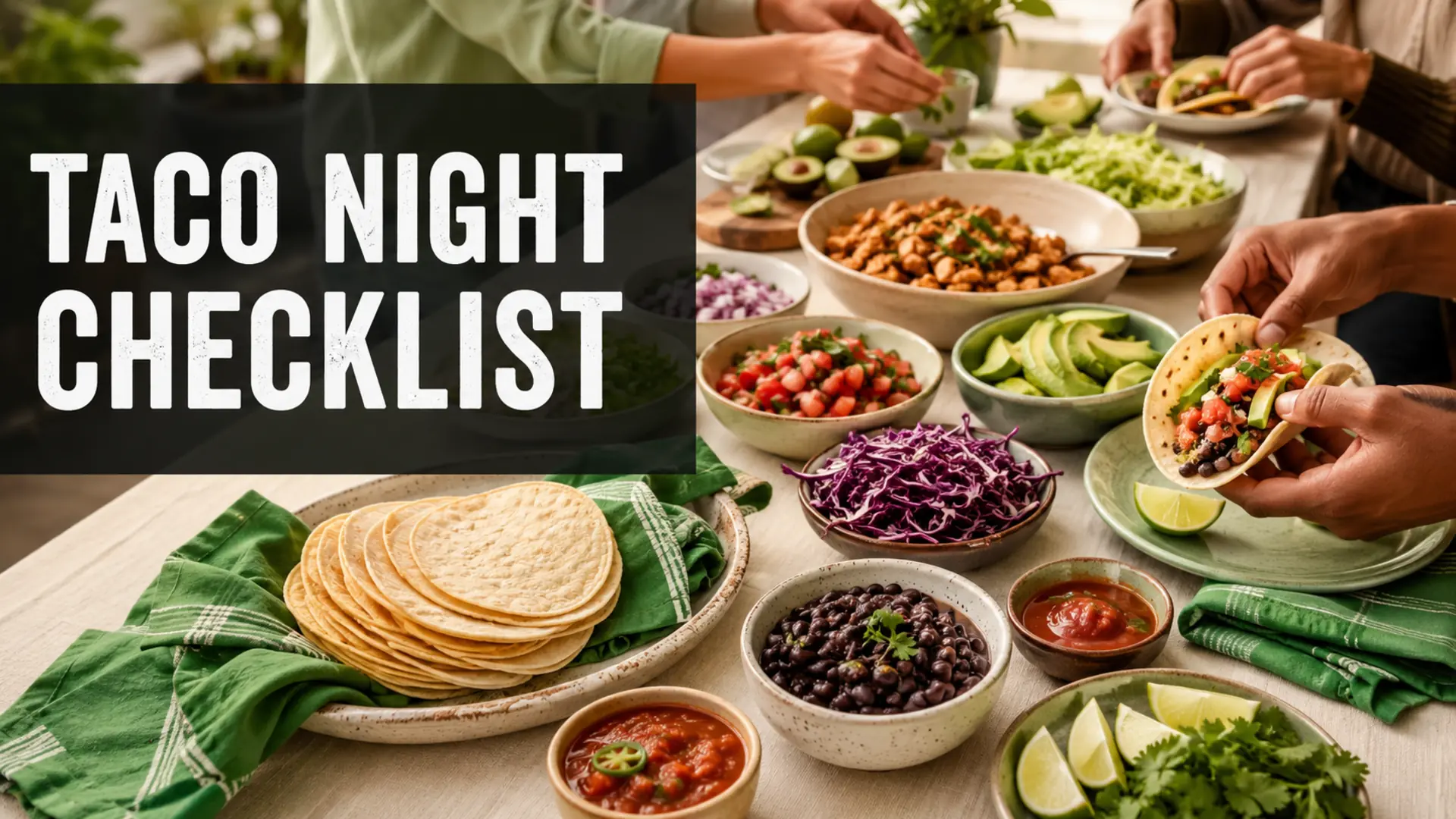
A practical taco night shopping checklist starts with five flexible groups: tortillas or another base, one or two fillings, fresh toppings, creamy or crunchy extras, and salsa or sauce. Choose only the options your household will use, then scale the quantities for the number of guests instead of buying every possible ingredient.
Taco night works well for families and groups because each person can assemble a meal around their preferences. It does not need to copy one “authentic” format. Regional taco traditions are diverse, and a home taco bar can respectfully use the ingredients available in your market.
Build Your Taco Night Shopping Checklist
1. Tortillas and other bases
- Corn or flour tortillas
- Crisp taco shells, if preferred
- Lettuce cups or a suitable gluten-free base
- Rice or another grain for taco bowls
Check package quantities and ingredient labels. If guests have allergies or coeliac disease, verify products carefully and keep suitable tortillas, utensils and preparation surfaces protected from cross-contact.
2. Choose one or two fillings
- Seasoned beans or lentils
- Ground beef, turkey or a plant-based alternative
- Shredded chicken or pork from a tested recipe
- Fish, shrimp, tofu, mushrooms or roasted vegetables
One filling may be enough for a small household. For a group, offering one plant-based option and one other filling can cover more preferences without creating an oversized buffet.
3. Fresh toppings
- Shredded cabbage or lettuce
- Diced tomatoes or pico de gallo
- Onions or quick-pickled onions
- Coriander/cilantro or another fresh herb
- Lime wedges
- Jalapeños or milder peppers
4. Creamy and crunchy extras
- Avocado or guacamole
- Sour cream, plain yoghurt or a suitable alternative
- Crumbled or shredded cheese
- Radishes, toasted seeds or crushed tortilla chips
5. Salsa, sauce and seasoning
- One mild salsa and one optional hot sauce
- Tomato, tomatillo or fruit-based salsa
- Garlic, cumin, chilli powder, oregano or a preferred blend
- Cooking oil and salt used according to the recipe and household needs
Check packaged salsa, seasoning mixes and meat alternatives for sodium and allergens. A shorter condiment selection is easier to serve and more likely to be finished.
Scale Taco Night for the Guest List
Ask how many adults and children are eating, whether tacos are the full meal, and which fillings guests prefer. Use the serving information on your recipes and packages as a starting point. Appetite and tortilla size vary, so avoid treating a universal tacos-per-person number as exact.
For a systematic approach, use the guide to scaling recipes for one, two or four people. Apply the multiplier to fillings first, then review tortillas and toppings separately because they may not scale in a perfectly straight line.
Plan for Dietary Needs and Allergies
Ask guests about dietary requirements before shopping. Keep ingredient packaging available so people can verify labels. Use separate serving spoons and avoid placing a shared spoon across several bowls. The allergy-friendly grocery-list guide explains label checking and household cross-contact precautions.
- Vegetarian or vegan: beans, lentils, tofu, mushrooms or roasted vegetables.
- Gluten-free: verified gluten-free tortillas or bowls, plus protected preparation.
- Dairy-free: omit dairy toppings or provide clearly identified alternatives.
- Milder option: keep chilli and hot sauces separate.
Organize the List by Store Section
Group tortillas and grains under bakery or pantry, fillings under protein or canned foods, toppings under produce, and chilled extras under refrigerated items. This aisle-based shopping-list method helps reduce backtracking and keeps chilled ingredients together near the end of the trip.
Prepare the Taco Bar Efficiently
- Read the recipes and identify long-cooking components.
- Wash produce under running water before cutting.
- Prepare cold toppings with clean equipment and refrigerate them.
- Cook fillings using separate utensils for raw and ready-to-eat food.
- Warm tortillas close to serving according to package or recipe directions.
- Place hot and cold components in separate serving areas.
Use a food thermometer for meat and poultry rather than relying on colour. The current FoodSafety.gov temperature chart lists safe minimum temperatures for ground meats, poultry, seafood and leftovers.
Keep Hot and Cold Foods Safe
Do not leave perishable toppings or cooked fillings sitting out indefinitely. Serve smaller bowls and replenish them from the refrigerator when needed. Keep hot food hot and cold food cold according to applicable local guidance, then refrigerate leftovers promptly in suitable containers.
Label leftovers by component. Tortillas, fillings and toppings often keep their quality better when stored separately. Follow the FoodSafety.gov cold-storage chart or the official guidance for your country when deciding how long to keep them.
Reduce Waste After Taco Night
- Turn leftover filling into bowls, salads, wraps or stuffed vegetables.
- Add chopped toppings to eggs, grain bowls or soups.
- Freeze suitable cooked filling in labelled portions.
- Buy fewer salsa varieties next time if several remain unopened.
- Record which toppings were popular before planning the next event.
Final Taco Night Checklist
- One or two bases
- One or two fillings
- Three to five fresh toppings
- One or two creamy or crunchy extras
- Mild salsa plus optional heat
- Dietary alternatives and separate utensils
- Storage containers for leftovers
The best taco night shopping checklist matches the people eating, the recipes being used and the food already at home. Keep the selection focused, scale the fillings carefully, offer clearly separated options and store leftovers safely. A flexible plan creates a welcoming taco bar without unnecessary expense or waste.
Frequently Asked Questions
What should be on a taco night shopping list?
Plan five groups: tortillas or bowls, one or two fillings, three to five fresh toppings, one or two creamy or crunchy extras, and salsa or sauce. Add cooking oil and seasonings only if needed. Check the pantry first so you do not duplicate spices and condiments.
How many tacos should I plan per person?
There is no exact number because tortilla size, appetite, guest age, side dishes, and fillings differ. Start with the serving guidance from your recipes and packages, then adjust for the group. Scale the main fillings first and add a modest buffer only where it will be used.
What are easy vegetarian taco fillings?
Seasoned beans, lentils, tofu, mushrooms, roasted vegetables, and suitable plant-based alternatives can all work. Choose one filling that fits the rest of the toppings and your guests’ preferences. Check packaged alternatives for sodium and allergens rather than assuming every vegetarian product has the same ingredients.
How do I plan a taco bar for dietary restrictions?
Ask guests in advance, verify every packaged ingredient, and label suitable choices clearly. Keep separate utensils with each bowl and protect allergy-sensitive ingredients from cross-contact. Offer heat separately. If gluten-free preparation is required, verify tortillas and seasonings and use protected surfaces and equipment.
Should taco fillings and toppings be served separately?
Yes. Separate components let guests choose according to taste and dietary needs, and they protect texture. Keep raw foods away from ready-to-eat toppings during preparation. Use individual serving utensils and avoid moving one spoon between salsa, dairy toppings, and allergy-sensitive dishes.
How do I keep a taco bar safe during a party?
Keep hot foods at 140°F or warmer and cold foods at 40°F or colder. USDA advises refrigerating perishable food within two hours, or one hour above 90°F. Review its food-safety basics and use small trays that can be replenished.
What taco ingredients can I prepare ahead?
Many cooked fillings, washed sturdy vegetables, sauces, and shredded cheese can be prepared ahead when stored safely. Keep crisp toppings, tortillas, and wet ingredients separate. Follow the specific recipe and cold-storage guidance; prepare delicate avocado or similar ingredients closer to serving for better quality.
How can I make taco night less expensive?
Choose one main filling, use beans or lentils where they fit, limit salsa varieties, and plan toppings that also work in another meal. Compare tortilla package sizes and buy realistic amounts. A focused taco bar usually costs less and creates fewer leftovers than offering every possible option.
What can I do with leftover taco ingredients?
Turn cooked filling into grain bowls, wraps, soups, salads, or stuffed vegetables. Use chopped toppings in eggs or another suitable meal. Store components separately, label them, and follow food-specific storage guidance. Freeze only fillings that retain acceptable quality and are handled safely.
How should I organize a taco night list by grocery aisle?
Put tortillas, beans, rice, spices, and salsa under pantry; vegetables, limes, and herbs under produce; cheese and other chilled toppings under refrigerated; and meat or seafood under its proper section. Shop for refrigerated and frozen foods near the end, then take them home promptly.