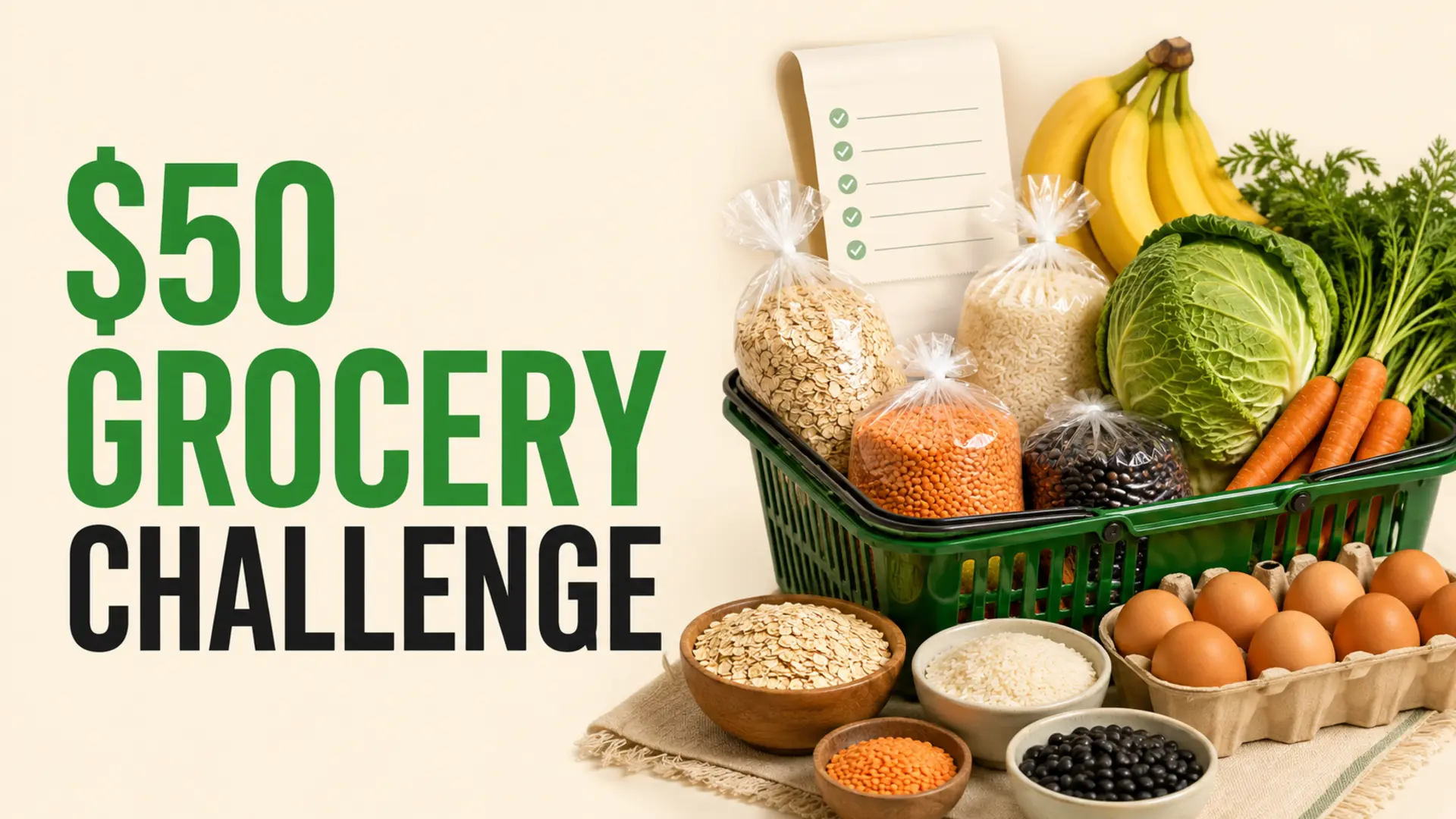
A $50-a-week grocery challenge is a planning exercise, not a universal promise. Food prices, currencies, household needs, dietary requirements and what you already have at home all change the result. The useful goal is to build a flexible week of meals around affordable staples, compare real local prices and adjust before checkout.
This guide shows how one adult can create a practical master shopping list without relying on a fabricated “exact receipt.” If $50 is unrealistic where you live, use the same method with a budget that fits your area and circumstances.
Start the $50-a-Week Grocery Challenge at Home
Begin with a quick pantry, fridge and freezer audit. Rice, oats, oil, seasonings or frozen vegetables already on hand can free more of the weekly budget for produce and protein. Note what needs using soon, then plan meals around those ingredients.
- Choose a weekly amount in your local currency.
- Decide how many people and meals it must cover.
- List dietary needs and foods you will genuinely eat.
- Keep a small buffer for price changes or substitutions.
- Check unit prices instead of assuming the largest package is best value.
Build a Flexible Master Shopping List
Use categories rather than a rigid brand-by-brand receipt. Select options that are affordable in your store, available in useful quantities and versatile enough for several meals.
Grains and filling staples
Compare oats, rice, pasta, bread, tortillas, potatoes and other familiar local staples. Choose two or three that work across breakfast, lunch and dinner rather than buying a separate base for every recipe.
Affordable protein choices
Eggs, lentils, beans, chickpeas, tofu, canned fish, dairy and discounted meat or poultry may all fit, depending on local pricing and dietary preferences. Dry pulses can be economical when time and cooking equipment allow; canned versions may be more practical in other households.
Produce that can serve several meals
Look for seasonal vegetables, cabbage, carrots, onions, bananas, frozen greens or mixed vegetables. Fresh is not automatically cheaper than frozen, so compare the usable amount and consider how quickly each item will be eaten.
Flavour and cooking essentials
Account for oil, salt, spices, sauces and cooking fuel instead of treating them as free. If these are already in your pantry, record them as available. If not, choose one or two versatile flavour builders rather than several single-use ingredients.
Plan Meals From Overlapping Ingredients
A budget list works best when ingredients repeat without every meal feeling identical. For example, oats and fruit can cover breakfasts; beans or lentils can become soup, bowls or wraps; rice can accompany a vegetable stir-fry and later support a leftover meal.
- Breakfast ideas: oatmeal with banana or toast with eggs.
- Lunch ideas: lentil soup, bean-and-rice bowls or leftovers from dinner.
- Dinner ideas: vegetable rice bowls, baked potatoes with beans, or a flexible protein with roasted vegetables.
Use a waste-aware meal plan to schedule delicate produce first and longer-lasting ingredients later. If you cook in batches, cool and store food safely and freeze portions you will not eat promptly.
Shop With a Price Buffer and Substitution Rules
Before shopping, organize your list using the supermarket aisle method. Mark essential items, flexible items and optional extras. If an essential costs more than expected, swap within the same meal role: one grain for another, one pulse for another, or fresh produce for a suitable frozen option.
Do not remove food groups indiscriminately just to hit a number. Nutrition needs vary, and children, pregnant people, athletes and people managing health conditions may need a different plan. Adapt general healthy-eating guidance to your region; Canada’s Food Guide is one public example, while other countries publish their own guidance.
Review the Challenge After Checkout
Save the receipt and note substitutions, unused food and meals that worked. The first attempt is a baseline. A realistic $50-a-week grocery challenge improves when you compare local prices, carry useful leftovers forward and remove purchases that regularly go to waste.