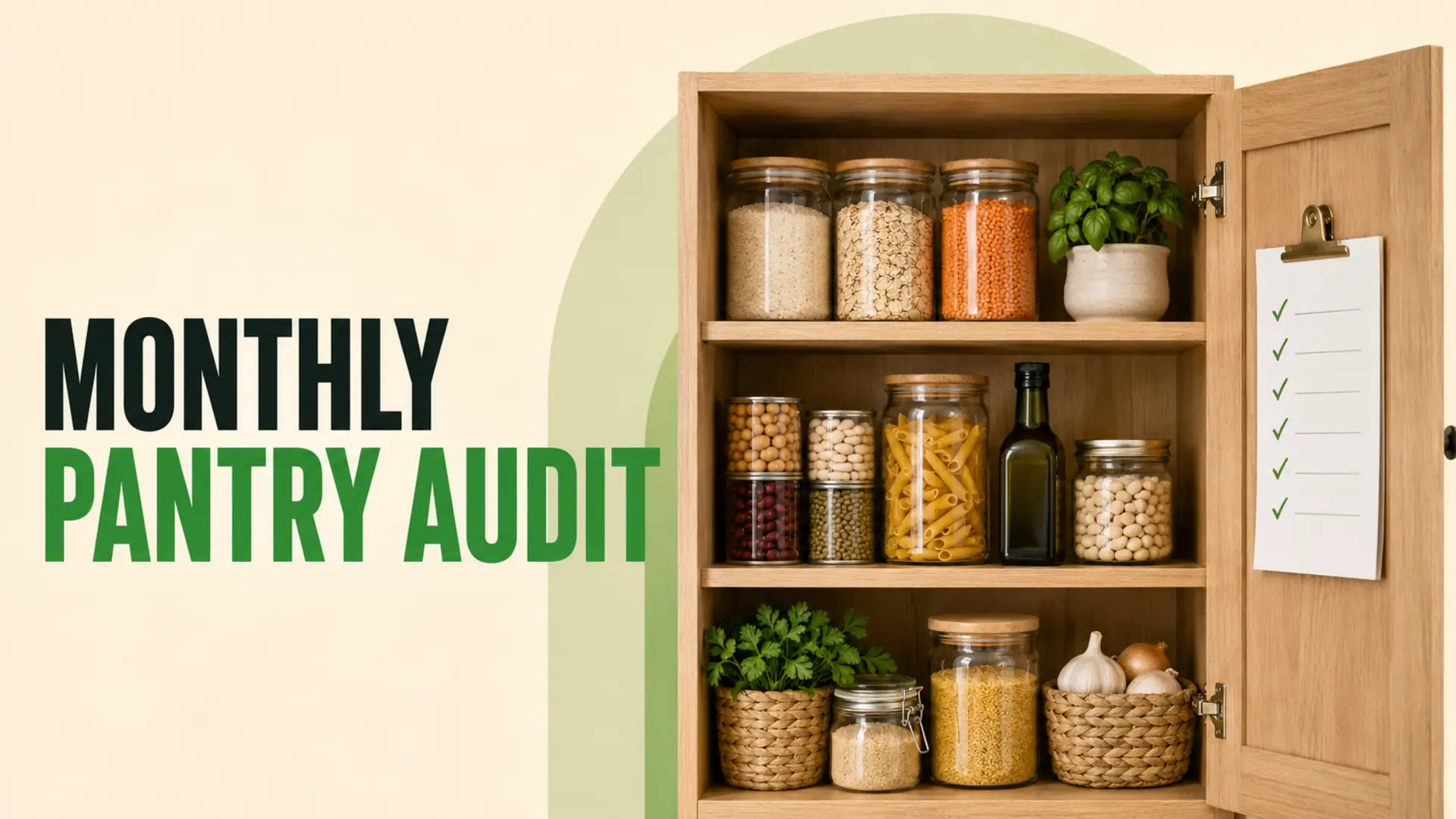
A monthly pantry audit is a simple review of the food you already have in cupboards, drawers and the freezer. The goal is to bring older items forward, identify food to use soon, clean up your inventory and create a grocery list based on what is actually missing. You do not need to empty the entire kitchen at once; working one small zone at a time makes the process easier to finish.
Use the checklist below as a repeatable routine. Follow package instructions and local food-safety guidance when deciding whether to keep or discard food, especially if packaging is damaged or storage conditions are uncertain.
Monthly pantry audit checklist
- Choose one pantry, cupboard or freezer zone.
- Remove enough items to see the shelf and product labels.
- Wipe the empty surface and check for spills or pests.
- Inspect packages for leaks, swelling, broken seals or other damage.
- Group items as keep, use first, donate if accepted, or discard.
- Record open packages and approximate quantities.
- Move older suitable items to the front.
- Create meal ideas around food that should be used soon.
- Add only genuine gaps to your grocery list.
- Set a reminder for next month.
How to complete a monthly pantry audit step by step
1. Divide the kitchen into manageable zones
Start with one section, such as grains and pasta, canned food, baking supplies, snacks, spices or a freezer drawer. Finishing a single zone is more useful than pulling out everything and leaving the job half done. Keep a cloth, recycling container and grocery list nearby so each item has a clear next step.
2. Check condition before dates
Look for torn bags, loose lids, rust around seams, leaks, bulging containers, moisture, pests or unusual odours. Do not taste food to decide whether a suspicious item is safe. Date labels can have different meanings across products and countries, so use the wording on the package together with the manufacturer’s storage instructions and relevant local guidance.
3. Sort items into four practical groups
- Keep: items in good condition that fit your usual meals.
- Use first: opened packages, older suitable products and ingredients already planned for upcoming meals.
- Donate: unopened, suitable items accepted by a local food bank or community pantry. Check its rules before donating.
- Discard: spoiled food, unsafe packages and items you cannot identify or verify.
A clear “use first” basket can make priority ingredients visible. Place it where household members will notice it, but continue to store every product according to its label.
4. Count what remains
You do not need perfect measurements. Notes such as “one unopened jar,” “half a bag” or “low” are usually enough for planning. If you use a digital list, update it while the products are in front of you. The Smart Grocery List features page explains the available tools for organizing shopping and pantry information.
5. Put food back in a useful order
Group similar items together and bring older suitable products forward so they are easier to notice. Keep frequently used staples within reach. Store heavy items on stable lower shelves, and avoid transferring food into an unlabelled container. If you decant an ingredient, retain its name, relevant allergen information and any preparation or storage directions you may need.
6. Turn the audit into a meal plan
Choose two or three priority ingredients and connect them to realistic meals. A tin of beans, rice and frozen vegetables might support a grain bowl; open pasta and canned tomatoes can become a simple dinner. This inventory-first approach also fits a practical zero-waste meal plan without requiring perfection.
Pantry audit template by category
| Category | What to review | Useful action |
|---|---|---|
| Grains, pasta and flour | Package condition, moisture and pests | Seal, label and group similar items |
| Canned and jarred food | Leaks, swelling, rust and broken seals | Move suitable older items forward |
| Oils, sauces and condiments | Storage directions and condition after opening | Refrigerate when instructed and mark priority items |
| Spices and baking supplies | Identity, aroma, clumping and package condition | Combine only identical safe products and note gaps |
| Snacks and open packages | Freshness, seals and duplicates | Create a visible use-first area |
| Freezer | Labels, packaging, unknown items and freezer condition | Plan suitable older items into upcoming meals |
For a deeper freezer review, use this freezer meal prep checklist for packaging, labelling and safe storage reminders.
Build a grocery list from the audit
Before adding replacements, ask whether the item supports a meal you expect to make. A pantry audit should reduce duplicate buying, not automatically replace everything that was discarded. Start with essential gaps, then add ingredients needed to use your priority food. Organizing the finished list with these shopping-list-by-aisle steps can make the store visit easier to follow.
- Replace now: a staple needed for a planned meal.
- Restock later: a useful item that is low but not urgent.
- Do not replace: an ingredient your household rarely uses.
- Buy a smaller size: an item repeatedly left unfinished.
Common pantry-audit mistakes
- Auditing too much at once: use zones so the kitchen stays manageable.
- Relying only on a printed date: consider package condition, storage instructions and applicable safety guidance.
- Decanting without labels: preserve ingredient names, allergens and directions.
- Hiding priority food again: keep suitable use-first items easy to see.
- Restocking automatically: replace only what fits your real cooking habits.
- Forgetting the freezer: include one drawer or shelf in the same routine.
Keep the routine easy to repeat
Save the checklist in your notes or print it, then schedule the next review for roughly the same point each month. If a full audit feels too large, rotate zones: dry goods one month, baking supplies the next and the freezer after that. Consistency matters more than completing every shelf in one session.
A monthly pantry audit gives you a clearer picture of what is available, what needs attention and what belongs on the next list. It also supports the practical food-waste prevention habits in the EPA’s guidance for preventing wasted food at home.