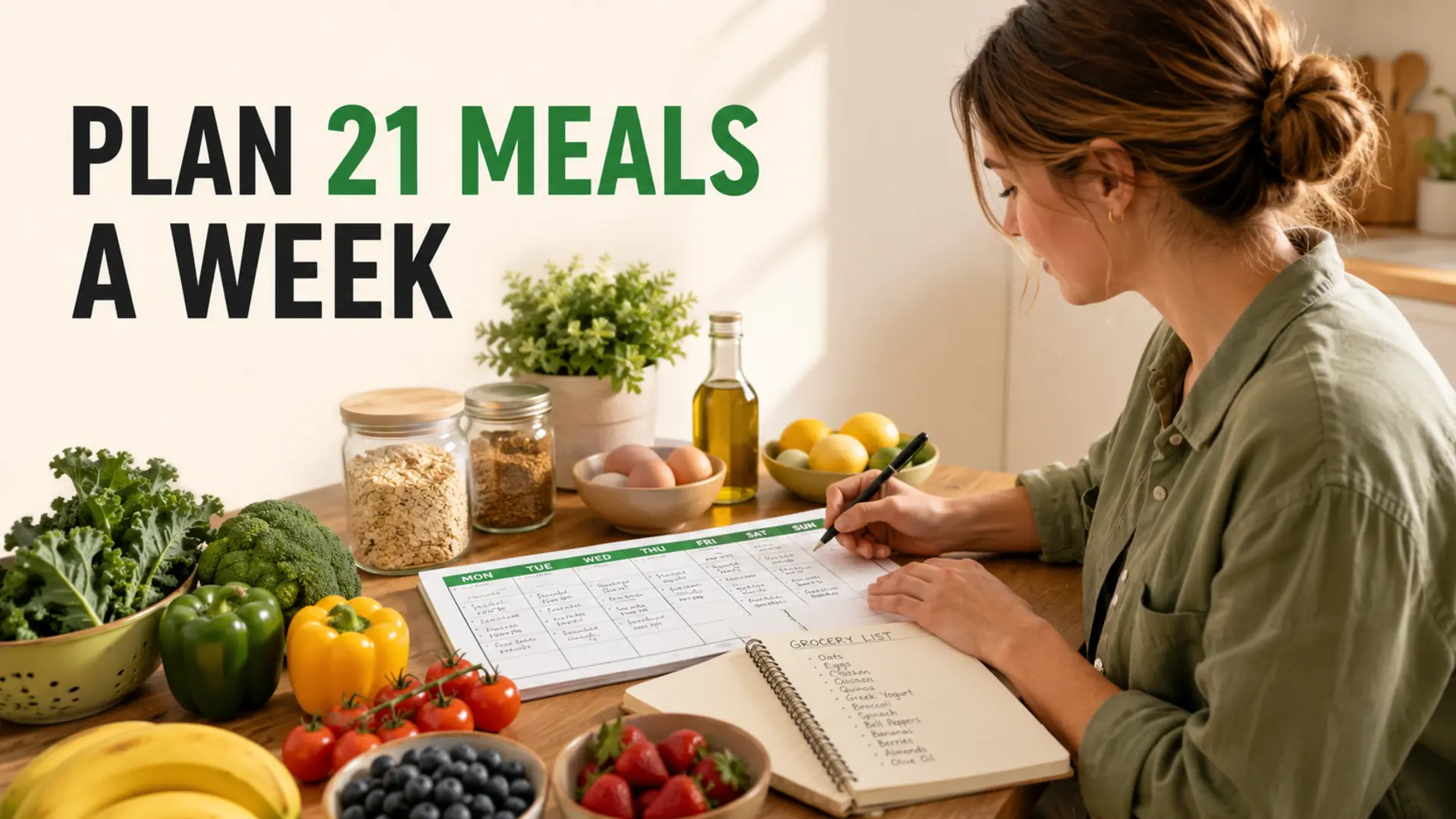
These steps show you how to plan 21 meals a week without choosing 21 completely different recipes. The useful shortcut is to build a small breakfast rotation, choose flexible lunches and give each dinner a simple role. Once that routine is familiar, you can create a weekly plan quickly and turn it into one organized grocery list.
The “under 15 minutes” target is best treated as a goal, not a guarantee. Your first plan may take longer while you choose dependable meals and note household preferences. Future weeks usually become easier because you can reuse the same framework and change only a few meals.
A Simple Way to Plan 21 Meals a Week
Twenty-one meals means seven breakfasts, seven lunches and seven dinners. You do not need twenty-one unique ideas. Repeating familiar options reduces decisions, makes ingredients easier to reuse and leaves room for the meals that deserve more attention.
- Choose two or three breakfast options.
- Choose two lunch patterns that use leftovers or easy staples.
- Assign a flexible theme to each dinner.
- Check the pantry, refrigerator and freezer.
- Combine the missing ingredients into one shopping list.
Keep the plan realistic for your schedule. A busy household may need more leftover nights, while someone who enjoys cooking may want one or two new recipes. The framework should support your week rather than force every day into the same pattern.
Start With a Repeatable Breakfast Rotation
Breakfast is often the easiest place to reduce planning. Pick two weekday choices and one slower option for days when you have more time. The exact foods can reflect your culture, dietary needs and preferences.
- Oats with fruit, seeds or yogurt
- Eggs with toast and vegetables
- Yogurt or a dairy-free alternative with fruit and cereal
- A smoothie plus a filling side
- Leftover savoury foods when that suits your routine
Write each option beside the days you expect to use it. Repetition is useful, but it does not have to mean eating the same breakfast seven times. Two or three options are usually enough to create variety without adding many separate ingredients.
Build Lunches Around Leftovers and Simple Staples
Lunch becomes easier when it connects to dinner. Plan one or two dinners with enough food for a next-day lunch, then keep a separate quick option for days when leftovers are unavailable.
- Soup, stew or curry made in a larger batch
- Grain bowls assembled from cooked grains, vegetables and a protein
- Sandwiches or wraps with fruit and vegetables
- Salads that use roasted vegetables or leftover protein
- A freezer portion from an earlier cooking day
If you want to prepare several components together, the batch cooking guide for beginners explains how to choose foods that can support more than one meal. Keep dressings and crunchy toppings separate when that helps the texture last.
Use Flexible Themes for Seven Dinners
Dinner themes narrow the choice without locking you into a specific cuisine or recipe. They describe a cooking method or meal type, so you can use ingredients you already have.
- Monday: tray bake or sheet-pan meal
- Tuesday: bowls, wraps or tacos
- Wednesday: pasta, noodles or a grain-based dish
- Thursday: soup, stew or slow-cooked meal
- Friday: homemade pizza, flatbread or another family favourite
- Saturday: a new recipe or shared meal
- Sunday: leftovers or a use-what-you-have dinner
These labels are examples, not rules. Swap the order to match work, school, religious observances or social plans. If one dinner changes, move it to another day rather than rebuilding the full menu.
Reuse Ingredients Without Making Every Meal Identical
Look for ingredients that can serve more than one meal. Roasted vegetables can become a dinner side, a lunch-bowl filling and part of an omelette. Cooked grains can support a bowl, soup or salad. Herbs can flavour several dishes when they are chosen before shopping.
Ingredient overlap should reduce waste, not create monotony. Change sauces, seasonings, textures and cooking methods. If a planned ingredient is unavailable, these practical ingredient-swapping tips can help you identify a replacement based on the job it performs in the recipe.
Turn the Meal Plan Into One Grocery List
After the meals are chosen, review each one and write down only what is missing. Check storage areas before shopping so you do not buy another package of something already on hand.
- List the ingredients needed for all seven dinners.
- Add breakfast and lunch staples.
- Include household essentials that are running low.
- Remove anything already available in usable condition.
- Group the remaining items in a way that matches how you shop.
For a repeatable workflow, read how to make a grocery list. You can also review the Smart Grocery List features and use only the tools that fit your routine.
A Sample 21-Meal Planning Structure
A simple week might use oats and eggs for breakfast, leftovers and grain bowls for lunch, and seven flexible dinner categories. That is still a complete twenty-one-meal plan even though several meals share a pattern.
Before finalizing it, check which days need portable food, which evenings are busy and whether any ingredients should be used early in the week. Leave one meal flexible when plans often change. That buffer can prevent a missed dinner from creating unused groceries.
Make the Next Week Faster
Save the plan after the week ends and mark which meals worked. Keep the dependable ideas, replace unpopular choices and note ingredients that were wasted or ran out early. This creates a reusable starting point instead of a blank page.
To plan 21 meals a week efficiently, focus on repeatable decisions rather than speed alone. A breakfast rotation, leftover-friendly lunches, flexible dinner themes and one checked grocery list can make the process easier to maintain. The best plan is the one your household can actually follow.