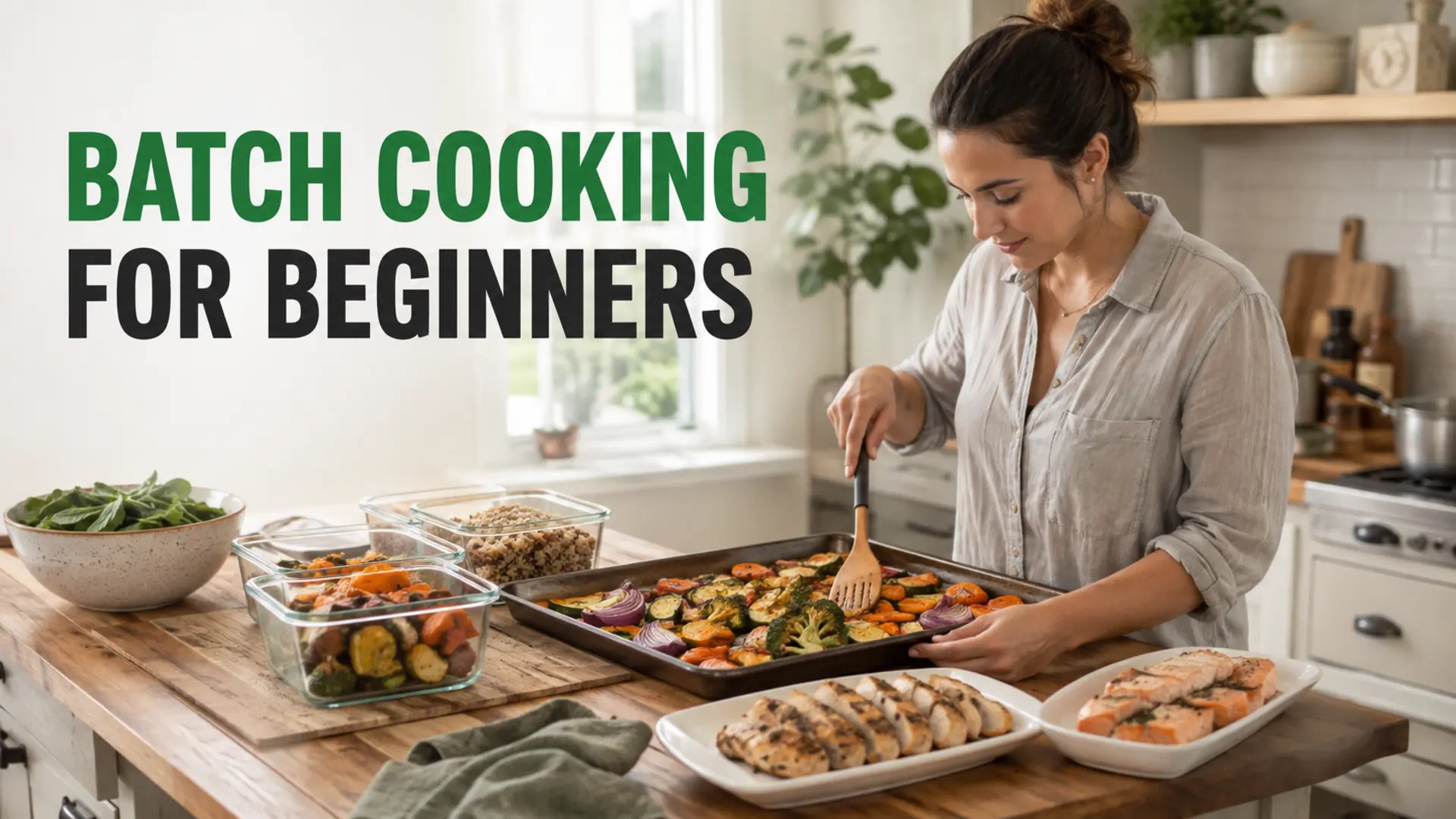
Batch cooking for beginners works best when you prepare flexible meal components instead of several complicated finished recipes at once. Cook a grain, one or two proteins, vegetables and a simple sauce, then combine them in different ways during the week.
This approach can reduce repeated cooking and make the week easier to manage without forcing you to eat the same dinner every day. Your first batch does not need to fill the freezer or cover every meal. Start with a few dependable components and learn what your household actually uses.
What Does Batch Cooking Mean?
Batch cooking means preparing a larger amount of one or more foods during a planned cooking session. Some people make complete meals, while others prepare building blocks that can be mixed throughout the week.
For beginners, component-based cooking is often easier. A pot of rice, a tray of roasted vegetables, cooked beans and a versatile sauce can become bowls, wraps, salads or quick side dishes. You still have variety, but much of the preparation is already complete.
Component Prep vs. Complete Recipe Prep
- Complete recipe prep: prepares finished dishes such as soup, curry or casserole. It is convenient when you know you enjoy reheating that meal.
- Component prep: prepares separate grains, vegetables, proteins and sauces. It gives you more freedom to assemble different meals.
You can use both methods. Prepare one finished dish for a busy evening and several components for meals that need more flexibility.
Batch Cooking for Beginners: Start With a Small Plan
Choose components that work together and share ingredients. A simple first plan might include:
- One grain or starch, such as rice, quinoa, potatoes or pasta
- One or two proteins, such as beans, lentils, tofu, eggs, chicken or fish
- Two vegetable groups suited to roasting, steaming or eating fresh
- One flexible sauce or dressing
- Fresh toppings, herbs or crunchy additions
Select foods that match your preferences, budget and dietary needs. There is no universal batch-cooking menu. The most useful plan is one your household will actually eat.
Build the Shopping List From Your Plan
Write down the ingredients for each component, then combine repeated items. Check the pantry, refrigerator and freezer before deciding how much to buy. This keeps the list connected to the food already at home.
Group the final list into produce, refrigerated foods, pantry items, proteins and frozen foods. If you want a reusable workflow, follow the guide to automating a weekly meal prep shopping list.
A digital list can help save recurring ingredients and organize them into familiar store sections. Review the available Smart Grocery List features for shared lists, favourites, pantry tracking, barcode scanning and offline access.
Prepare an Efficient Cooking Order
Before turning on the stove, read through the plan and decide what takes longest. Start grains, baked dishes and other slow components first. Use their cooking time to wash produce, prepare quick ingredients and mix sauces.
- Clear the worktop and gather containers, utensils and ingredients.
- Start the longest-cooking grain, starch or main dish.
- Wash and cut vegetables while the first component cooks.
- Prepare proteins on separate boards and utensils when food-safety separation is needed.
- Cook vegetables and remaining components.
- Mix sauces and prepare fresh toppings.
- Cool and store the finished food safely.
The session length depends on the menu, equipment and number of portions. A smaller, well-organized batch is better than an ambitious plan that leaves too many ingredients unused.
Choose Containers That Fit the Food
You do not need a matching collection of specialized meal-prep boxes. Use clean containers with secure lids in sizes that suit the food.
- Shallow containers help cooked food cool more quickly.
- Small containers keep sauces and toppings separate.
- Clear containers make leftovers easier to identify.
- Freezer-safe containers are useful for portions you will not eat soon.
- Labels with the food and preparation date reduce guesswork.
Follow Safe Cooling and Storage Practices
Food safety matters when cooking in larger quantities. Divide cooked food into shallow containers and refrigerate perishable food promptly. Keep raw ingredients separate from ready-to-eat foods and use clean utensils and surfaces.
The official FoodSafety.gov cold-storage chart lists many cooked leftovers at three to four days in a refrigerator kept at 40°F (4°C) or below. Storage needs vary by food, so follow reliable local food-safety guidance and freeze portions you will not use within the recommended time.
Turn Components Into Different Meals
The main benefit of component cooking is flexibility. The same grain and roasted vegetables can support several meals:
- Serve them warm with a protein and sauce.
- Add them to greens for a substantial salad.
- Use them as filling for wraps or grain bowls.
- Mix them into soup, pasta or an omelette.
- Serve them beside a freshly cooked main dish.
Change sauces, herbs and fresh toppings to create variety without cooking every component again. For another low-effort cooking format, explore the five-ingredient sheet-pan dinner guide.
Common Beginner Mistakes
- Cooking too much: begin with a realistic number of portions and adjust next time.
- Choosing unrelated recipes: use overlapping ingredients so shopping and preparation remain simple.
- Ignoring the pantry: check existing food before buying another package.
- Storing everything together: keep sauces and ingredients that lose texture in separate containers.
- Skipping labels: mark containers so you know what was prepared and when.
- Planning without flexibility: leave room for leftovers, changed plans and ingredient substitutions.
If an ingredient is unavailable, use a practical substitute instead of making another shopping trip. The guide to ingredient swapping can help you make sensible replacements.
Keep Your First Batch Cooking Session Simple
Batch cooking for beginners should make meals easier, not create a second job. Pick a small group of compatible ingredients, organize the shopping list, cook in a sensible order and store everything safely.
After the week, note what was popular, what remained unused and which quantities felt right. Use that information to improve the next batch rather than rebuilding the system from scratch.