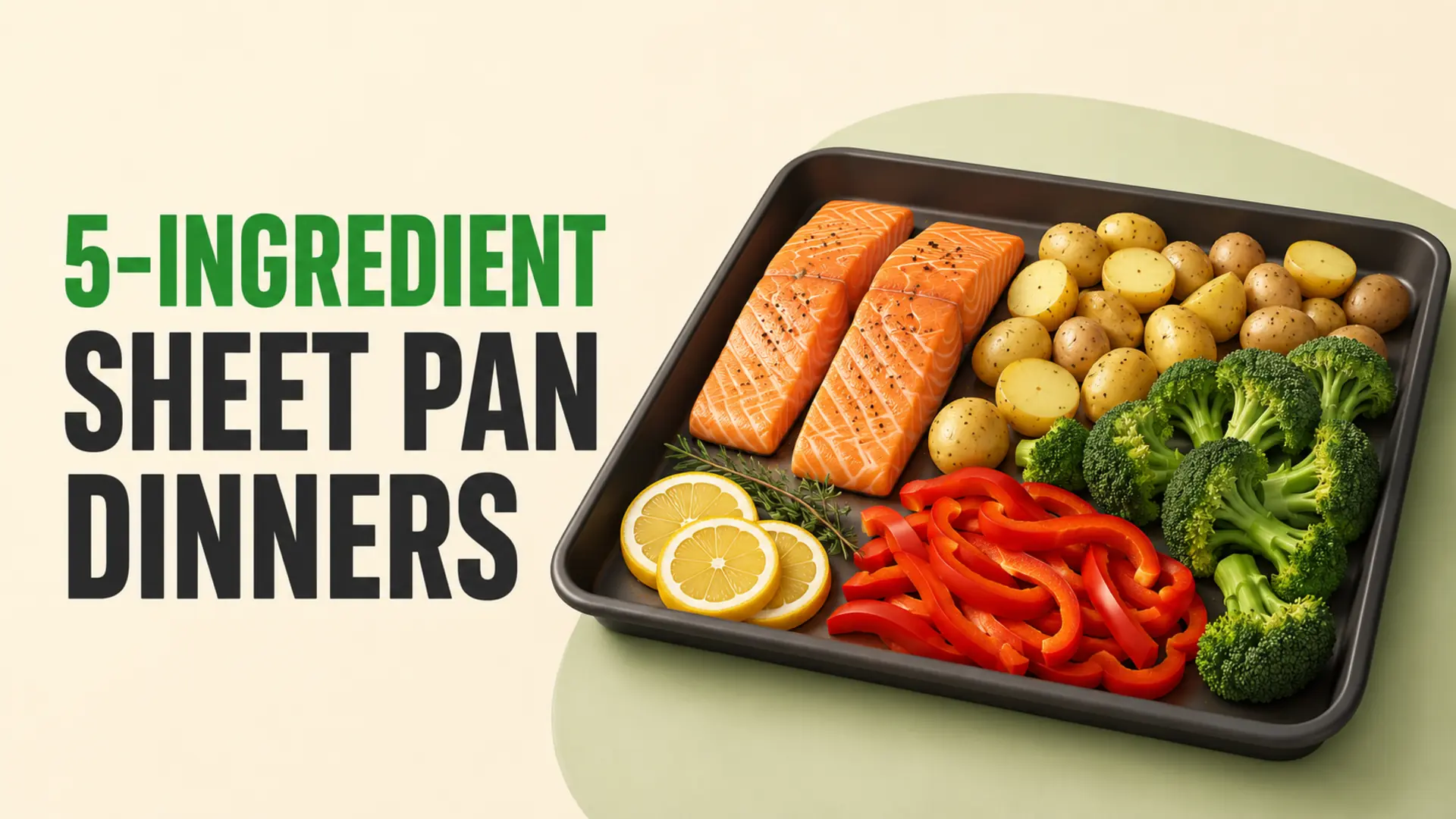
These 5-ingredient sheet pan dinners use one protein, two vegetables, one cooking fat and one seasoning option to build a practical weeknight meal. The formula keeps the shopping list focused while leaving room for different cuisines, dietary preferences and ingredients already in your kitchen.
Five ingredients is a planning framework rather than a strict cooking rule. Salt, pepper and water may be treated as staples if you already have them, but count anything you need to buy. Cooking time will vary with the ingredients, their size and your oven, so use doneness—not a single universal timer—as your guide.
How 5-Ingredient Sheet Pan Dinners Work
- Choose one protein: fish, chicken, tofu, beans, sausages or another option suited to roasting.
- Add one dense vegetable: potatoes, carrots, squash, cauliflower or Brussels sprouts.
- Add one quicker vegetable: peppers, zucchini, green beans, asparagus or tomatoes.
- Choose a cooking fat: an oil appropriate for roasting or another recipe-suitable fat.
- Finish with flavour: a seasoning blend, sauce, pesto, citrus-and-herb combination or spice mixture.
This structure creates variety without requiring a long ingredient list. It also makes it easier to compare what the recipe needs with what is already in the pantry, refrigerator and freezer.
Match Ingredients by Cooking Speed
The main challenge is getting everything ready at the same time. Dense vegetables often need a head start, while delicate vegetables and thin fish fillets cook more quickly. Cutting similar foods into evenly sized pieces helps them cook more consistently.
- Cut dense vegetables smaller than quick-cooking vegetables.
- Begin roasting dense ingredients before adding delicate foods when needed.
- Leave space between pieces so food roasts instead of steaming.
- Use separate areas of the pan when ingredients release different amounts of moisture.
- Remove an ingredient when it is ready instead of waiting for everything else.
Always check the thickest part of meat, poultry or fish and follow reliable local food-safety guidance for safe doneness. Prevent raw animal proteins and their juices from contacting foods that will not receive adequate cooking.
Five Flexible Sheet Pan Dinner Ideas
1. Salmon, Potatoes and Broccoli
Combine salmon, baby potatoes, broccoli, oil and a lemon-herb seasoning. Start the potatoes first when their size requires more cooking time, then add the salmon and broccoli later. Lemon slices can be part of the seasoning choice if you are counting by shopping-list item.
2. Chicken, Peppers and Red Onion
Use chicken pieces, bell peppers, red onion, oil and a favourite spice blend. Keep the chicken pieces similar in size and confirm they are safely cooked before serving. This combination works with many flavour profiles, from garlic-herb to warm spice blends.
3. Tofu, Broccoli and Snap Peas
Pair firm tofu, broccoli, snap peas, cooking oil and a suitable sauce or seasoning. Patting tofu dry can help its surface brown. Add a sauce near the end if it contains sugar and is likely to darken quickly.
4. Sausage, Sweet Potato and Green Beans
Combine your preferred sausage, sweet potato, green beans, oil and smoked paprika or another seasoning. Check the product label to learn whether the sausage is raw or fully cooked, because that affects handling and cooking.
5. Chickpeas, Cauliflower and Tomatoes
Use drained chickpeas, cauliflower, cherry tomatoes, oil and a spice blend. Add the tomatoes later if you want them to hold more shape. This plant-based combination can be served alone or with a grain already available at home.
Adapt the Formula to What You Have
A missing ingredient does not always require another shopping trip. Replace it with an option that has a similar cooking time and purpose. A dense root vegetable may replace another dense vegetable, while firm tofu or chickpeas may suit some meals planned around another protein.
Flavour, moisture and structure still matter, so avoid treating every substitute as identical. The guide to practical ingredient swaps explains how to choose replacements based on the job they perform.
Create a Sheet Pan Dinner Shopping List
Choose two or three combinations before shopping. Then look for overlapping ingredients without forcing every dinner to taste the same. Broccoli might appear beside salmon one night and tofu another, while different seasonings change the result.
- List the protein for each planned dinner.
- Add the dense and quick-cooking vegetables.
- Check whether enough cooking oil is available.
- Review seasoning, sauce and citrus options.
- Remove anything already on hand and still usable.
- Group the remaining items in the order that makes shopping easier.
For a broader workflow, see how to make a grocery list. If these dinners are part of a weekly routine, use the system for planning 21 meals a week to connect breakfasts, lunches and dinners.
Prepare Ahead Without Sacrificing Texture
You can wash vegetables, mix a dry seasoning and review the recipe ahead of time. Store raw animal proteins safely and separately. Some cut vegetables hold well, while others lose texture or release moisture, so preparation should match the ingredient.
The guide to organizing a weekly meal prep shopping list offers a repeatable way to review recipes and pantry staples before shopping.
Common Sheet Pan Mistakes to Avoid
- Overcrowding: tightly packed food can trap moisture and limit browning.
- Using one start time: ingredients with different cooking speeds may need staggered additions.
- Cutting uneven pieces: very different sizes can finish at different times.
- Adding sugary sauces too early: some sauces may darken before the food is ready.
- Assuming one temperature fits every recipe: follow guidance appropriate to the chosen ingredients.
Keep Weeknight Cooking Flexible
Five-ingredient sheet pan dinners are useful because they provide a structure without requiring the same meal every week. Choose ingredients that roast well together, adjust their start times and build the shopping list around what is genuinely missing.
Start with one dependable combination, note what worked and change one element the next time. A small set of flexible formulas can make dinner planning easier while still leaving space for different flavours and household preferences.
Frequently Asked Questions
What counts as a five-ingredient sheet-pan dinner?
Use the count as a planning shortcut: one protein, two vegetables, a cooking fat and a seasoning choice. Some recipes exclude salt or water from the total. For shopping, count every item you actually need to buy, including a sauce or spice blend you do not already have.
How do I keep sheet-pan vegetables from turning soggy?
Arrange food in a single layer with space between pieces, and use a second pan when necessary. Moisture-rich ingredients can release liquid, especially when tightly packed. Dry washed vegetables before seasoning and avoid crowding simply to keep the meal on one tray.
Should all sheet-pan ingredients go into the oven together?
Only when their cooking needs are compatible. Dense vegetables often need a head start, while delicate vegetables or thin fish cook faster. Follow a tested recipe’s sequence and remove finished ingredients when appropriate rather than forcing everything to share one starting time.
How do I check that sheet-pan chicken is safely cooked?
Use a digital food thermometer in the thickest part of each chicken piece, avoiding bone. Health Canada specifies 74°C (165°F) for poultry pieces. Check the safe cooking temperatures chart; browning and elapsed oven time are not reliable safety checks.
What is an easy vegetarian sheet-pan dinner formula?
Try drained chickpeas or firm tofu with two vegetables, oil and a seasoning you enjoy. Choose ingredients with compatible cooking times or add them in stages. Serve with a grain or bread if desired, remembering to include it on the shopping list if you need to buy it.
Can I use frozen vegetables for a sheet-pan dinner?
They can work, but expect extra moisture and check the package’s preparation instructions. Avoid piling them into a deep layer, and use a recipe designed for frozen vegetables when possible. Adjust the meal around their actual cooking behavior rather than assuming they match fresh vegetables exactly.
What oven temperature works for every sheet-pan dinner?
There is no single temperature that suits all combinations. Protein type, vegetable size, sauces and the pan affect the result. Start with a tested recipe for your ingredients, then use appropriate doneness checks instead of choosing a high temperature solely to shorten cooking time.
How do I build a shopping list for several sheet-pan dinners?
Choose the protein, vegetables and seasoning for each meal, then look for ingredients used across more than one dinner. Total quantities and check kitchen stock before shopping. Keep enough variety in seasoning and texture so overlapping ingredients do not make every meal feel the same.
When should I add sauce to a sheet-pan meal?
Follow the recipe, especially with sauces containing sugar that can darken quickly. Some are added near the end or after cooking. Keep serving sauces separate from anything that contacted raw meat, and do not assume a marinade is ready to use as a finishing sauce.
Can I prepare sheet-pan dinner ingredients ahead of time?
You can review the recipe, mix dry seasoning and prepare suitable vegetables ahead. Store raw animal proteins separately from ready-to-eat foods and follow ingredient-specific storage guidance. Keep components separate until cooking when that helps preserve texture or prevents unwanted contact between raw and cooked food.