
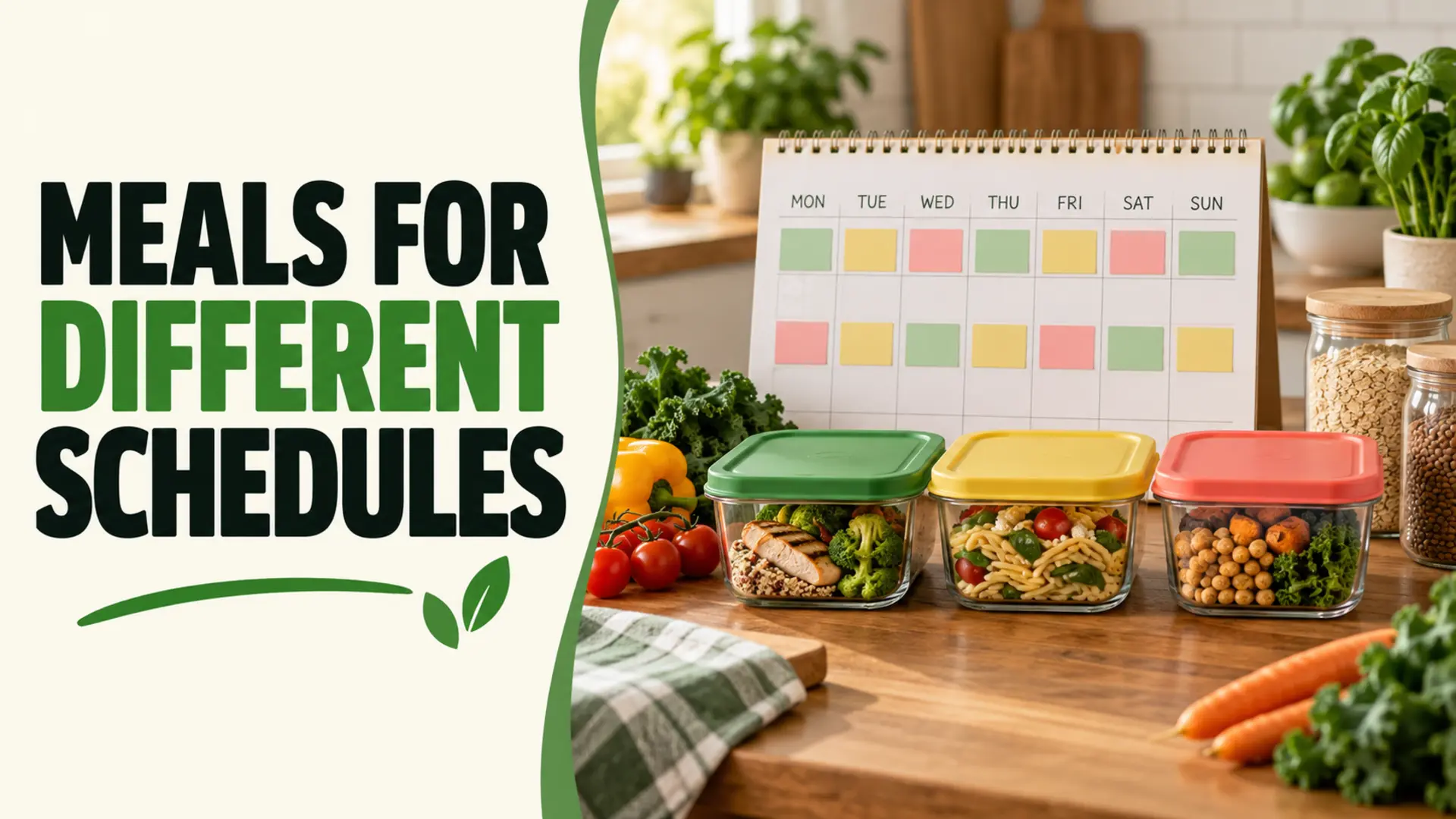
Meal planning for different family schedules works best when food is prepared for safe reheating and flexible assembly—not left on the counter for hours. Start with the household calendar, identify who eats when, and choose meals that can be stored in individual portions.
Start meal planning for different family schedules
- Mark work, school, sports, lessons, travel, and expected arrival times.
- Identify nights when people can eat together and nights requiring separate portions.
- Note who can cook, reheat, pack, or clean up safely.
- Plan one backup meal for unexpected changes.
Choose adaptable meal formats
Grain bowls, pasta, soup, tacos, baked dishes, and snack-style plates can be portioned or assembled at different times. Keep toppings separate when this preserves texture or accommodates preferences. The family meals for different preferences guide offers modular ideas.
Store food instead of running a counter buffet
Perishable ingredients should not remain at room temperature through a long arrival window. Refrigerate individual portions promptly, label them, and reheat according to reliable guidance. If using a slow cooker’s warm setting, follow the appliance manufacturer’s instructions and food-safety guidance.
Build a practical staggered-dinner station
- Refrigerated labeled meal portions
- Cold toppings stored separately
- Clear reheating instructions
- Clean bowls and utensils
- A visible note about allergens or reserved portions
Match responsibilities to ability
Adults and capable older children can share packing, reheating, and cleanup, but tasks should reflect age, safety, disability, schoolwork, and other responsibilities. Avoid assuming everyone can operate appliances independently.
Organize the grocery list
Shop for ingredients that work in more than one meal, such as cooked grains, beans, vegetables, tortillas, eggs, or suitable proteins. See the meal-planning guide for kids’ sports and the opposite-shift meal plan for related scheduling strategies.
Review the plan weekly
Notice which portions were eaten, which meals reheated well, and where handoffs failed. Meal planning for different family schedules becomes simpler when the calendar, quantities, and responsibilities are adjusted from real experience.