
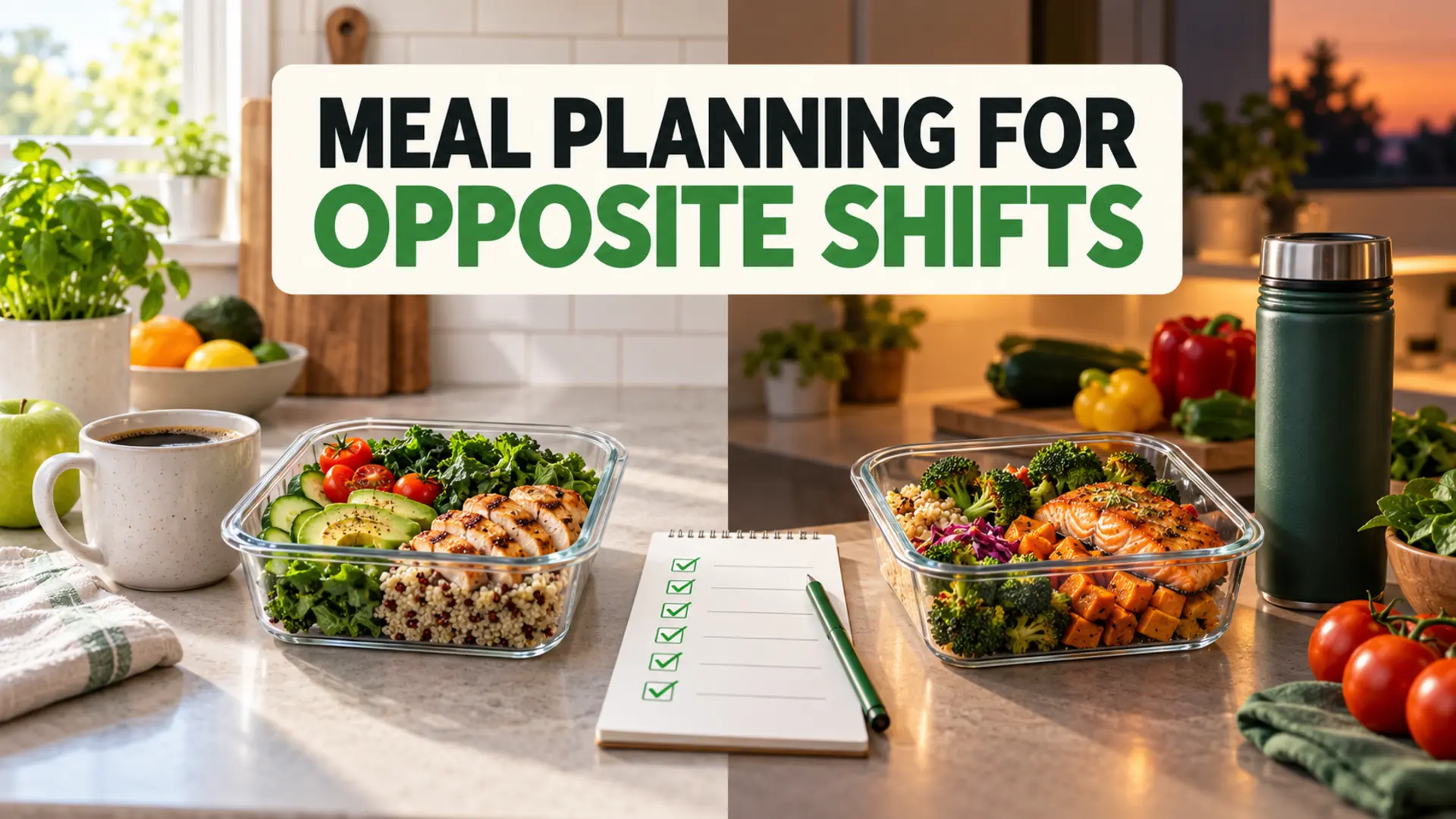
Meal planning for opposite shifts works best when two people share one flexible food system instead of trying to force every meal into the same schedule. A short planning check-in, a shared grocery list, and a few mix-and-match components can help each partner eat well at a suitable time while keeping shopping and prep manageable.
Start Meal Planning for Opposite Shifts With Your Overlap Window
Find the small window when you are both awake and available. It might be a weekend morning, a few minutes before one person leaves, or a regular video call. Use that time to compare work schedules, note appointments, and decide how many meals each person actually needs at home.
The goal is coordination, not a rigid calendar. Mark any meals you can enjoy together, then plan the remaining meals as individual portions. A simple shared chore and grocery workflow can clarify who checks the kitchen, who shops, and who handles the next kitchen reset.
Choose Flexible Meals Instead of Separate Menus
Build the plan around components that can become more than one meal. Cooked grains, roasted vegetables, a protein, a sauce, and washed salad ingredients can be combined as bowls, wraps, salads, or side dishes. This gives both partners choice without doubling the cooking.
- Rice or another grain with vegetables and beans, eggs, fish, tofu, or meat
- Soup or stew served with bread, salad, or a baked potato
- Pasta with vegetables and a separately stored sauce
- Wrap fillings that also work in a bowl or salad
- Yogurt, oats, fruit, and seeds for a meal or snack at any hour
Meal labels do not need to say “breakfast” or “dinner.” Name the food and add any useful serving note. Someone finishing an overnight shift may prefer oatmeal in the afternoon or a savoury meal in the morning.
Make One Shared Grocery List
Before adding items, check the refrigerator, freezer, and pantry. Record quantities where they matter and agree on acceptable substitutions. A shared list reduces crossed wires when either partner can shop, but it still helps to assign one person to complete or confirm the trip.
Organize the list by store section and separate shared staples from personal items. The principles in this guide to sharing the grocery-list mental load can help make the work visible without turning every missing item into a message.
Divide Prep Into Small, Clear Jobs
One long batch-cooking session is optional. Split prep into jobs that fit each schedule: wash produce, cook a grain, prepare a sauce, portion snacks, or assemble tomorrow’s lunch. Leave a short note about what is ready and what still needs cooking.
Use food-safe containers in sizes that suit your portions. Glass is one option, but it is not required. Label perishable meals with the preparation date and any important allergen or reheating information. For easier cooking nights, borrow adaptable ideas from these five-ingredient family meals rather than creating an entirely different recipe for each shift.
Store and Reheat Food Safely
Cool cooked food promptly, refrigerate it in shallow containers, and keep raw and ready-to-eat foods separated. Storage time varies by food, so use the current FoodSafety.gov cold-storage chart instead of applying one universal number to every dish. Freeze portions that will not be eaten within the recommended refrigerator window.
Follow the recipe and appliance guidance for reheating, and make sure leftovers are heated thoroughly. Avoid putting ordinary glass jars in the oven unless the manufacturer specifically identifies them as oven-safe.
Plan Food Around Each Person’s Shift
Appetite, break access, sleep, health needs, and job demands differ. Pack foods that are practical for the available break area and include water. The CDC/NIOSH guidance for night-shift workers emphasizes nutrient-dense choices and notes that meal timing can affect alertness and sleep, but individual needs still vary.
If either partner manages diabetes, allergies, digestive concerns, pregnancy, or another medical condition, follow their clinician’s advice rather than a generic shift-work menu.
Use a Short Weekly Reset
- Compare the next week’s work and sleep schedules.
- Count the meals and snacks each person needs.
- Check perishables and plan to use the most time-sensitive foods first.
- Choose two or three flexible meal bases.
- Assign shopping, prep, and cleanup tasks.
- Freeze extra portions and update the shared list.
This inventory-first approach can also reduce avoidable waste. The U.S. EPA’s home food-waste guidance recommends planning meals, shopping with a list, and storing food properly.
Keep Connection Separate From the Dinner Clock
Opposite shifts may limit shared dinners, but food can still support connection. Save one overlap meal when schedules allow, leave a note about a dish, or share a quick coffee before a handoff. The routine should serve the relationship rather than become another standard neither person can meet.
A Practical Opposite-Shift Meal Plan
Start small: choose a planning window, make one accurate grocery list, prepare a few versatile components, and review what was actually eaten. Adjust portions and responsibilities the following week. Consistent meal planning for opposite shifts is less about perfect batch cooking and more about a dependable handoff that respects both schedules.
Frequently Asked Questions
How do couples on opposite shifts meal plan together?
Start with the weekly calendar and identify overlap windows, solo meals, packed meals, and sleep periods. Choose two or three dishes that store and reheat well, plus quick fresh options. Plan around actual handoffs instead of expecting both partners to eat dinner at the same time.
What meals work best for opposite work schedules?
Flexible dishes such as soups, stews, grain bowls, pasta components, curries, roasted vegetables, cooked proteins, and breakfast foods can be portioned and reheated. Keep delicate toppings separate. Choose meals both partners like and adjust portions to shift length and appetite.
How can opposite-shift couples share meal-prep duties?
Split prep into independent jobs with deadlines: one person chooses meals and starts the list, another shops, one cooks a batch, and the other portions and cleans. Use clear notes so the next person knows what is cooked, what is reserved, and what still needs preparation.
How do we avoid cooking two completely separate dinners?
Prepare a shared base that each person finishes differently. Cook grains, protein, vegetables, and sauce, then assemble bowls, wraps, salads, or reheated plates. Add one fresh component at serving time. This preserves variety without duplicating the most time-consuming work.
How should prepared meals be stored for different shifts?
Cool food promptly in shallow containers, label portions with the dish and date, and refrigerate at 40°F/4°C or below. Reserve portions before someone starts eating from the shared dish. Freeze what will not be used within the safe refrigerator window.
What is the safest way to reheat shift meals?
Reheat leftovers to 165°F/74°C and stir or rotate food so it heats evenly. The official FoodSafety.gov leftovers guidance recommends using refrigerated leftovers within four days or freezing them sooner.
How can night-shift workers pack meals without relying on vending machines?
Keep a repeatable packing formula: main meal, fruit or vegetable, filling snack, water, and any needed utensils. Prepare the bag before sleep or during the shared handoff. Use an insulated bag and cold packs when a reliable refrigerator is not available.
How can we keep the grocery list accurate when we rarely shop together?
Use one shared list and add quantities, acceptable substitutions, and who needs each item. Mark products already ordered or bought immediately. A short scheduled list review prevents both partners from purchasing the same staple between shifts.
What should we do when shift schedules change unexpectedly?
Keep two freezer meals and several shelf-stable backup combinations, then move perishable planned meals earlier or freeze them. Update the shared calendar and list rather than forcing the original plan. A resilient meal plan includes room for overtime, sleep needs, and missed overlap.
How can couples maintain connection when they rarely share dinner?
Separate connection from a traditional dinner time. Share breakfast, coffee, a weekend prep session, or a written note with the prepared meal. Meal planning can reduce logistical stress, but it should not make either partner feel guilty for eating when their shift requires it.