
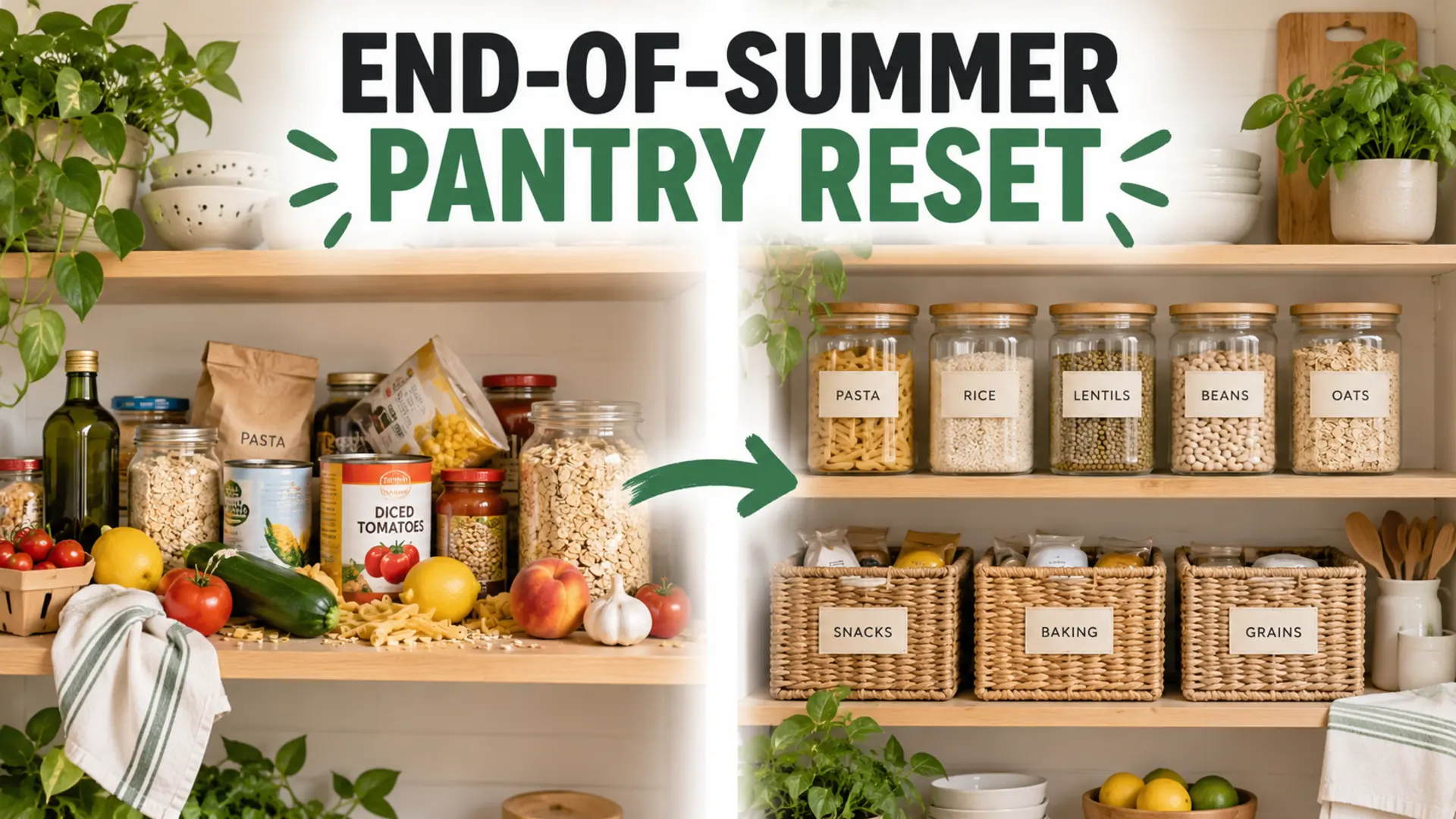
An end-of-summer pantry reset helps you see what is usable, what needs attention and what belongs on the next grocery list. The goal is a safer, easier-to-use pantry—not a dramatic clear-out or a guaranteed savings figure.
End-of-Summer Pantry Reset: Check Every Zone
Work one shelf or category at a time so chilled foods are not left out and the kitchen remains usable. Inspect packaging, dates and signs of pests or spoilage. Follow local food-safety guidance when deciding whether an item is safe.
- Group unopened staples by type.
- Place open, safe items where they will be noticed.
- Discard food that is spoiled, contaminated or unsafe.
- Set aside unopened, suitable donations only where local organizations accept them.
The monthly pantry-audit checklist provides a repeatable inventory method.
Plan Meals Around Priority Ingredients
Build a few flexible meals around ingredients that should be used soon. Beans, grains and tomatoes may become soup, chili or grain bowls; safe cracker or cereal remnants may work as toppings where appropriate. Do not combine questionable food simply to avoid waste.
Clean and Reorganize Safely
Remove crumbs, clean shelves according to their material, and let surfaces dry before returning food. Store heavy items low, keep household chemicals separate, and place allergens or special-diet foods according to your household’s cross-contact plan.
- Breakfast and lunch components
- Weeknight meal bases
- Snacks and frequently used foods
- Baking ingredients
- Back-stock items
Build the Next Grocery List
Record true gaps after the pantry is organized. Buy quantities that match storage space and likely use rather than automatically replacing every discarded item. For a meal-first approach, see the zero-waste meal-plan guide.
Keep the Reset Useful
An end-of-summer pantry reset works best as a calm seasonal review. Note a few items to use first, plan practical meals, and schedule a shorter follow-up before clutter builds again.