
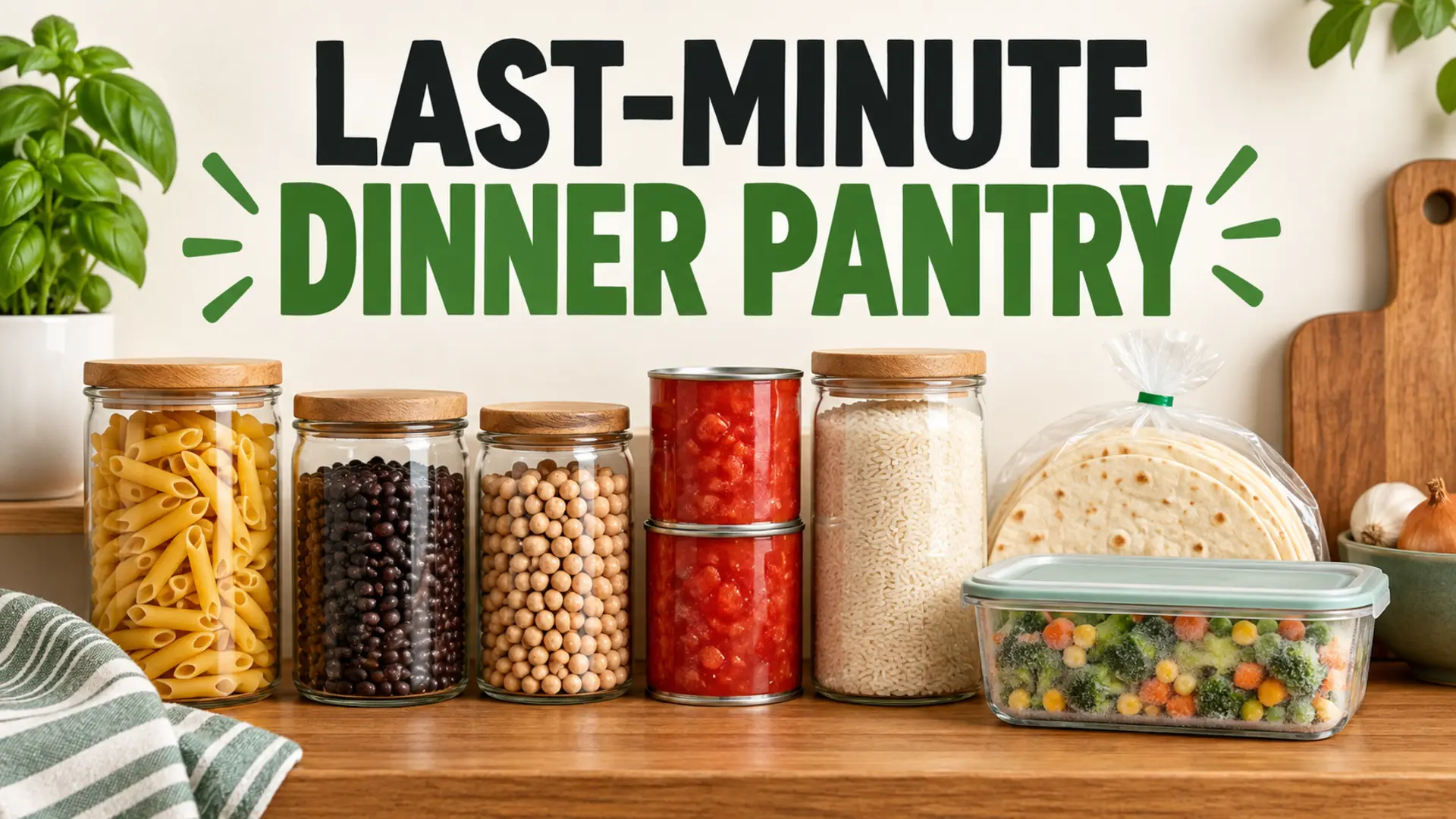
A last-minute dinner pantry keeps adaptable ingredients available for evenings when plans change. It should match your household’s allergies, cooking equipment, storage and preferred foods—not a rigid menu or promised cooking time.
Stock a Last-Minute Dinner Pantry
- Pasta, rice, couscous or another quick staple
- Beans, lentils, fish or another suitable protein
- Tomatoes, broth, coconut milk or a familiar sauce base
- Frozen vegetables and bread or tortillas
- Eggs, cheese or alternatives when appropriate
Choose package sizes the household can use and check labels every time. For another practical reserve, see the sick-day pantry list.
Use Flexible Meal Formats
Combine staples as pasta and vegetables, bean tacos, soup, grain bowls, eggs with toast or curry. Follow package and tested-recipe directions, especially for eggs, meat and frozen foods.
Rotate the Emergency Ingredients
These foods do not need to sit untouched. Include them in normal meal planning, replace what is used and check dates periodically. This prevents forgotten stock and unnecessary waste.
Store Food Safely
Keep packages dry and sealed, separate allergens when needed, and refrigerate leftovers promptly. Do not use damaged, leaking or questionable containers.
Make Backup Meals Routine
A useful last-minute dinner pantry reduces decision-making without promising gourmet results or fixed savings. The welcome-home travel pantry offers more simple meal combinations.
For internationally focused food-safety guidance, consult the Food and Agriculture Organization of the United Nations.