
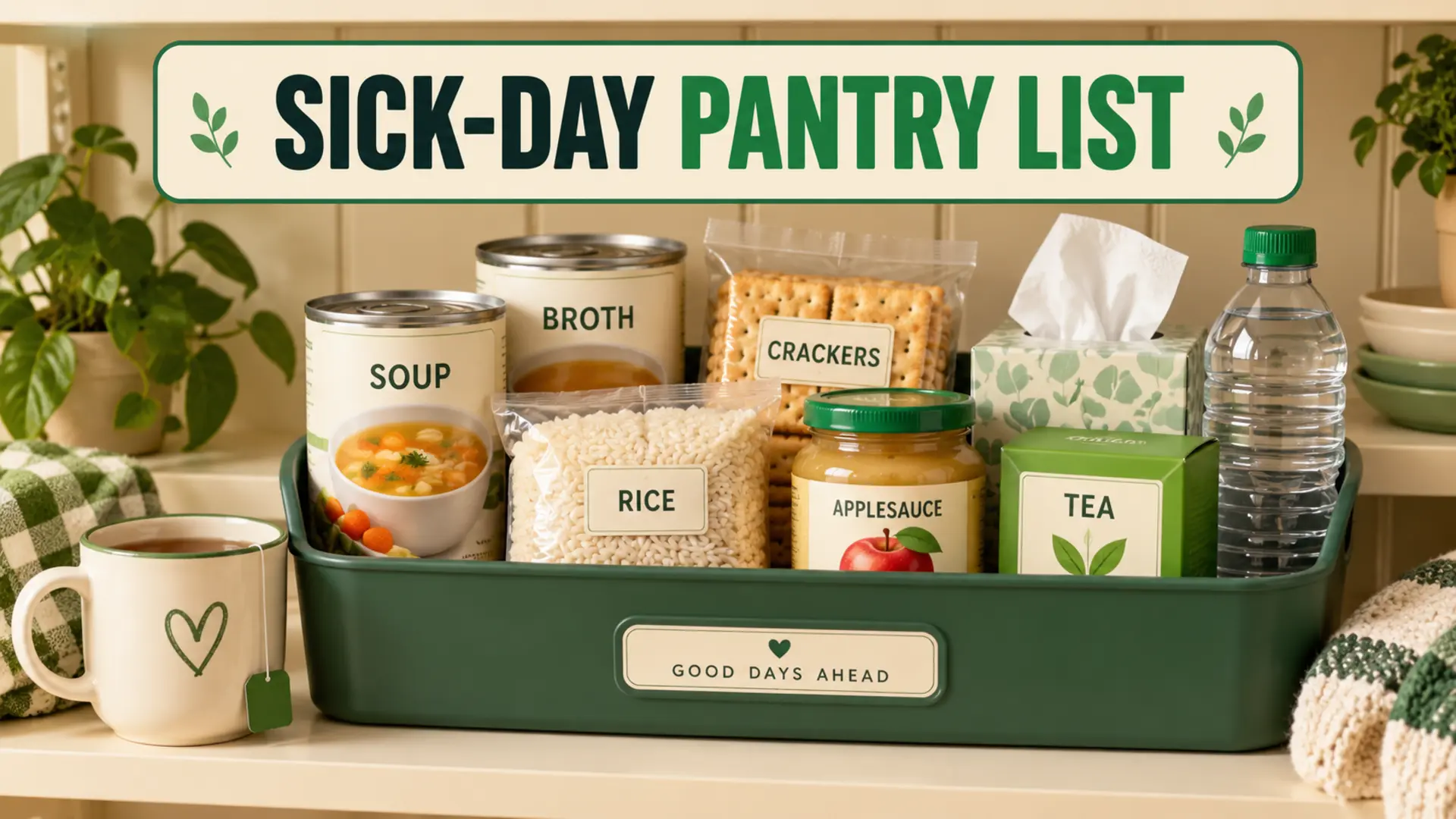
A sick-day pantry list can reduce errands when someone is unwell, but food is not a substitute for medical care. Stock familiar items your household can tolerate, check them regularly, and follow professional advice for infants, children, older adults, pregnancy, and medical conditions.
Sick-day pantry list essentials
- Water and suitable shelf-stable beverages
- Broth or soup that fits dietary needs
- Rice, oats, pasta, toast, or crackers
- Applesauce and canned or frozen fruit
- Tea and honey for people over one year old
- Simple canned beans, chicken, or other familiar foods
- Tissues, soap, and household thermometer supplies
Avoid universal recovery stages
There is no single four-stage diet for every illness. The traditional BRAT approach is not a complete long-term diet, and “bone broth” does not guarantee tissue repair or immune support.
Use hydration products appropriately
Electrolyte products are not automatically needed and may be unsuitable for some people. Follow package directions and medical advice, particularly for children or people with kidney, heart, or metabolic conditions.
Store the kit safely
Keep food dry and within date, store medicines separately and securely, and place the bin where adults can access it without creating a child-safety risk.
Plan for allergies
Read labels and include alternatives for household dietary needs. A food-allergy household plan can help.
Know when to seek help
Contact a healthcare professional for concerning or persistent symptoms, dehydration, breathing difficulty, severe pain, confusion, or when the person is at higher risk. Use local emergency services for urgent symptoms.
Pair the kit with this emergency pantry guide. A useful sick-day pantry list supports comfort and convenience without making treatment claims.