
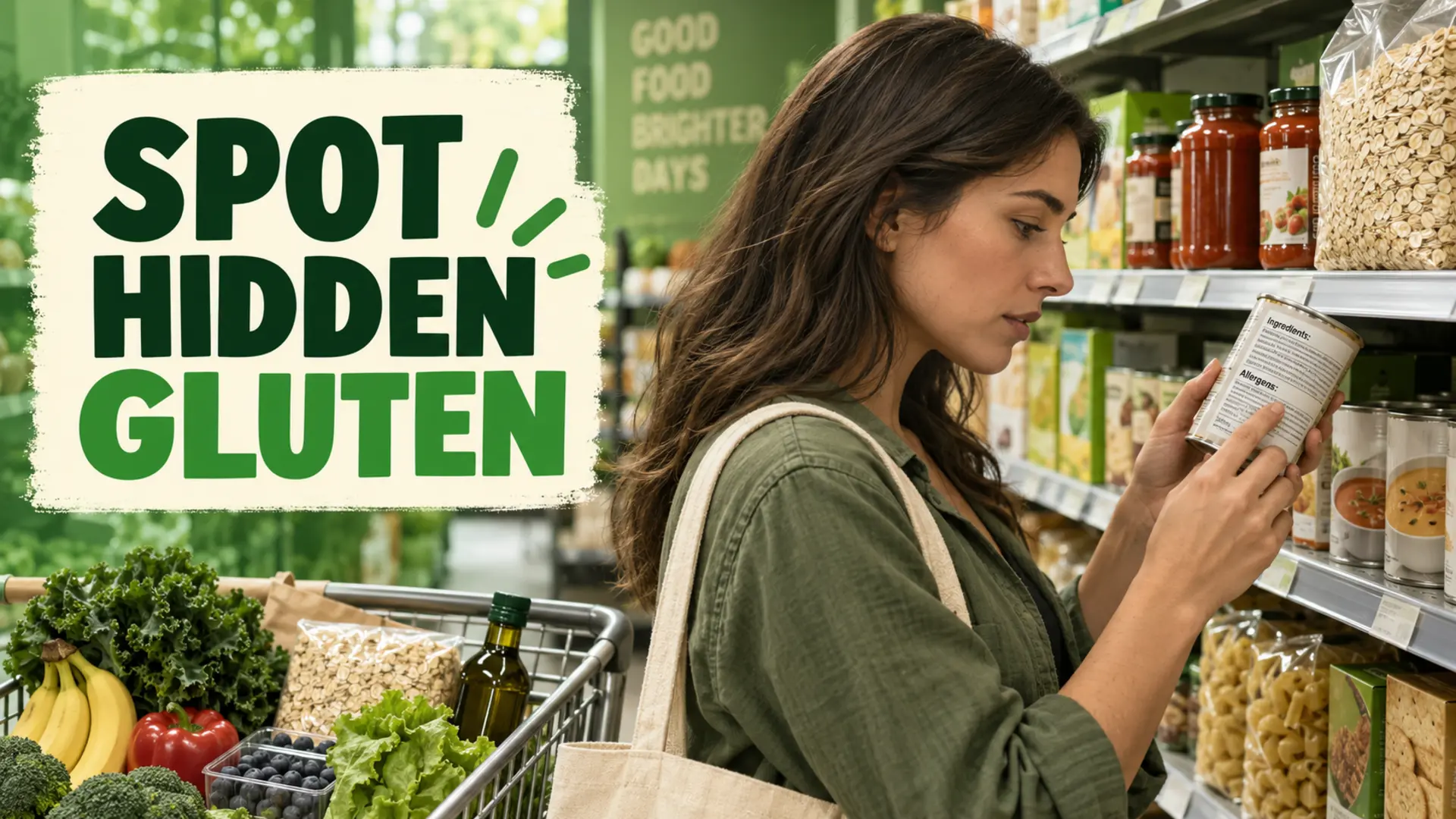
Learning to spot hidden gluten is especially important for people with coeliac disease, wheat allergy, or medically advised gluten avoidance. Ingredients and allergen-labelling rules vary by country, so check every package rather than relying on assumptions.
How to spot hidden gluten on labels
Check the ingredient list and allergen statement for wheat, barley, rye, triticale, malt, brewer’s yeast, and other relevant ingredients. Oats require special care because ordinary oats may be cross-contaminated; follow your clinician’s and local coeliac organization’s guidance.
Products worth checking carefully
- Sauces, gravies, stocks, soups, and seasoning blends.
- Processed meats, meat alternatives, and marinades.
- Cereals, snack foods, confectionery, and flavoured drinks.
- Medications and supplements when medically relevant.
Consider cross-contact
Shared fryers, toasters, bulk bins, cutting boards, and preparation surfaces can transfer crumbs. “Gluten-free ingredients” do not guarantee a safely prepared meal. Contact manufacturers or food providers when information is unclear.
Keep different conditions distinct
Wheat-free does not always mean gluten-free, and gluten-free does not mean low-FODMAP or nutritionally superior. See our gluten-free budget shopping guide and low-FODMAP grocery guide for these distinctions.
Conclusion
To spot hidden gluten reliably, read current labels, verify cross-contact information, and follow condition-specific professional advice.