
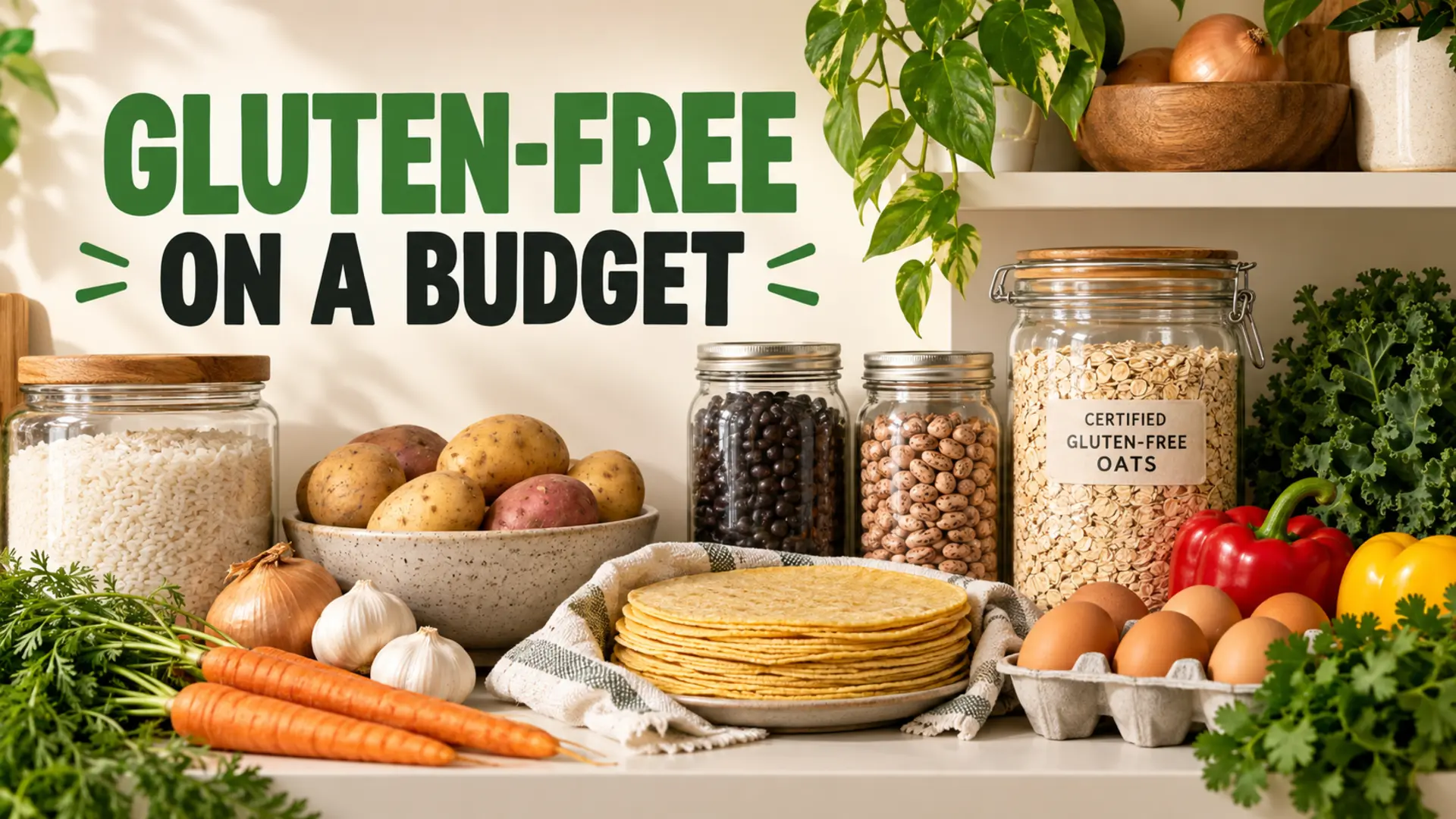
Gluten-free shopping on a budget is easier when you build meals around suitable everyday staples, compare unit prices, and reserve specialty substitutes for the foods your household truly uses. If you have coeliac disease or another diagnosed condition, label checking and cross-contact controls matter as much as cost.
Gluten-free shopping on a budget starts with a plan
Check your pantry and freezer before shopping, then plan a few meals that share ingredients. Rice, potatoes, beans, lentils, eggs, plain meat or fish, fruit, vegetables, and some dairy foods are naturally gluten-free, although packaged versions can include gluten-containing seasonings or be exposed to cross-contact.
- Choose two or three flexible meal bases, such as rice bowls, baked potatoes, soups, or corn-tortilla meals.
- Compare the unit price, package size, and likely waste—not just the shelf price.
- Buy only the specialty bread, pasta, or flour products that solve a real need.
Read every label carefully
Ingredients and allergen statements vary by country and can change without notice. Check each package every time, especially sauces, stocks, spice blends, processed meats, and ready-made foods. Oats require particular care because ordinary oats may be contaminated during growing or processing; follow the advice of your healthcare professional and local coeliac organization.
For medically necessary gluten avoidance, use separate preparation surfaces, clean utensils, and dedicated items where crumbs are difficult to remove, such as a toaster. Avoid shared bulk bins if scoop or airborne cross-contact is possible.
Make affordable meals from repeat ingredients
- Rice bowls: rice, beans or safely prepared protein, vegetables, and a checked sauce.
- Potato meals: baked potatoes with beans, cheese, vegetables, or leftover filling.
- Egg dinners: omelettes or frittatas with vegetables and a salad.
- Soups and stews: lentils, beans, vegetables, and clearly labelled stock.
Frozen vegetables and fruit can reduce waste and may cost less than fresh produce out of season. Canned beans and fish can also be practical; compare drained weight and rinse products when appropriate.
Use baking mixes with care
Homemade flour blends are not universal one-for-one replacements. Different recipes need different starches, binders, hydration, and structure. Use a tested gluten-free recipe or a blend designed for that recipe rather than assuming it will replace wheat flour exactly.
Keep the system sustainable
Track which products work, note reliable substitutes, and keep a small backup meal in the pantry or freezer. Our last-minute dinner pantry checklist can help with backup planning, while the one-stop versus specialty-store guide offers a useful framework for comparing shopping trips.
A practical conclusion
Successful gluten-free shopping is not about buying every product with a gluten-free label. Start with suitable staples, verify packaged foods, protect against cross-contact, and spend specialty-product money where it brings the most value.