
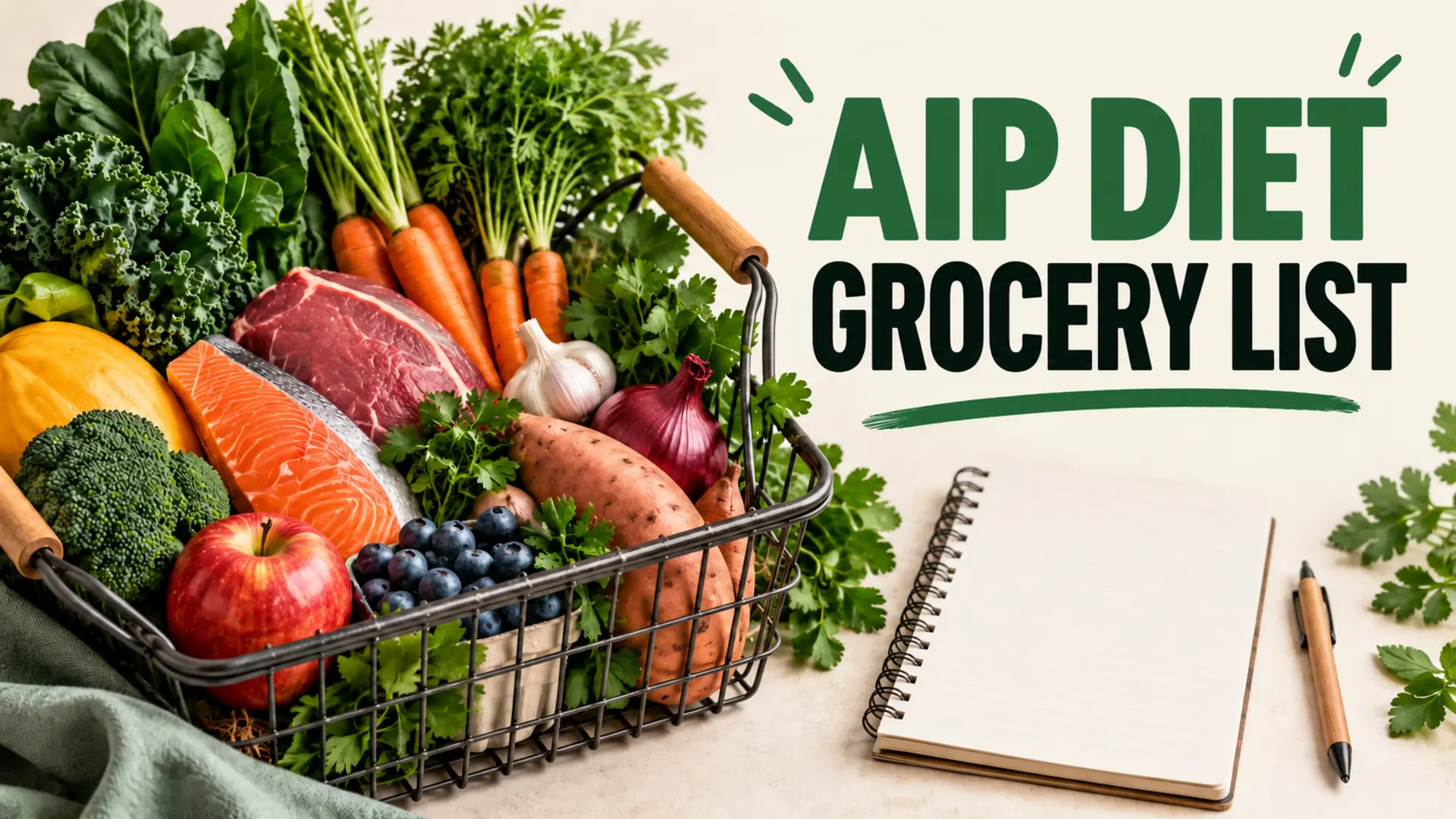
An AIP diet grocery list supports the Autoimmune Protocol, a highly restrictive elimination approach sometimes used by people with autoimmune conditions. Evidence and individual responses vary, and AIP should not replace medical treatment.
AIP diet grocery list basics
Common versions include vegetables, fruit, meat, fish, selected fats, and herbs while temporarily excluding grains, legumes, dairy, eggs, nightshades, nuts, seeds, alcohol, and various additives. Exact rules differ, so use a current protocol source if compliance matters.
Plan simple meals
- Fish or meat with root vegetables and greens.
- Vegetable soup with an allowed protein and fat.
- Roasted vegetables with fruit and suitable leftovers.
Understand the risks of restriction
Eliminating many food groups can increase cost, reduce dietary variety, and create nutrient gaps. The protocol may be unsuitable during pregnancy, childhood, eating-disorder recovery, or without clinical oversight. Symptoms require medical assessment rather than self-diagnosis.
Reintroduce foods methodically
An elimination diet should have a planned endpoint. Reintroductions can help identify tolerance while restoring variety. Work with a registered dietitian or clinician familiar with your condition and medication.
The balanced grocery list explains flexible meal planning, while the nutrition-label guide supports ingredient checks.
Conclusion
An AIP diet grocery list is a temporary planning tool, not a cure. Use qualified support, monitor adequacy, and work toward the broadest suitable diet.