
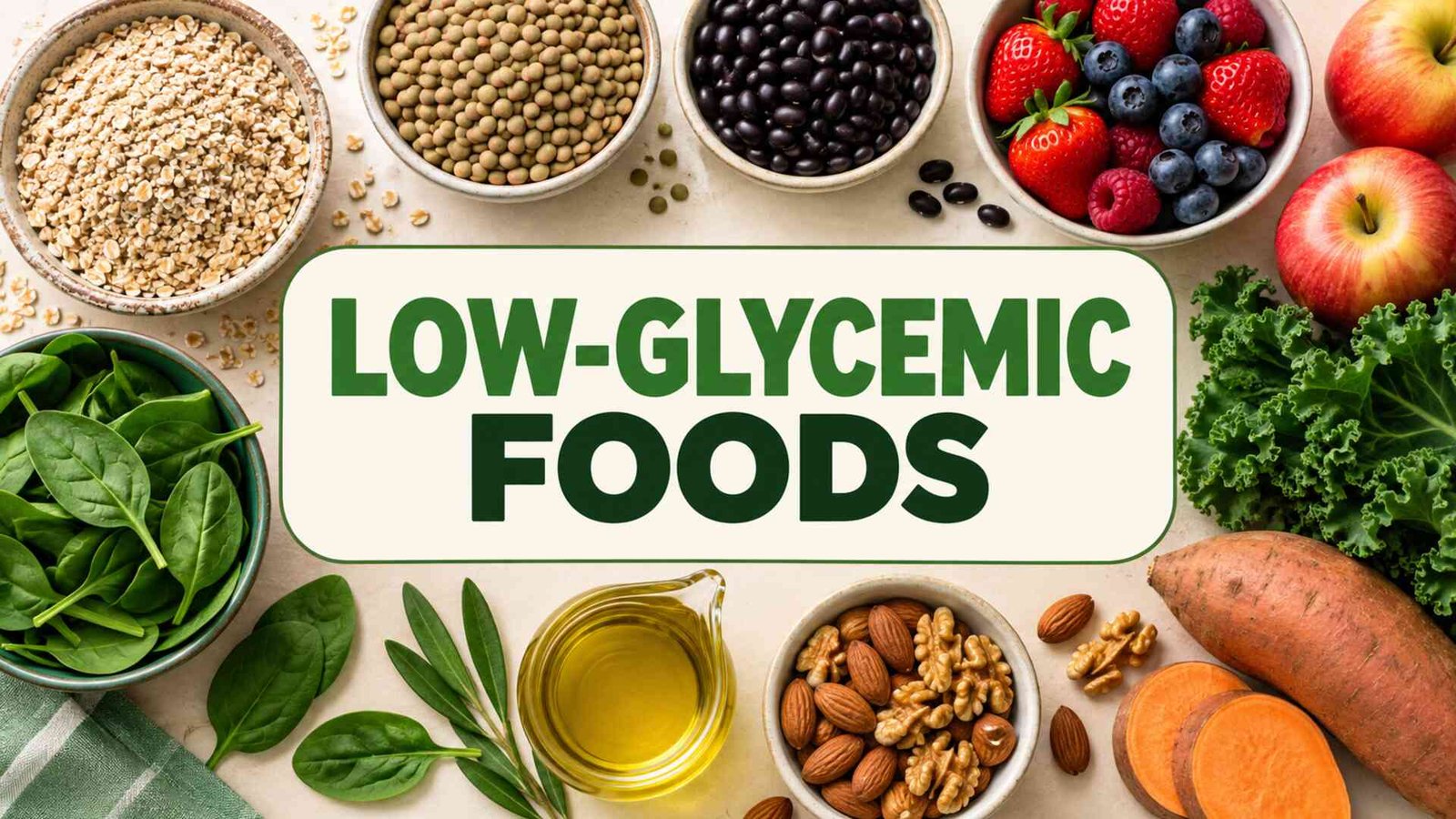
A practical low-glycemic foods list can make grocery planning easier, but glycemic index is only one part of a food’s effect. Portion size, preparation, meal composition, medication, activity and individual response also matter. Use this guide as a flexible starting point rather than a promise of a particular blood-glucose result.
How to use a low-glycemic foods list
Choose foods you enjoy from several categories and build balanced meals around them. If you manage diabetes, hypoglycaemia or another medical condition, follow your clinician’s plan and do not change medication based on a grocery list.
- Legumes: lentils, chickpeas, black beans and kidney beans.
- Less-refined grains: steel-cut oats, barley, quinoa and intact whole grains.
- Fruit: berries, apples, pears, citrus and other locally available fruit.
- Non-starchy vegetables: leafy greens, broccoli, cabbage, peppers, cucumber and courgette.
- Protein and fats: eggs, fish, poultry, tofu, plain yogurt, nuts, seeds, avocado and olive oil.
Compare foods in context
Glycemic-index values are averages measured under controlled conditions. Ripeness, processing and cooking can change them, while glycemic load also accounts for the amount of carbohydrate in a serving. Check labels for serving size, carbohydrate and fibre using our guide to reading nutrition labels.
Build flexible lower-GI meals
- Oats with plain yogurt or soy yogurt, berries and seeds.
- Lentil soup with vegetables and whole-grain bread.
- Bean and quinoa salad with greens and an olive-oil dressing.
- Fish or tofu with vegetables and a suitable grain or potato portion.
Cooling cooked starches may change their resistant-starch content, but the effect varies and does not make any food universally suitable. Cool food promptly, refrigerate it safely and reheat according to local food-safety guidance.
Plan the shopping list
Start with two proteins, two grains or starchy foods, several vegetables and two fruits. Add only what fits your household’s week to limit waste. For another adaptable framework, see the diabetes-friendly grocery list.
A practical conclusion
A useful low-glycemic foods list prioritizes variety, realistic portions and meals you can repeat. Treat numbers as context—not guarantees—and seek individualized advice when blood-glucose management is part of your care.