
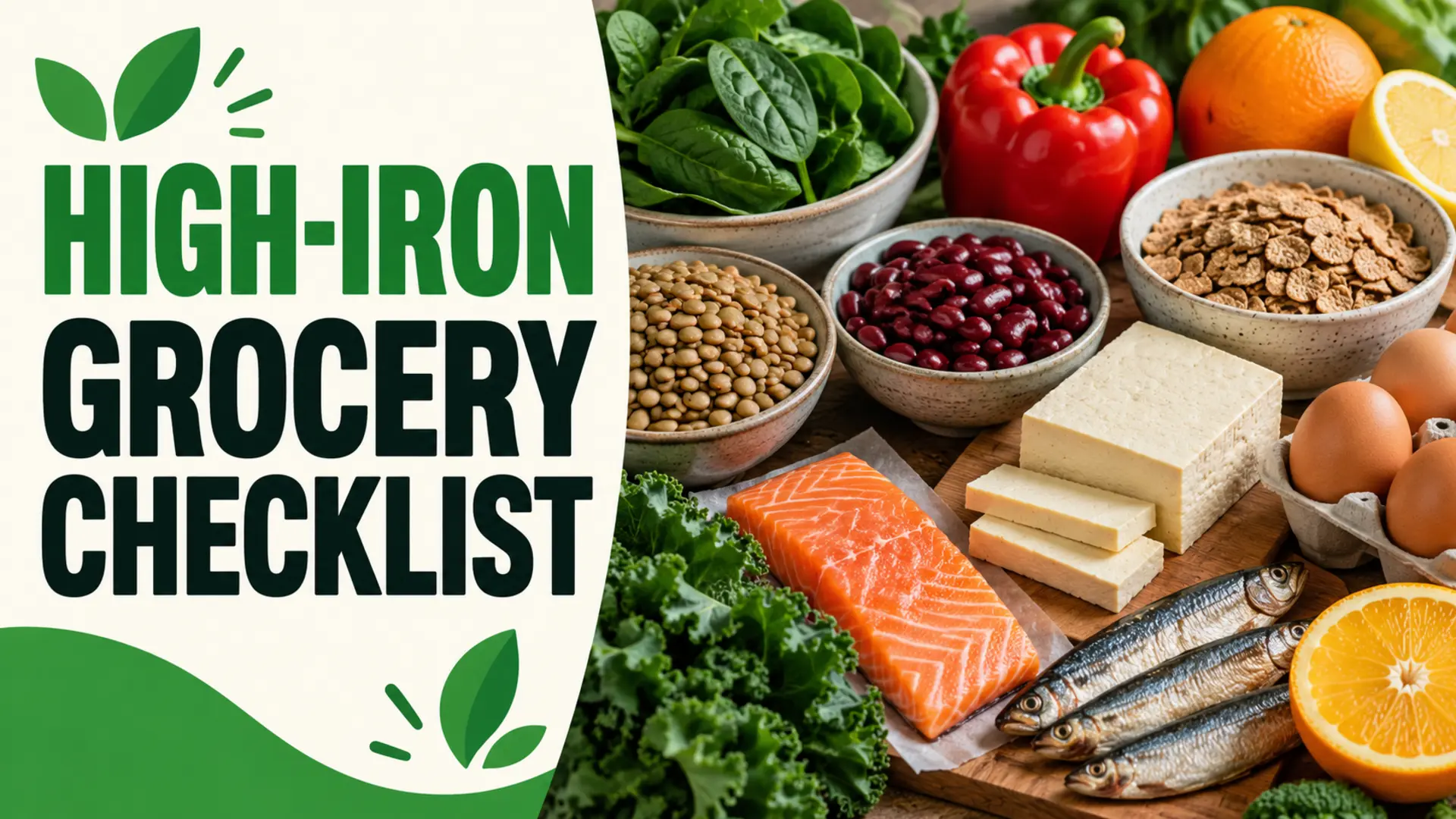
This high-iron grocery checklist includes varied animal and plant foods, but food alone may not prevent or correct iron-deficiency anaemia. Fatigue, breathlessness and other symptoms have many causes. Seek medical assessment rather than self-diagnosing or taking iron supplements without guidance.
High-iron grocery checklist
- Animal sources: meat, poultry, fish, shellfish and eggs.
- Plant sources: lentils, beans, chickpeas, tofu, tempeh, pumpkin seeds and iron-fortified cereals.
- Supporting foods: bell peppers, citrus, berries, tomatoes and broccoli provide vitamin C.
Iron content varies by product and serving size. Read labels on fortified foods using our guide to nutrition-label comparisons.
Pair plant sources practically
Vitamin-C-containing foods can support absorption of non-haem iron. Try lentils with tomatoes, tofu with peppers, or fortified cereal with berries. You do not need rigid pairing rules at every meal, and individual absorption varies.
Consider common interactions
Tea, coffee, calcium and some medicines can affect iron absorption in certain contexts, but blanket timing rules are not appropriate for everyone. Ask a pharmacist or clinician about your medicines and supplements. Do not stop prescribed treatment or avoid necessary calcium foods without professional advice.
Food-safety and suitability notes
- Cook meat, seafood and eggs according to local guidance.
- Choose lower-mercury seafood where relevant, especially during pregnancy.
- Prepare beans safely and follow package directions.
- Adapt nuts, seeds and firm foods for young children to reduce choking risk.
- Organ meats are concentrated sources and may be unsuitable in large or frequent amounts.
Turn the list into meals
- Lentil and tomato soup with greens.
- Tofu and pepper stir-fry with a grain.
- Bean salad with citrus dressing.
- Fish, vegetables and potatoes or whole grains.
For more plant-focused options, see the plant-based protein and iron checklist.
When to seek care
Testing and treatment depend on age, pregnancy status, symptoms, medical history and the cause of deficiency. A high-iron grocery checklist can support a varied diet, but diagnosed anaemia needs individualized follow-up.