
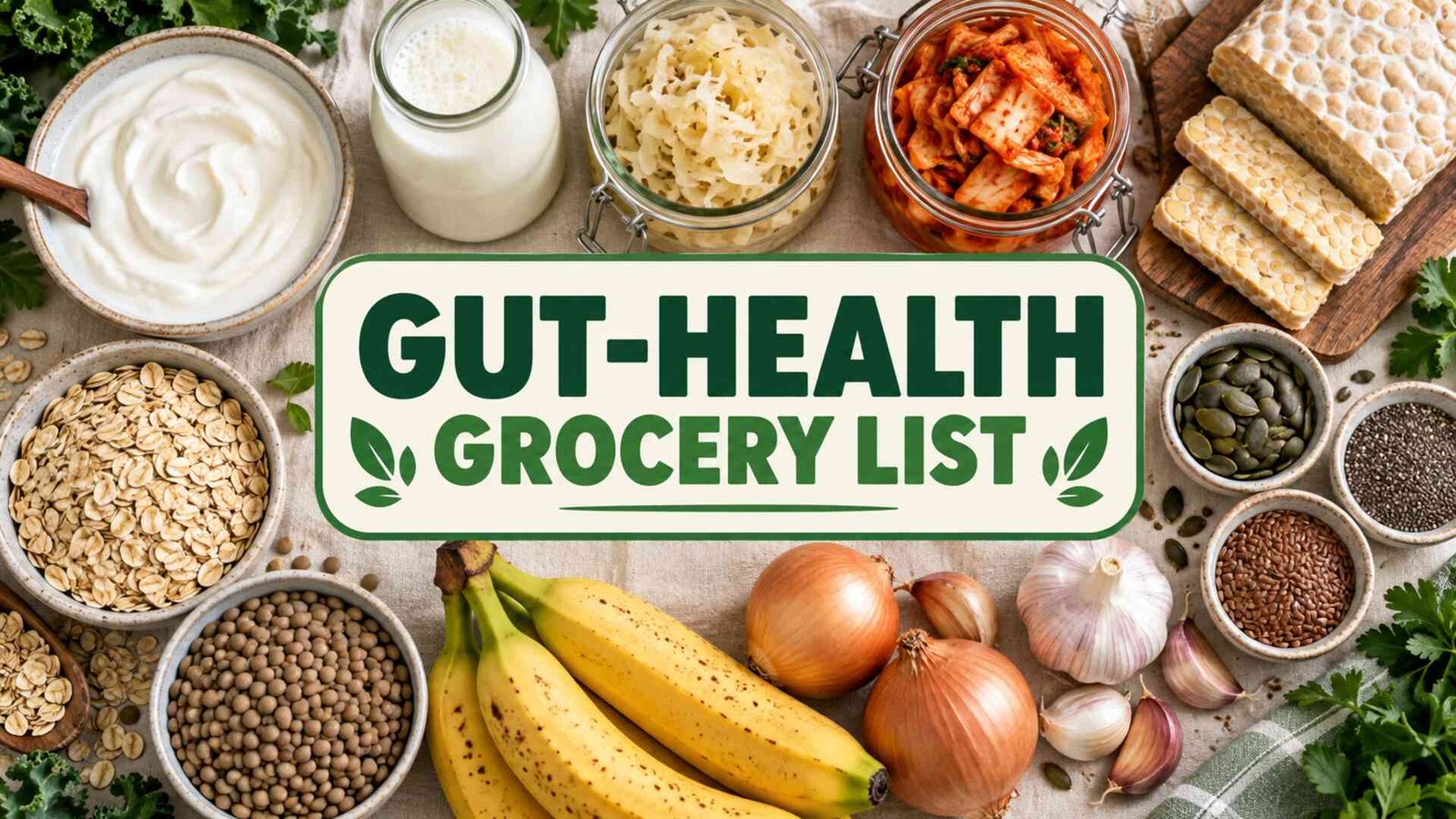
A varied gut-health grocery list can include fermented foods and fibre-rich plant foods, but no single ingredient can “restore” a microbiome or guarantee digestive, immune or mental-health outcomes. Tolerance differs, so introduce unfamiliar foods gradually.
Gut-health grocery list categories
- Fermented dairy or alternatives: plain yogurt, kefir and products with cultures where suitable.
- Fermented vegetables: sauerkraut or kimchi, checking sodium and storage instructions.
- Fermented proteins and seasonings: tempeh and miso.
- Fibre-rich staples: oats, beans, lentils, whole grains, vegetables, fruit, nuts and seeds.
Fermented foods vary in live-culture content; shelf position or the word “raw” does not establish a clinical benefit.
Add fibre gradually
Rapid increases can cause bloating or discomfort. Increase variety at a manageable pace and drink fluids according to your individual needs. People with digestive conditions may require tailored portions or alternatives.
For more choices, see the high-fibre foods checklist.
Simple meal combinations
- Oats with yogurt or fortified plant yogurt and berries.
- Lentil and vegetable soup with whole-grain bread.
- Rice or quinoa with tempeh and cooked vegetables.
- A grain bowl with vegetables and a small serving of tolerated fermented food.
Store fermented foods safely
Follow the package’s refrigeration and use-by directions. Use clean utensils, discard food showing unexpected spoilage and do not assume fermentation makes a product safe indefinitely. People who are immunocompromised, pregnant or medically vulnerable should seek guidance about unpasteurized foods.
The plant-based protein and iron list can help round out meals.
A balanced conclusion
A gut-health grocery list works best as part of an overall varied diet. Choose foods you tolerate, make changes gradually and seek medical advice for persistent pain, bleeding, unexplained weight loss or other concerning symptoms.