
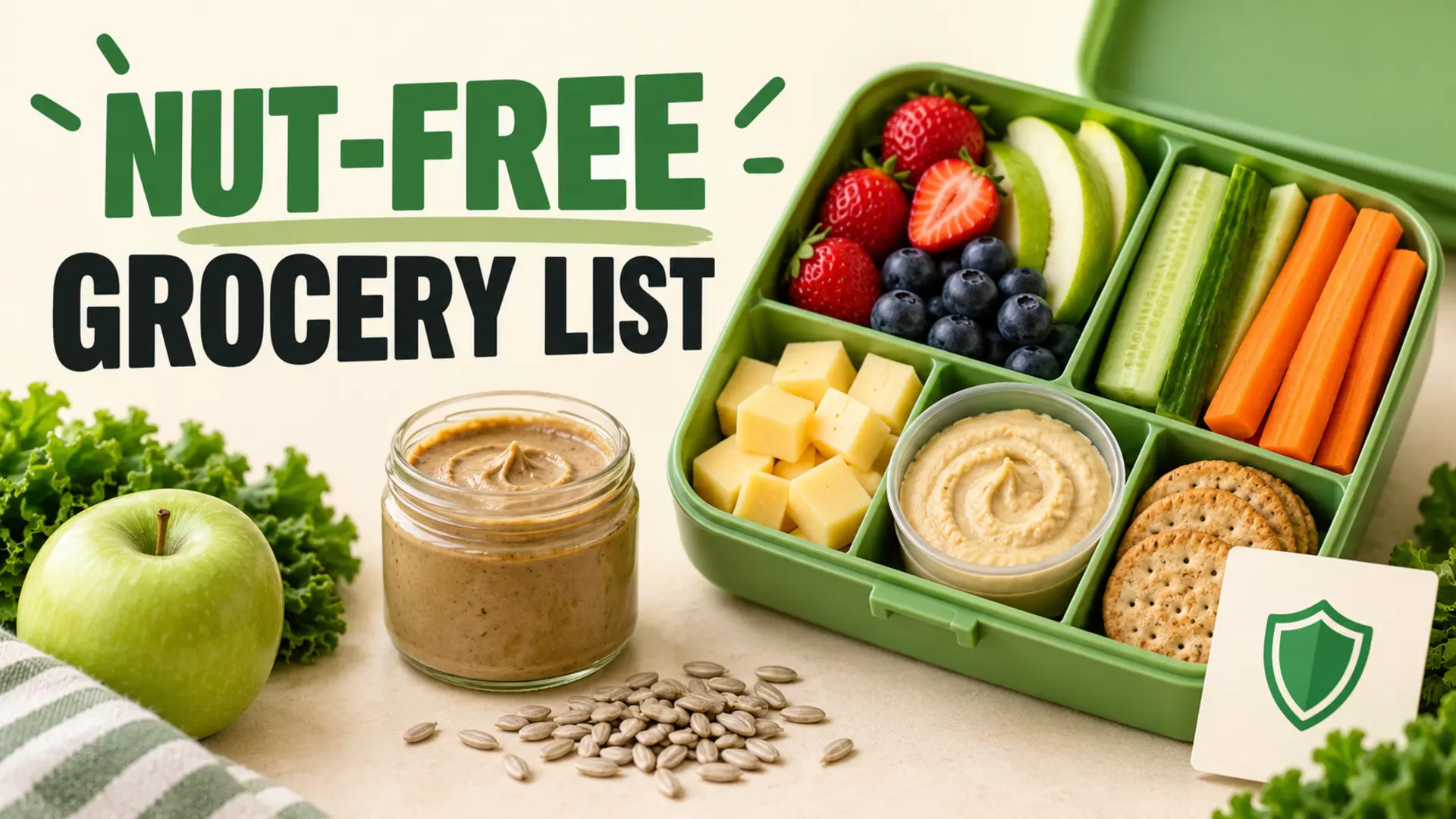
A nut-free grocery list must be tailored to the person’s diagnosed allergies and the school or workplace policy. “Nut-free” does not automatically mean safe for every allergy, and product ingredients or facilities can change. Always follow the individual emergency plan and current label.
Nut-free grocery list foundations
- Fresh fruit and suitably prepared vegetables.
- Cheese, yogurt or appropriate dairy-free alternatives.
- Eggs, beans, lentils, hummus, meat or fish where permitted.
- Bread, wraps, rice, oats, crackers or cereals verified for the person’s needs.
- Sunflower or other seed spreads only if seeds are permitted.
Adapt hard, round or sticky foods for young children to reduce choking risk.
Check every packaged product
Read the full ingredient list and allergen statement every time, even for familiar products. Precautionary statements such as “may contain” vary by jurisdiction; follow advice from the allergy-care team rather than relying on a brand list or package colour.
See our nutrition-label guide for a repeatable comparison process.
Reduce cross-contact at home
- Wash hands and preparation surfaces thoroughly.
- Use clean utensils and avoid shared spread jars.
- Store verified foods in clearly identified containers.
- Consider separate equipment when recommended by the allergy plan.
A household with multiple allergens may need more than a simple “nut-free” zone. Our household food-allergy guide covers shared-kitchen planning.
Coordinate with school or caregivers
Confirm written policies, approved foods and emergency procedures directly. Do not assume homemade or bakery food is safe. Provide medication and action-plan information through the appropriate school process.
A safer conclusion
A useful nut-free grocery list combines varied food choices with current labels, individualized medical instructions and consistent cross-contact controls. Recheck products and policies regularly.