
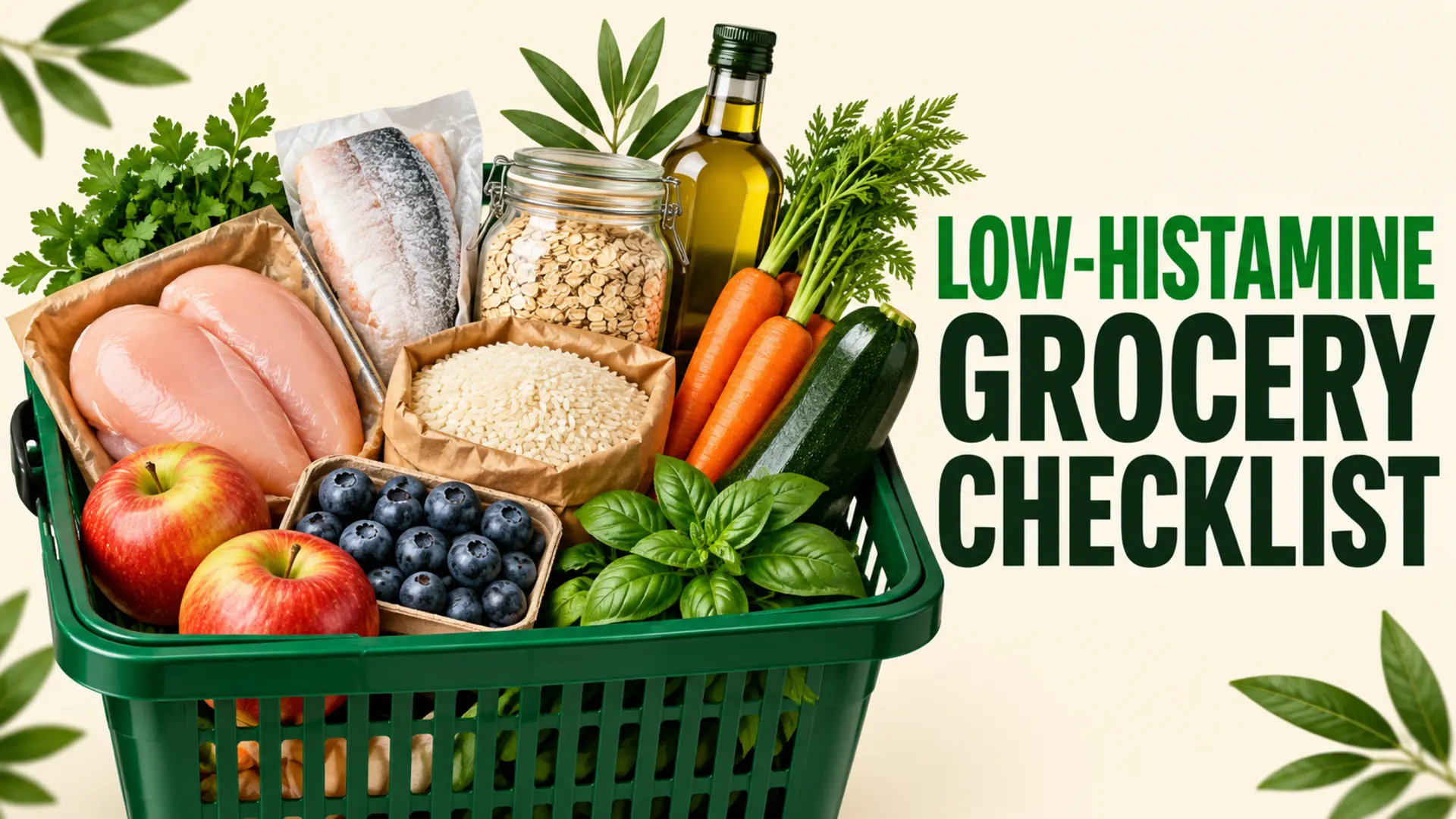
A low-histamine grocery checklist should be individualized. Histamine intolerance is difficult to diagnose, symptoms overlap with many conditions, and food tolerance varies. Work with a qualified clinician or dietitian before making broad exclusions, especially if symptoms are severe.
Low-histamine grocery checklist basics
- Fresh or safely frozen meat and fish that suit your care plan.
- Rice, oats, quinoa and other tolerated grains.
- Apples, blueberries, mangoes and other individually tolerated fruit.
- Carrots, courgette, cucumber, broccoli and tolerated leafy vegetables.
- Olive oil and fresh herbs for simple meals.
No food list is universally “safe.” Fermented, aged or stored foods may trouble some people, while reactions and thresholds differ.
Keep a structured food record
Record the food, portion, preparation, storage and symptoms without assuming every reaction is caused by histamine. Avoid increasingly restrictive eating without supervision. Our nutrition-label guide can help identify ingredients consistently.
Store food safely
Buy quantities you can use promptly, refrigerate perishables according to local guidance and freeze portions when appropriate. Thaw meat safely in the refrigerator or with another approved method—not on the counter. Freezing does not reverse histamine already present or guarantee tolerance.
Avoid unsupported remedies
Foods containing quercetin or vitamin C are not proven substitutes for antihistamines or prescribed treatment. Do not use a grocery plan to manage possible anaphylaxis. Follow your emergency plan and seek urgent help for breathing difficulty, swelling, faintness or rapidly worsening symptoms.
For broader allergy organization, see the nut-free and allergy-safe grocery list.
A practical conclusion
A low-histamine grocery checklist works best as a supervised, temporary planning tool that protects nutritional variety while clinicians investigate symptoms and suitable foods.